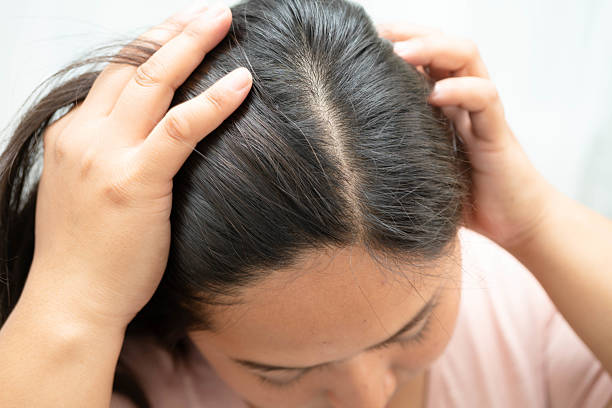

Growing your hair can feel like a waiting game.
You wash it. You moisturise it. You try a new oil. You promise yourself you’ll stop using too much heat. Then you check the mirror three weeks later and wonder, “Has my hair grown at all?”
Here’s the thing: healthy hair growth usually isn’t about finding one magical product. It’s about creating a routine that supports the scalp, protects the hair shaft, reduces breakage, and gives your hair enough time to do what it naturally does.
That matters even more when your schedule is packed. Between lectures, meetings, commuting, childcare, deadlines, workouts, and trying to get eight hours of sleep (good luck!), a complicated 14-step hair routine isn’t realistic.
You need something you can actually stick with.
This guide breaks down a practical hair growth routine for busy women and professionals, including what to do daily, weekly, and monthly. It also explains what really affects hair growth, which habits can quietly cause breakage, and when hair loss may need medical attention.
A quick look at the routine
Before we get into the details, here’s the basic framework:
- Daily: Protect your hair, avoid unnecessary tension, and keep your scalp comfortable.
- Wash days: Clean the scalp, condition the lengths, detangle gently, and reduce heat.
- Weekly: Give your hair consistent moisture and check for signs of dryness, breakage, or scalp irritation.
- Monthly: Review your hairstyle, heat use, chemical treatments, and overall hair health.
- Long-term: Eat a balanced diet, manage stress where possible, and address persistent shedding or thinning early.
Simple? Yes.
Effective? It can be, especially when you stay consistent.
First, what actually makes hair grow?
Your hair grows from follicles beneath the skin of your scalp. Each follicle follows a hair growth cycle, and not every strand is growing at the same speed at the same time.
That means hair growth isn’t like watching a plant sprout in a time-lapse video.
Some hairs are actively growing. Others are resting. Eventually, older hairs shed and make room for new growth. Losing around 50 to 100 hairs per day can be normal.
So when someone says, “My hair isn’t growing,” there are actually two different possibilities.
Your hair may be growing slowly, or it may be growing but breaking before you notice the length.
That second problem is incredibly common.
Imagine filling a bucket while there’s a small hole at the bottom. You’re adding water, but the level barely changes. Hair can work the same way. New growth may be happening at the scalp, while dryness, friction, chemical processing, heat, or rough handling causes the older lengths to snap.
Your goal, therefore, isn’t simply to “make hair grow faster.”
It’s to support healthy growth while protecting the length you already have.
Your daily hair growth routine
You don’t need to spend an hour on your hair every morning.
In fact, less fuss can sometimes be better.
1. Start with gentle scalp care
Your scalp is the environment where your hair follicles operate, so it deserves attention.
That doesn’t mean aggressively scrubbing your scalp every day or covering it in five different oils.
Keep it clean and comfortable.
How often you wash depends on your hair type, scalp, activity level, and how quickly your scalp becomes oily. The American Academy of Dermatology recommends washing according to how dirty or oily the hair becomes rather than following one universal schedule.
If you exercise frequently, sweat heavily, or use a lot of styling products, you may need to cleanse more often.
If your hair is very dry, curly, thick, or tightly coiled, you may need less frequent washing.
The goal is balance.
A clean scalp doesn’t need to feel squeaky or stripped.
A simple rule
If your scalp feels oily, itchy, uncomfortable, or heavily coated with product, it’s probably time for a wash.
If your scalp feels comfortable and your hair isn’t dirty or weighed down, you don’t necessarily need to wash it just because the calendar says it’s “wash day.”
2. Keep your hands off your hair when you can
This sounds almost too simple, but constant touching can create unnecessary friction.
Running your fingers through your hair repeatedly, twisting strands, pulling at knots, or constantly changing your hairstyle can increase mechanical stress.
And if you’re sitting at your desk thinking, “I don’t do that,” notice what your hands are doing during your next meeting.
You might be surprised.
Try low-manipulation styles during busy days. Loose buns, gentle twists, ponytails without excessive tension, or protective styles can reduce daily handling.
Just make sure the style isn’t pulling at your scalp.
Tight braids, cornrows, ponytails, buns, and similar styles can contribute to traction alopecia when they repeatedly place tension on the hair.
3. Protect your hair while you sleep
Nighttime is one of the easiest parts of your routine to improve.
Your hair rubs against your pillow for hours. That friction can contribute to tangling, frizz, and breakage, especially if your hair is dry or fragile.
Consider:
- A satin or silk pillowcase
- A satin or silk bonnet
- A loose protective hairstyle
- Keeping your hair moisturised without leaving it heavily coated
You don’t need to turn bedtime into a spa appointment.
A few minutes of preparation can be enough.
For busy professionals and mothers, this is particularly useful because it requires almost no extra time once the habit is established.
Your wash-day routine: where the real work happens
Your wash day doesn’t need to be complicated.
Think of it as a reset.
You’re removing buildup, conditioning the hair, detangling it carefully, and preparing it for the next few days.
Step 1: Detangle before or during washing
Don’t attack a giant knot with a brush.
That’s a recipe for frustration and broken hair.
Instead, separate your hair into manageable sections if needed. Use your fingers first to loosen larger tangles, then use a wide-tooth comb or suitable detangling tool.
The AAD recommends being gentle with wet hair because it is more vulnerable to damage. For textured or curly hair, detangling while conditioner is present can make the process easier.
Work from the ends upward.
It takes slightly longer.
It can save you a lot of snapping.
Step 2: Shampoo the scalp, not the entire length
This is one of those small changes that can make your routine feel much better.
Your scalp is where oil, sweat, dead skin cells, and product buildup collect. The lengths of your hair usually don’t need aggressive scrubbing.
Apply shampoo primarily to your scalp and massage gently with your fingertips.
Let the lather move through the lengths as you rinse.
The AAD specifically recommends applying shampoo to the scalp rather than the entire length of the hair to help clean away buildup while limiting unnecessary drying of the hair shaft.
And please don’t scratch your scalp with your fingernails.
Your fingertips are enough.
Step 3: Condition every wash
If shampoo is the cleanup crew, conditioner is part of the maintenance team.
Conditioner helps moisturise and detangle hair, making it easier to manage. It can also reduce friction and help limit breakage and split ends.
Apply it according to your hair type.
Fine or straight hair may need conditioner mainly on the mid-lengths and ends.
Dry, curly, coily, or thick hair may benefit from conditioning more of the length.
Don’t skip the ends.
They’re the oldest part of your hair and have already been through months or years of washing, styling, sunlight, friction, and general life.
They need the help.
Step 4: Add a leave-in conditioner if your hair needs it
If your hair gets dry, tangled, or frizzy between wash days, a leave-in conditioner can be useful.
Think of it as a lightweight layer of support.
It isn’t mandatory for everyone. But if your hair tends to feel rough after washing, a leave-in product can make detangling and styling easier.
The AAD recommends leave-in conditioner or detangler for people experiencing fragile or thinning hair because these products can help reduce breakage, split ends, and frizz.
The trick is not to pile on product.
More isn’t automatically better.
Step 5: Dry your hair gently
This is where many good routines fall apart.
You’ve just washed and conditioned your hair beautifully, and then aggressively rub it with a rough towel.
Oops.
Instead, gently squeeze out excess water and use a microfiber towel or a soft T-shirt to help absorb moisture.
The AAD recommends microfiber towels as one way to reduce drying time and limit the amount of blow-drying needed.
If you use a blow-dryer, choose a lower heat setting when possible.
And don’t hold intense heat in one spot for too long.
Heat styling: can you still straighten your hair?
Yes.
You don’t have to swear off your flat iron forever.
But frequent high heat can weaken hair and increase damage. Dermatologists recommend limiting curling irons, flat irons, hot combs, and other high-heat tools, particularly when hair is already fragile.
If you use heat:
- Start with properly conditioned hair.
- Use a heat-protective product.
- Keep the temperature as low as practical.
- Avoid repeatedly passing over the same section.
- Give your hair heat-free days.
Your hair doesn’t need to be perfectly styled every day.
Sometimes the healthiest hairstyle is the one that lets your hair rest.
A weekly hair growth routine for busy women
Now let’s make this practical.
You have work. You have school. You have children. You have errands. You have approximately 900 things competing for your attention.
So your routine needs to fit into real life.
Once a week: assess your scalp.
During your normal wash, take a moment to check your scalp.
Look for:
- Persistent itching
- Redness
- Scaling
- Pain
- Unusual tenderness
- New bald patches
- Noticeable thinning
- Excessive shedding
A little observation goes a long way.
Hair changes can be gradual, so people sometimes don’t notice them until they’re significant.
If something looks unusual and doesn’t settle, don’t keep experimenting with random products. Persistent scalp symptoms deserve proper evaluation.
Once a week: deep-condition if your hair needs it
A deep conditioner can be useful for hair that is dry, chemically treated, heat-styled, curly, coily, or prone to breakage.
But don’t treat deep conditioning as a magic growth treatment.
It doesn’t directly force follicles to produce hair faster.
Its value is in helping your existing hair remain conditioned and manageable, which can support length retention.
That’s an important distinction.
Healthy-looking length isn’t only about growth. It’s also about keeping the hair you grow.
Once a week: examine your ends
Take a quick look at the ends of your hair.
Do they feel rough?
Are there lots of tiny broken pieces?
Do you see obvious split ends?
Does your hair tangle much more easily than usual?
These can be signs that your current routine is causing too much mechanical or chemical stress.
You don’t necessarily need to cut your hair every time you see a split end. But if breakage is becoming frequent, a trim and a gentler routine may help you get back on track.
What about hair oils?
Hair oils can have a place in a routine, but let’s keep expectations realistic.
Oils can help reduce dryness, improve lubrication, and make hair feel softer. Some people also enjoy scalp massage as part of their routine.
But rubbing oil onto your scalp doesn’t automatically mean your follicles will produce dramatically more hair.
And heavy oiling can cause problems for some people, particularly if it contributes to buildup, irritation, or follicle-related inflammation.
So use oils based on how your scalp and hair respond.
A few drops on the lengths may be enough.
You don’t need to soak your hair until it looks like you’ve just walked through a rainstorm.
Nutrition matters more than another bottle on your shelf
Hair is made largely of a protein called keratin, so your overall nutritional status matters.
A restrictive diet, significant weight loss, or inadequate nutrition can contribute to hair shedding. Mayo Clinic lists poor nutrition and significant weight loss among factors associated with hair loss.
Instead of chasing “hair vitamins,” focus on regular, balanced meals.
Include foods such as:
- Eggs
- Fish
- Chicken
- Beans and lentils
- Greek yoghurt or other protein-rich dairy
- Nuts and seeds
- Leafy greens
- Fruits and vegetables
- Whole grains
- Healthy fats
And don’t forget hydration.
Water isn’t a miracle hair-growth potion, but adequate fluid intake supports normal body function, including the skin and scalp.
Be careful with supplements.
This part deserves attention.
Hair supplements are heavily marketed, but taking more vitamins isn’t necessarily better. The American Academy of Dermatology warns that excessive amounts of certain nutrients can actually worsen hair loss.
If you suspect a deficiency, speak with a healthcare professional rather than taking a cabinet full of supplements based on social media advice.
Stress, sleep, and the hair-growth conversation
You probably expected this section.
Stress is not a magical explanation for every hair problem, but significant physical or emotional stress can contribute to temporary shedding. Mayo Clinic notes that substantial stress can lead to generalised thinning several months after the triggering event.
And life can be stressful.
Deadlines. Exams. New jobs. Long commutes. Pregnancy. Parenting. Poor sleep. Financial pressure.
You don’t need to become perfectly calm to have healthy hair.
Instead, focus on manageable habits:
- Keep a regular sleep schedule when possible.
- Eat consistently.
- Move your body.
- Take short breaks during demanding workdays.
- Make time for activities that help you decompress.
- Don’t let your hair routine become another source of stress.
Ironically, worrying constantly about your hair can make the whole process feel worse.
Your routine should support you, not become another deadline.
Protective hairstyles: helpful, but only when they’re actually protective
Braids, twists, wigs, cornrows, buns, locs, and other protective styles can be practical and beautiful.
But “protective” doesn’t mean “tension doesn’t matter.”
If a hairstyle hurts while it’s being installed, that’s a warning sign.
The AAD specifically advises that braids, cornrows, weaves, and extensions shouldn’t be excessively tight. Pain can signal damage to the scalp and hair.
Repeated tension can contribute to traction alopecia.
So if your hairline feels sore after styling, don’t ignore it.
Ask the stylist to loosen the style.
Your edges aren’t supposed to suffer for the sake of a hairstyle.
Chemical treatments need a little strategy.y
Relaxers, permanent colour, bleaching, and other chemical processes can change the structure of the hair.
That doesn’t mean you can’t use them.
It means you need to be intentional.
Avoid stacking multiple harsh processes too close together. Follow professional guidance, maintain conditioning, and pay attention to how your scalp and hair respond.
The AAD recommends professional care for chemical treatments when hair is fragile or thinning and advises against repeated harsh chemical processing at home.
If your hair suddenly feels gummy, extremely dry, unusually fragile, or starts breaking heavily after a chemical service, don’t keep adding products to fix it.
Pause.
Give the hair time to recover and consider speaking with a professional stylist or dermatologist.
Your monthly hair-growth check-in
Once a month, take five minutes.
Not 50.
Five.
Ask yourself:
Is my hair breaking less?
Does my scalp feel healthy?
Are my ends in better condition?
Am I using less heat?
Are my hairstyles causing tension?
Am I noticing actual thinning or just normal shedding?
You can also take a photo of your hair under similar lighting and with a similar hairstyle.
This is far more useful than checking your hair growth every morning.
Hair changes are slow. Daily comparison can make perfectly normal progress look like no progress at all.
What can quietly sabotage your hair growth routine?
Sometimes the problem isn’t what you’re failing to do.
It’s what you’re doing too often.
Watch out for:
Constant tight hairstyles
Repeated tension can contribute to traction alopecia.
Excessive heat
Frequent high heat can weaken the hair and increase breakage.
Aggressive detangling
Pulling through knots can snap fragile strands.
Over-processing
Repeated chemical treatments can weaken the hair shaft.
Ignoring scalp problems
Persistent itching, scaling, pain, or inflammation shouldn’t be dismissed as “normal.”
Taking random supplements
More isn’t always better, and excess nutrients can sometimes worsen hair loss.
Constantly changing products
Your hair doesn’t need a new product every Tuesday.
Give a sensible routine enough time to show whether it works.
What if your hair still isn’t growing?
This is where we need to separate hair growth from hair loss.
If your hair is gradually thinning, your part is widening, your hairline is receding, or you develop bald patches, the issue may not be solved by changing shampoo.
Hair loss has many possible causes, including genetics, hormonal changes, medical conditions, medications, stress, and nutritional problems.
The American Academy of Dermatology recommends seeing a dermatologist when you’re experiencing hair loss because identifying the cause is an important first step in choosing appropriate treatment.
Seek medical advice particularly if you notice:
- Sudden hair loss
- Patchy bald spots
- Rapid thinning
- A receding hairline
- Scalp pain or inflammation
- Significant changes in your hair texture
- Heavy shedding that persists
- Hair loss after a major illness or other significant physical stress
Don’t wait months while trying increasingly complicated home remedies if something clearly isn’t right.
What about minoxidil?
Minoxidil is one of the better-studied treatments for certain forms of hair loss.
The AAD notes that minoxidil can stimulate hair growth and help prevent further hair loss in some people, although results take time and it doesn’t restore an entire head of hair.
For hereditary hair loss, results may take around six to 12 months, and continued use is generally needed to maintain the benefit.
It’s important not to treat minoxidil like a general-purpose hair-growth oil.
Whether it’s appropriate depends on the cause of your hair loss, your health, and the formulation you’re considering. If you’re experiencing unexplained shedding or thinning, getting the diagnosis first is the smarter move.
A realistic hair growth routine for busy mornings
Let’s make this even easier.
Morning
Keep it simple:
- Remove your bonnet or sleep protection.
- Gently style your hair.
- Avoid unnecessary brushing and pulling.
- Keep your hairstyle comfortable.
- Use a small amount of moisturiser or leave-in product if your hair needs it.
That’s it.
You don’t need 30 minutes.
A realistic wash-day routine
When you have more time:
- Section the hair if needed.
- Gently detangle.
- Cleanse the scalp.
- Condition the hair.
- Detangle carefully while conditioned if appropriate for your hair type.
- Rinse thoroughly.
- Apply leave-in conditioner if needed.
- Dry gently.
- Add heat protection before heat styling.
- Choose a low-tension hairstyle.
The goal is consistency, not perfection.
The biggest mindset shift: think in months, not days
This may be the hardest part.
Hair doesn’t care that you have a vacation coming up in three weeks.
It doesn’t care that your friend grew six inches and yours didn’t.
It certainly doesn’t care about TikTok’s latest “grow your hair overnight” hack.
Your follicles operate on a biological cycle.
So measure progress over months.
Take occasional photos. Track breakage. Notice how your scalp feels. Watch how much shedding you’re seeing.
And remember: longer hair isn’t always the same thing as healthier hair.
You can have long hair that’s heavily damaged.
You can also have shorter hair that’s strong, full, and healthy.
The better goal is to create conditions where your natural growth can happen while protecting your existing strands.
Your simple hair growth routine, summed up
If your schedule is packed, don’t overcomplicate this.
Every day:
Protect your hair, avoid unnecessary tension, and keep manipulation low.
Every wash:
Clean your scalp gently, condition your hair, detangle carefully, and minimise heat.
Every week:
Check your scalp, moisturise when needed, and look at your ends.
Every month:
Review your styling habits, heat use, chemical treatments, and overall hair condition.
Long term:
Eat well, get enough rest where possible, manage stress, and pay attention to changes in shedding or density.
Most importantly, give the routine time.
Hair growth is a long game. There will be weeks when you don’t notice anything. That’s normal. Keep caring for the scalp, protect the lengths, reduce unnecessary damage, and stay consistent.
You don’t need a bathroom shelf overflowing with products.
You need a routine you can actually live with.
And honestly, that’s often the routine that works best.


