

Dry hair has a way of making itself known.
The ends feel rough. Your usual ponytail suddenly looks a little fuzzy around the edges. You run your fingers through your hair and meet tangles halfway down. After styling, your hair might look shiny for an hour, then somehow become dull, puffy, or brittle again.
And so begins the familiar response: buy another oil, add another mask, try another “moisturising” product.
Except dry hair doesn’t always need more products. Quite often, it needs less damage.
That distinction matters.
A good hair care routine for dry hair isn’t about coating your strands with the richest thing you can find. It’s about cleansing without over-stripping, conditioning consistently, reducing friction, controlling heat, protecting fragile ends, and choosing products that suit your actual hair texture.
For students rushing to class, professionals getting ready before a morning meeting, mothers trying to wash their hair somewhere between everything else, or anyone who doesn’t want wash day to become a three-hour project, simplicity matters too.
So this routine is practical. No 14-product shelf required.
Let’s start with what your hair may actually be trying to tell you.
First, What Does “Dry Hair” Really Mean?
Dry hair usually feels rough, dull, frizzy, stiff, tangled, or brittle. You may also notice split ends, snapping, or a lack of that smooth slip you expect when running your fingers through it.
Sometimes the cause is your natural hair structure.
Curly and tightly coiled hair, for example, often feels drier because scalp oils don’t travel along bends and coils as easily as they move down straighter strands. Thick hair can have different conditioning needs from fine hair too.
Then there are the things we do to hair.
Frequent blow-drying. Flat ironing. Bleaching. Relaxing. Coloring. Tight hairstyles. Rough towel drying. Aggressive detangling. Swimming. Sun exposure. Shampooing more often than your scalp needs.
A few habits aren’t necessarily disastrous on their own. Stack several together, though, and the hair shaft takes the hit.
The American Academy of Dermatology notes that excessive heat, rough handling, chemical processing, tight styles, and some washing habits can contribute to brittleness and breakage. Dermatologists also recommend applying shampoo mainly to the scalp rather than scrubbing it through the full length of the hair.
Here’s another point worth knowing: damaged hair doesn’t truly “heal” the way skin can heal a cut.
Hair products can smooth the shaft, improve manageability, decrease friction, temporarily improve the appearance of damaged areas, and help prevent additional wear. That’s valuable, very valuable, but it helps keep product claims in perspective.
Think of an old silk blouse. You can steam it, soften it, handle it gently, and protect it from further wear. You can’t make every weakened fibre brand-new again.
Your hair deserves that same gentle treatment.
Step 1: Stop Washing Your Hair on Autopilot
How often do you wash your hair because it actually needs washing, and how often do you wash because Tuesday is simply “hair wash day”?
There isn’t one perfect shampoo schedule for everyone.
Your scalp produces oil. You also accumulate sweat, dead skin, environmental debris, and styling-product residue. Those things need to be cleaned away. But the lengths of dry hair don’t necessarily need repeated heavy cleansing.
The American Academy of Dermatology recommends basing washing frequency partly on how oily or dirty your hair becomes. Dry, thick, curly, or textured hair can often be washed less frequently than oily, straight hair.
So watch your scalp.
If it feels greasy, itchy, uncomfortable, coated, or visibly dirty, wash it.
If your scalp still feels comfortable but your ends feel like straw two days after shampooing, washing even more often probably isn’t your magic fix.
How to shampoo dry hair
Wet your hair thoroughly.
Apply shampoo primarily to the scalp and roots. Massage gently with your fingertips. You don’t need to vigorously scrub shampoo into your ends.
As you rinse, the lather travels through the lengths anyway.
This small change can make a surprising difference, particularly if your roots become oily while your ends remain dry.
Dermatologists specifically recommend concentrating shampoo on the scalp to remove excess oil and buildup while limiting unnecessary drying of the lengths.
If you use lots of styling cream, dry shampoo, silicone-rich serum, gels, waxes, or oils, occasional stronger cleansing may be useful because buildup can make hair feel coated, heavy, or strangely dry.
But don’t turn clarifying shampoo into punishment.
Clean hair isn’t supposed to squeak.
Step 2: Consider a Pre-Shampoo Treatment When Your Ends Need Extra Help
This step is optional, which is important to say because beauty routines have become exhausting enough.
If your hair is very dry, porous, chemically treated, or prone to tangling during washing, you can apply a small amount of oil to the lengths before shampooing.
Coconut oil has particularly interesting research behind it.
A published study comparing coconut, sunflower, and mineral oils found that coconut oil reduced protein loss from both damaged and undamaged hair when used as a pre-wash or post-wash grooming treatment. The researchers connected this effect to coconut oil’s structure and ability to penetrate the hair fibre.
That doesn’t mean coconut oil is mandatory.
Some fine-haired people find it heavy. Others simply dislike how their hair feels after using it.
If it works for you, use a modest amount mainly through the driest lengths and ends before washing.
And remember: more is not automatically better.
Hair soaked in half a jar of oil isn’t receiving bonus points.
Step 3: Conditioner Is Not the Step to Skip
If shampoo is the cleaning crew, conditioner is damage control.
Conditioning helps smooth the hair, reduce friction, improve detangling, and make the strands easier to handle. The American Academy of Dermatology recommends using conditioner after shampooing, particularly because it helps improve manageability and reduce damage from handling.
For dry hair, this is one of the most important parts of the entire routine.
Apply conditioner generously enough to coat your hair without emptying half the bottle.
Where you apply it depends partly on your hair.
If your hair is fine and relatively straight, concentrate conditioner from the mid-lengths downward.
If your hair is thick, dry, curly, or coily, you may benefit from conditioning more of the length.
Let it sit while you wash your body, shave, contemplate your unread emails—whatever fits into your shower routine.
Then detangle before rinsing if your texture handles wet detangling well.
Look for ingredients that give hair slip
The front label is marketing.
The ingredient list tells you a little more.
Useful conditioning formulas may contain ingredients such as fatty alcohols, conditioning agents, silicones, oils, humectants, or hydrolysed proteins.
And no, seeing the word “alcohol” doesn’t automatically mean a conditioner is drying.
Fatty alcohols such as cetyl alcohol and stearyl alcohol are commonly used in conditioners to improve texture and conditioning. Cosmetic-science literature also describes conditioning agents and silicones as ingredients that can reduce friction, improve smoothness, help detangling, and make hair look shinier.
That brings us to a beauty-internet argument that refuses to die.
Are Silicones Bad for Dry Hair?
Not automatically.
Silicones have been blamed for practically every bad hair day since social media discovered ingredient lists.
But they can be useful.
Silicone ingredients can coat the hair shaft, decrease friction, improve smoothness and shine, and make damaged or tangled hair easier to manage. A 2025 review also describes their conditioning and protective roles, while noting that certain less water-soluble silicones can contribute to buildup if overused.
So this doesn’t have to become Team Silicone versus Team Silicone-Free.
Pay attention to your hair.
If a silicone-containing conditioner makes your dry, tangle-prone hair smooth and manageable, you don’t need to throw it away because someone online declared it “toxic for curls.”
If your hair becomes limp, heavily coated, or difficult to cleanse, adjust the products or cleanse buildup when needed.
Context beats ingredient fear.
Step 4: Detangle Like Your Hair Costs Money
Dry hair and aggressive detangling are a terrible pair.
When hair is tangled, the instinct is often to attack the knot from the top and drag the comb downward.
That’s exactly how a tiny tangle becomes a collection of snapped strands in your sink.
Instead, divide your hair into manageable sections when needed.
Start near the ends.
Work upward gradually.
Hold the section above stubborn knots so you aren’t pulling directly against your scalp.
Use conditioner or a detangling product to provide slip rather than forcing your comb through resistance.
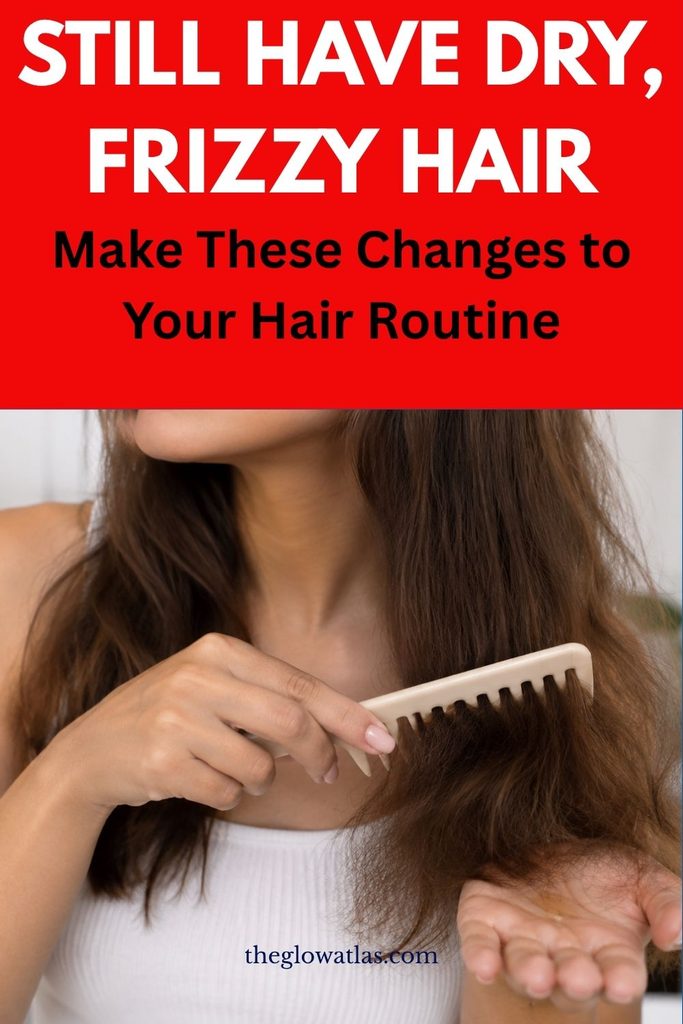
The tool matters too. A wide-tooth comb can be gentler for many hair types.
There is one important texture difference here.
AAD guidance recommends allowing straight hair to dry slightly before gently combing it, while thick or curly hair can often be detangled while damp or during conditioning.
This is why generic advice such as “never brush wet hair” can be too simplistic.
Straight, fine hair and tightly coiled hair do not always behave the same way.
Your routine should respect that.
Step 5: Don’t Rough-Dry Your Hair With a Bath Towel
You step out of the shower, grab a towel, flip your head over and rub your hair like you’re trying to start a small fire.
It feels efficient.
Your hair may disagree.
Rough towel rubbing creates friction, and wet hair is already vulnerable to mechanical damage.
Instead, gently squeeze excess water from your hair.
Then wrap or blot it with a soft T-shirt, microfiber towel, or regular towel without aggressively rubbing the strands.
Dermatologists recommend wrapping or gently absorbing water rather than rough towel drying.
It’s one of those unglamorous changes that won’t make a dramatic TikTok transformation video.
It still matters.
A lot of healthy-looking hair comes from avoiding small, repetitive damage.
Step 6: Add a Leave-In Conditioner While Hair Is Damp
For persistent dryness, your rinse-out conditioner may not be the final conditioning step.
A leave-in conditioner can add slip, reduce frizz, make detangling easier, and provide another layer of protection during styling.
The American Academy of Dermatology notes that leave-in conditioner can be particularly useful for dry, brittle, curly, long, chemically treated, heat-styled, tangled, or frizz-prone hair.
Apply it to damp hair, mainly from the mid-lengths toward the ends.
Start small.
Fine hair might need a lightweight spray or thin lotion.
Thick, coarse, curly, or very dry hair may handle a richer cream.
This isn’t a contest to see who can use the most product. You want enough to improve softness and manageability without leaving your hair greasy or sticky.
Also, don’t turn regular rinse-out conditioner into a DIY leave-in by diluting it in a spray bottle. Dermatologists point out that rinse-out and leave-in conditioners are formulated differently and recommend using each product as intended.
Sometimes the boring answer—follow the label—is the useful answer.
Step 7: Seal and Smooth the Driest Areas
Once your leave-in is distributed, you may want a small amount of serum or hair oil on the ends.
The key phrase here is small amount.
Start with a drop or two, depending on your hair’s thickness and length. Rub it between your palms first, then lightly smooth it over the driest sections.
Oil can help reduce friction and improve shine and softness, but it isn’t a substitute for conditioner.
That’s where many dry-hair routines become unnecessarily heavy.
Condition first.
Then use oil where it earns its place.
If your roots get oily quickly, keep rich serums away from the scalp.
For curly and coily hair, you may use more conditioning and sealing product than someone with fine, straight hair. That’s normal. The target isn’t identical product quantities. The target is hair that feels flexible, manageable, and protected.
Step 8: Heat Protectant Is Not an Optional Extra If You Regularly Use Heat
You can use the gentlest shampoo ever made and buy a beautiful conditioner.
Then undo much of that careful work with a flat iron set unnecessarily high.
Heat styling isn’t automatically forbidden.
Repeated excessive heat is the issue.
The American Academy of Dermatology advises limiting blow-drying, curling irons, flat irons, and similar tools, using lower heat settings and reducing how frequently they are used. Heat-protective products can also help when thermal styling is part of your routine.
So before blow-drying, straightening, curling, or using a hot brush, apply a product specifically labelled for heat protection.
Then ask yourself a slightly annoying but useful question:
Does the tool really need to be this hot?
If a lower temperature gets the job done, use it.
Allow hair to partially air-dry before blow-drying when practical. Keep the dryer moving rather than concentrating intense heat on one spot. Avoid repeatedly running a straightener over the same section because the first pass wasn’t quite perfect.
Dry hair doesn’t need perfection.
It needs fewer assaults.
Step 9: Give Your Ends More Attention Than Your Roots
Hair ends are the oldest part of your hair.
They’ve survived more shampoos, sunny afternoons, scarves, pillowcases, heat sessions, hairstyles, detangling battles, colour treatments, gym ponytails, and rushed Monday mornings than the hair near your roots.
Naturally, they often look worse first.
Treat them accordingly.
Focus conditioner, leave-in products, serums, and oils where dryness is most obvious.
You can also trim badly split or wispy ends.
A trim doesn’t magically make hair grow faster from the scalp, but removing damaged ends can prevent your hairstyle from looking thin, rough, and increasingly frayed. Cleveland Clinic dermatology guidance notes that removing split ends can help prevent damage from continuing farther along the fibre.
And yes, cutting an inch after spending months growing your hair can feel mildly offensive.
Sometimes keeping damaged ends isn’t preserving length, though.
It’s preserving damage.
Step 10: Protect Your Hair While You Sleep
Eight hours of rubbing dry hair against bedding can add another source of friction.
You don’t need to turn bedtime into a complicated beauty ritual, but a few adjustments may help.
Loosely secure long hair rather than sleeping with it tightly pulled back.
If your hair tangles easily, try a loose braid, loose twist, bonnet, scarf, or another low-tension style suited to your texture.
Satin or silk-like pillowcase surfaces are also popular because they create less drag than rougher fabrics, although your daytime hair habits still matter far more than one pillowcase.
Most importantly, avoid sleeping regularly with hairstyles that feel tight or painful.
AAD warns that repeated tension from tight ponytails, braids, cornrows, extensions, and similar styles can contribute to breakage and, when prolonged, traction-related hair loss.
Your protective hairstyle should feel protective.
If your scalp is throbbing, it isn’t.
What About Deep Conditioning Masks?
This is where dry-hair care can feel a little contradictory.
You don’t necessarily need a separate mask.
But you may enjoy and benefit from one.
Deep conditioners are generally richer conditioning treatments designed to stay on the hair longer than regular instant conditioners. Cosmetic dermatology literature describes them as particularly useful for very dry or damaged hair.
Try one periodically if your regular conditioner isn’t giving you enough softness and slip.
That might mean weekly for one person and occasionally for another.
Watch how your hair behaves rather than chasing a fixed internet schedule.
If it feels smooth, flexible, manageable, and easy to detangle, good.
If it starts feeling weighed down, sticky, coated, or limp, scale back.
Your hair gives feedback.
Listen to it.
A Simple Weekly Hair Care Routine for Dry Hair
You don’t need a different treatment every night.
For most busy people, something like this is much easier to maintain:
- Wash day: Cleanse the scalp gently, condition thoroughly, detangle, apply leave-in conditioner, add heat protection if needed, then finish the ends with a small amount of serum or oil.
- Between washes: Refresh only where necessary. Add a tiny amount of leave-in or serum to dry ends instead of repeatedly layering products over the entire head.
- Once a week or as needed: Replace your normal conditioner with a richer mask if your hair responds well to deeper conditioning.
- Occasionally: Remove heavy product buildup with appropriate cleansing, especially if your hair feels coated or unusually dull.
- Every few months or when needed: Trim damaged, split, increasingly thin ends.
Notice what’s missing?
Daily oiling. Daily washing. Constant manipulation. Ten different repair treatments.
Dry hair often responds beautifully to consistency rather than chaos.
Your Hair Texture Changes the Routine
Here’s where generic hair advice falls apart.
If your hair is fine and straight
You need moisture without flattening your hair.
Use conditioner mainly through the mid-lengths and ends. Choose lightweight leave-ins. Apply oils sparingly—sometimes one drop is enough.
Wash according to scalp oiliness rather than forcing yourself to stretch wash days when your scalp is uncomfortable.
Fine dry hair can still become greasy.
Dryness and oiliness can exist on the same head.
If your hair is wavy or curly
Conditioning and careful detangling become especially important.
Detangle while your hair has plenty of slip. Apply leave-in product to damp hair, then follow with your preferred curl cream or styling product if needed.
Limit rough brushing once curls have formed because it can increase frizz and disrupt curl definition.
If your hair is tightly curled or coily
Your hair may naturally need richer conditioning and less frequent shampooing than straight, oily hair.
Work in sections when washing and detangling if that makes handling easier. Use enough conditioner to create slip. Be particularly careful with tight protective styles and extensions.
AAD guidance notes that Black hair is especially prone to dryness and breakage and recommends gentle handling, appropriate conditioning, and caution with styles that create tension.
Protective styling can reduce daily manipulation.
But a protective style that causes pain, bumps, pulling, or broken edges isn’t doing its job.
If your hair is bleached, relaxed, colored, or chemically treated
Treat it as more fragile.
Chemical processing changes the hair fibre and can increase vulnerability to breakage.
Condition consistently. Reduce overlapping chemical services when possible. Give your hair breathing room between intensive treatments, and be conservative with heat.
AAD also recommends spacing chemical treatments and using conditioner consistently to help reduce additional damage.
Your hair may look dramatically different after a colour appointment.
Its tolerance for heat and rough handling may be dramatically different too.
The Dry-Hair Mistakes That Seem Helpful but Aren’t
A few habits deserve special mention because they often hide inside otherwise good routines.
Using too much oil: Oil can smooth hair, but endless layers may simply create buildup.
Avoiding shampoo completely: A clean scalp still matters. Product, oil, sweat, and skin debris don’t disappear because your hair is dry.
Scrubbing shampoo through the ends: Focus cleansing mainly where cleansing is needed—the scalp.
Skipping conditioner because a mask is coming later: Conditioner is one of the routine’s most useful tools. Don’t casually remove it.
Using maximum heat because it’s faster: Higher isn’t automatically better.
Brushing through tangles aggressively: Detangling should become slower when you meet resistance, not faster.
Thinking expensive means moisturising: Formula and suitability matter more than a glamorous bottle.
Buying every viral repair treatment: Your hair doesn’t need a new personality every seven days.
That last one might save both your hair and your bank account.
What If Your Hair Still Feels Dry?
Give your routine some consistency before changing everything again.
If you’re using gentler cleansing, conditioning every wash, limiting heat, reducing friction, and protecting your ends but your hair remains severely brittle or continues breaking, look deeper.
Sometimes what looks like “dry hair” isn’t simply a cosmetic problem.
Persistent breakage, significant shedding, bald areas, scalp redness, pain, sores, intense itching, or sudden changes in your hair deserve professional attention.
Dry scalp is another separate issue.
A flaky or itchy scalp can come from several causes, including irritation, contact dermatitis, weather-related dryness, psoriasis, dandruff-related conditions, or other scalp disorders.
So don’t automatically pour hair oil onto every flaky scalp.
If symptoms persist, a dermatologist can help determine what you’re actually dealing with.
A Realistic Dry-Hair Routine for Busy Mornings
Let’s make this practical.
Say it’s 7:15 a.m.
You’ve got class in an hour. Or a commute. Or a child asking where their other shoe is while your calendar is quietly threatening you from your phone.
This isn’t the morning for six layers of hair treatment.
Mist or lightly dampen the sections that need refreshing.
Apply a tiny amount of leave-in conditioner to rough ends if necessary.
Smooth with a small amount of serum.
Style gently.
Done.
Save your deeper care for wash day.
A routine that works only when you have two uninterrupted hours isn’t a very useful routine for most people.
The boring, repeatable routine wins.
Again and again.
Frequently Asked Questions About Caring for Dry Hair
Should I oil dry hair every day?
Usually, you don’t need to coat your entire head in oil every day.
A small amount on dry ends may improve softness and reduce friction, but too much can leave hair greasy or coated. Build your routine around proper cleansing and conditioning first.
How often should I wash dry hair?
There isn’t one universal number.
Wash according to your scalp, hair type, styling habits, oil production, and buildup. Dry, thick, curly, and textured hair may need shampoo less often than fine, straight, oily hair.
Is conditioner necessary every time I shampoo?
For dry hair, it’s a very good habit.
AAD dermatologists recommend using conditioner after shampooing because it helps moisturise, detangle, and improve manageability.
Can I use both conditioner and leave-in conditioner?
Yes.
They’re different products with different purposes. A rinse-out conditioner works during washing, while a leave-in can provide additional conditioning and manageability afterwards. Dermatologists note that people with dry, curly, long, heat-styled, or chemically treated hair may particularly benefit from leave-in conditioner.
Is air-drying always better?
Not necessarily in every circumstance, but reducing excessive heat exposure is sensible.
If you blow-dry your hair, use heat protection, choose a lower temperature when possible, and avoid repeatedly concentrating high heat on one section.
Should I avoid sulfates completely?
Not necessarily.
Cleansers vary significantly in strength and formulation, and a shampoo isn’t automatically unsuitable simply because one surfactant appears on its ingredient list.
What matters is how well the complete formula cleans your scalp without repeatedly leaving your hair rough, tangled, or difficult to manage.
If your current shampoo makes your hair feel stripped every time you use it, consider a gentler formula or reduce how often you use stronger cleansing products.
Can damaged dry hair become healthy again?
You can dramatically improve how damaged hair feels and behaves, and you can prevent additional damage.
But severely damaged portions of the hair shaft cannot biologically regenerate like living skin.
Conditioners, silicones, proteins, oils, and styling products can coat, smooth, lubricate, and temporarily improve damaged fibres. New hair growing from the scalp gives you the real fresh start.
That is why preventing damage matters as much as treating dryness.
The Bottom Line: Your Dry Hair Probably Needs More Gentleness, Not More Drama
A strong hair care routine for dry hair doesn’t have to fill an entire bathroom cabinet.
Start with the fundamentals.
Clean your scalp without constantly scrubbing shampoo through vulnerable ends. Condition after washing. Detangle gently. Use leave-in care when your hair needs extra slip. Keep heat under control. Protect fragile ends. Reduce unnecessary friction. Give chemically treated hair more care, not more punishment.
Then customize.
Fine hair may need featherlight conditioning. Coily hair may love richer formulas. Bleached hair may demand stricter heat limits. Someone who swims several times a week has different needs from someone who rarely uses styling products.
There isn’t one perfect dry-hair routine.
There is, however, a much better question than “What product am I missing?”
Ask:
“What keeps making my hair dry in the first place?”
Sometimes the answer is heat.
Sometimes it’s over-washing.
Sometimes it’s chemical damage, friction, tight styling, rough detangling, or simply a conditioner that isn’t doing enough.
Fix those patterns first.
Then let your products support the work.
Because softer, healthier-looking hair usually isn’t the result of one miracle mask.
It’s the result of dozens of small, gentle decisions, made consistently enough that your hair finally gets a chance to behave differently.


Pingback: Why Is My Hair Dry? Causes, Fixes & Care Tips