
You wash your hair, condition it, buy the promising serum, maybe even sleep in a bonnet, and somehow there are still little broken hairs around the sink.
Your ends look thinner than they did a few months ago. Your hair seems to grow, but the length never changes much. Ponytails feel less full. Detangling has somehow become a negotiation.
Sound familiar?
Hair breakage can be frustrating because it often happens quietly. One strand snaps while you’re brushing. Another breaks when a hair tie comes out. A few more disappear during heat styling. None of this looks dramatic on its own.
But week after week, it adds up.
The encouraging part is that preventing hair breakage usually doesn’t require a shelf full of expensive products. It requires reducing the amount of stress your hair experiences and giving fragile strands enough conditioning, slip, and protection to survive everyday life.
Dermatologists make much the same point: damaged hair becomes fragile, and fragile hair is more likely to break. Heat, rough grooming, tight hairstyles, chemical processing, and excessive manipulation can all contribute.
So, if your goal is longer, fuller-looking, healthier hair, don’t focus only on growing more hair.
Protect the hair you’ve already grown.
First, Is It Hair Breakage or Hair Shedding?
This distinction matters more than people realise.
Hair shedding happens when an entire strand separates from the follicle as part of the hair growth cycle or because something has affected that cycle.
Hair breakage happens along the hair shaft. The strand physically snaps somewhere between the root and the end.
That means a person can have perfectly normal hair growth at the scalp and still struggle to gain length because the ends keep breaking off.
Look closely at what you’re seeing.
Breakage often shows up as shorter pieces of different lengths. You might notice flyaways around the crown, tiny hairs on your clothes, split or rough ends, or sections that seem much shorter than the rest.
Shedding tends to involve full-length strands.
Of course, the two can happen together.
If you’re suddenly losing large amounts of hair from the root, developing bald patches, seeing a rapidly widening part, or noticing significant thinning, don’t assume it’s simply breakage. Hair loss can have several causes, including hormonal changes, certain medications, nutritional deficiencies, stress, thyroid disease, and some scalp conditions.
That’s a different conversation—and often one worth having with a dermatologist.
Why Does Hair Break in the First Place?
Think of a hair strand a little like a rope.
A fresh rope can handle bending, pulling, and movement. But repeatedly scrape it, bleach it, heat it, soak it, dry it, stretch it, and rub it against rough surfaces, and eventually the fibres weaken.
Hair behaves differently from rope, obviously, but the comparison works.
Each strand has an outer protective layer called the cuticle. When that surface becomes worn or damaged, the hair tends to become rougher. Rough strands catch against one another. Tangling increases. More force is needed during combing.
Then the snapping starts.
Mechanical stress from grooming, chemical treatments, and thermal stress can affect the bonds and structure responsible for the mechanical behaviour of hair.
And damage isn’t always obvious.
Hair can still look glossy after a blowout while being increasingly fragile underneath. A silicone serum can smooth the surface. An iron can flatten frizz. A fresh colour can look gorgeous.
Pretty and healthy aren’t always the same thing.
That doesn’t mean you have to give up everything fun. It means knowing where your hair’s damage budget is going.
Stop Treating Wash Day Like a Scrubbing Session
There’s something strangely satisfying about creating piles of shampoo foam.
Your ends may disagree.
Shampoo is mainly there to clean your scalp and remove excess oil, sweat, dead skin, and product buildup. You usually don’t need to pile the lengths of your hair on top of your head and aggressively scrub them together.
That creates friction.
Instead, concentrate shampoo on your scalp. Massage gently with your fingertips. When you rinse, allow the lather to move through the rest of your hair.
The American Academy of Dermatology recommends applying shampoo primarily to the scalp rather than rubbing it through the entire hair length, which can help avoid unnecessary drying.
How often should you wash?
That depends on your scalp, hair texture, styling habits, activity level, and product use.
Fine straight hair with an oily scalp may need frequent cleansing. Dry, thick, curly, or tightly coiled hair usually needs a different schedule.
Forget the idea that everyone needs the same wash-day calendar.
Your scalp should help set the schedule.
Conditioner Isn’t the Optional Part
If breakage is your problem, conditioner deserves more respect.
Shampoo cleans.
Conditioner helps improve slip and manageability, which can reduce the amount of friction and pulling involved in detangling. Dermatologists recommend using conditioner after shampooing, particularly because it can make hair easier to manage.
Pay extra attention to your ends.
They’re the veterans of your hair.
If your hair is shoulder length, those ends have been through months, or years, of washing, weather, pillowcases, ponytails, brushes, coats, scarves, sunshine, dryers, flat irons, and random moments when your handbag strap caught three strands and nearly ended a friendship.
Of course they’re more fragile.
For fine or straight hair, concentrating conditioner toward the ends can prevent roots from becoming heavy.
For dry, curly, or coily hair, conditioning more of the length may work better.
And give the product time to do its job. Applying conditioner and immediately rinsing it down the drain isn’t always enough. Follow the directions on the product rather than inventing an impressive 45-minute ritual every Tuesday night.
Your Detangling Technique May Be the Real Problem
Here’s the thing: knots don’t care how expensive your hair products are.
If you’re tearing through them with a brush, something has to give.
Usually, it’s the hair.
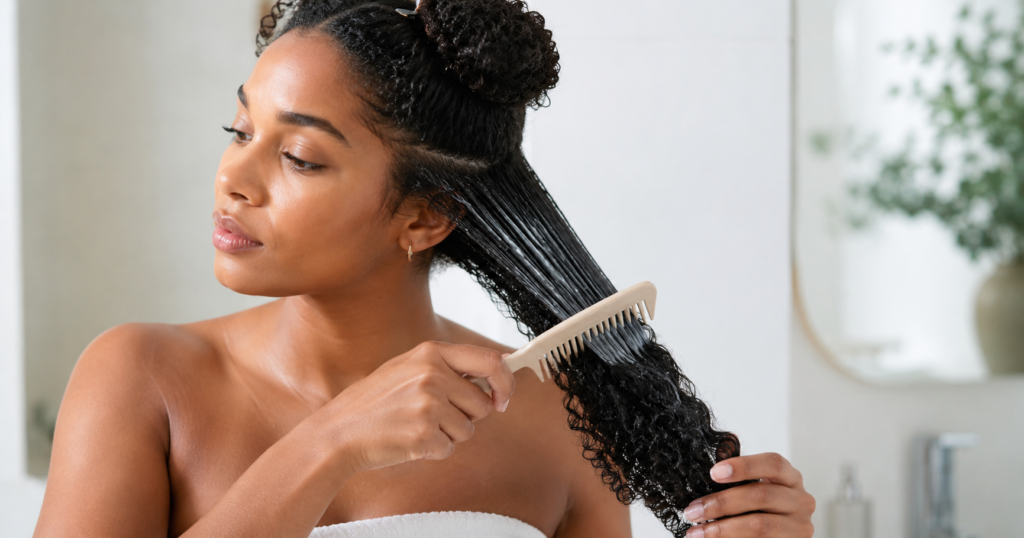
Start detangling near the ends. Work through small knots first, then gradually move higher. This prevents one giant knot from being dragged down the entire strand.
A wide-tooth comb can also reduce unnecessary pulling.
But there’s an important difference between hair types.
For many people with straight hair, reducing manipulation while hair is soaking wet can help because wet hair is vulnerable to breakage. People with tightly curled or textured hair, however, may find that detangling while the hair is wet and coated with conditioner reduces breakage because the strands have more slip and the curl pattern is easier to separate.
The American Academy of Dermatology specifically notes this distinction rather than applying one brushing rule to everybody.
That’s a useful lesson for hair care in general.
Context matters.
What protects one person’s hair may make another person’s routine harder.
Please Stop Rough-Drying Your Hair
You know that classic move after a shower?
Graa b towel. Drop head forward. Rub like you’re trying to start a campfire.
Not ideal.
Rough towel drying creates extra friction when the hair is already vulnerable.
Instead, gently squeeze excess water from your hair. Then wrap or blot it with a microfiber towel or soft cotton T-shirt.
No violent rubbing required.
Dermatologists specifically recommend gently wrapping or absorbing moisture rather than roughly rubbing wet hair dry.
It’s one of those tiny changes that feels almost too simple to matter.
But breakage prevention is full of tiny changes.
That’s the point.
Heat Isn’t Forbidden. But Your Hair Keeps the Receipts
Flat irons, curling wands, blow-dry brushes, hot combs and dryers can make styling much faster.
For a busy professional trying to leave home before 7:30 a.m., “simply air-dry your hair for six hours” isn’t exactly useful advice.
So no, you don’t necessarily have to swear off heat.
You do need to manage it.
Excessive heat can damage hair, and dermatologists recommend limiting heat styling, using low or medium settings when possible, and using a heat-protective product.
Start with fewer passes.
Going over the same thin section five or six times with a straightener isn’t giving the tool another chance to succeed. It’s exposing already heated hair to more heat.
Make sure hair is appropriately dry before using tools designed for dry hair. Don’t crank every device to its maximum temperature simply because the dial goes that high.
And use heat protectant as directed.
Some leave-in products contain ingredients that coat the hair fibre and help reduce friction or provide thermal protection. Conditioning agents, including certain silicones, can form thin films over the hair and improve slip. Research reviews have found that silicones can reduce friction and protect the hair shaft from abrasive and thermal stress.
No need to fear every ingredient ending in “-cone.”
Hair care social media has given several perfectly useful ingredients unnecessarily dramatic reputations.
Chemical Treatments Need Breathing Room
Colour is beautiful.
Relaxed hair can be beautiful.
Permed hair can be beautiful.
Bleached blonde hair can be beautiful.
But chemistry has consequences.
Bleaching, relaxing, perming, and some colouring processes alter the hair so that it can take on a new look or shape. Repeated processing can leave strands drier and more brittle. Lightening hair significantly generally requires stronger chemical processing and can cause greater damage.
This becomes especially important when services start piling up.
Bleach plus frequent flat ironing plus tight extensions plus rushed detangling?
Your strands are working overtime.
If your hair is already breaking, consider spacing chemical services farther apart and giving new growth or damaged areas careful attention. Avoid repeatedly processing hair that has already been chemically treated unless the specific service requires it and is being handled correctly.
For relaxers, the AAD advises applying touch-ups only to new growth rather than previously relaxed hair.
When substantial chemical processing is involved, an experienced stylist can be worth the money.
Not because salons are magical, but because timing, placement, product strength, overlap, and technique matter.
Tight Doesn’t Mean Neat
This one deserves special attention.
Braids, cornrows, sleek ponytails, buns, extensions and weaves can all be stylish, practical, and culturally important.
The problem isn’t the name of the hairstyle.
It’s excessive tension.
A style shouldn’t require painkillers and a philosophical commitment to suffering.
Repeated pulling can cause both breakage and traction alopecia, a type of hair loss caused by ongoing tension on the hair follicles. In advanced cases, that hair loss can become permanent.
Pay attention to your hairline.
Broken hairs around the forehead, soreness, bumps, stinging, crusting, headaches, or skin that looks pulled are not signs that your braids are simply “fresh.”
They’re warning signs.
The AAD’s guidance is wonderfully straightforward: if a hairstyle hurts, it’s too tight.
Ask for looser braids around the hairline. Reduce the weight of very long extensions when tension is a concern. Rotate hairstyles instead of stressing the same areas month after month.
And let your edges live.
They have been through enough.
Protective Styles Only Protect Hair When They’re Actually Protective
A style doesn’t become protective just because TikTok calls it one.
A low-manipulation style can help reduce daily brushing and handling. That’s useful.
But if installing that style requires extreme tension, layers of bonding glue, heavy extensions, aggressive edge control, and two hours of painful braiding, the math changes.
Protective styling should reduce stress, not relocate it.
If you wear wigs, weaves, braids or extensions, continue caring for the hair underneath. Clean your scalp appropriately. Keep the natural hair conditioned. Watch for tenderness.
Weaves and extensions can damage natural hair when they create constant pulling, and dermatologists advise removing styles that cause pain or scalp irritation.
A break between installations can also be useful.
Your hair does not need to be styled into submission every day of the year.
Your Night Routine Matters More Than You Think
Eight hours is a long time to rub fragile hair against something.
If you toss and turn while sleeping, your hair repeatedly moves across the pillowcase. For already dry or textured hair, reducing that friction can make nighttime care more comfortable and help preserve styles.
A satin or silk bonnet, scarf, or pillowcase can be useful.
Keep long hair loosely contained rather than sleeping with a tight elastic digging into the same spot each night.
For curly or coily hair, loose braids, twists, or a relaxed “pineapple” may help limit tangling, depending on your texture and style.
Notice the repeated word here?
Loose.
Hair doesn’t care that nobody can see the hairstyle while you’re sleeping. There’s no prize for the tightest bedtime bun.
Watch the Everyday Friction You Barely Notice
Some breakage comes from surprisingly ordinary places.
Hair trapped underneath a handbag strap. Hair rubbing against the collar of a wool coat. Tight helmet straps. Rough scarves. Repeatedly tucking the same front section behind your ear. Elastic bands with exposed metal. Taking hair ties out by yanking them through the ponytail.
None of these things will destroy healthy hair overnight.
But remember: damage stacks.
When your ends are already bleached, dry, relaxed, weathered, or heat-styled, small sources of friction matter more.
Choose smoother accessories. Remove elastics gently. Keep hair away from straps when possible.
It’s not glamorous advice.
It works because hair breakage isn’t always glamorous either.
Don’t Wait Until Your Ends Look Like Tiny Paintbrushes
Split ends don’t zip themselves back together.
Conditioners and serums can temporarily smooth the hair surface and make damaged ends look and feel better. Some conditioning ingredients can temporarily coat or bind damaged areas, improving manageability.
But once a strand has split badly, no product can permanently turn that old damaged fibre into untouched new hair.
That means trims still have a role.
You don’t need to cut off several inches every month just because somebody online announced a universal trimming schedule.
Watch your own ends.
If they’re repeatedly knotting, splitting, catching against one another, or becoming very thin and see-through, a trim may prevent you from spending the next six weeks fighting them.
Sometimes keeping length means cutting a little damaged length.
A mild contradiction, yes.
But a useful one.
Does Your Hair Need Moisture, Protein, or Something Else?
The beauty industry loves putting hair into dramatic categories.
“Your hair is protein overloaded!”
“You have moisture fatigue!”
“You need a bond repair immediately!”
Sometimes these labels are useful. Sometimes they’re just very good marketing.
For everyday breakage, start with the basics before building a laboratory in your bathroom.
A good rinse-out conditioner can improve softness and detangling. A leave-in conditioner may be particularly useful for hair that is dry, long, tangled, colour-treated, permed, or regularly styled with heat.
Some conditioners contain proteins or protein-derived ingredients that temporarily improve the feel of damaged hair. Others rely more on fatty alcohols, oils, silicones, cationic conditioning agents, humectants, or combinations of these.
You don’t need to memorise cosmetic chemistry.
Pay attention to performance.
After conditioning, does your hair feel flexible and easier to detangle? Does the comb move through with less resistance? Do your ends feel smoother?
Good.
If a treatment repeatedly leaves your hair stiff, rough, coated, sticky, or harder to manage, don’t keep using it simply because the label promised “strength.”
Your hair doesn’t read marketing copy.
Curly and Coily Hair Needs Extra Respect for Friction
Curly and tightly coiled strands can be especially vulnerable to dryness, tangling, and mechanical damage.
The twists and curves along the strand create more points where fibres can catch against one another. Natural oils from the scalp also don’t travel down curved hair as easily as they move along straighter strands.
That’s why moisture and slip matter so much.
For curly hair, dermatologists recommend conditioning the full length and note that leave-in conditioner or oil after washing may help with moisturization.
Sectioning can also make wash day less chaotic.
Instead of wrestling with your entire head at once, working in manageable sections can reduce tangling and give you better control while cleansing and detangling.
And no, natural hair doesn’t need to be brushed into perfect submission every morning.
Sometimes the gentlest styling decision is leaving yesterday’s twist-out alone.
What About Relaxed Hair?
Relaxed hair needs similar breakage protection, with added attention to chemical overlap.
Because relaxing changes the hair structure, previously processed sections shouldn’t repeatedly receive the same strong chemical treatment during touch-ups.
Protect the line where new growth meets relaxed hair as well.
That area can experience considerable stress during detangling because the two textures behave differently. Use conditioner, work slowly, and avoid forcing a comb through resistance.
Heat plus chemical processing can also become a rough combination.
If you’re relaxing your hair and then frequently pressing it at high temperatures, reducing one source of stress may make a noticeable difference.
You don’t have to choose between healthy hair and polished hair.
You may have to stop demanding every styling method from the same strand at the same time.
Is Your “Growth Problem” Really a Length-Retention Problem?
This realisation changes everything.
Hair can grow from the scalp while breaking at almost the same rate at the ends.
From the mirror, it looks like nothing is happening.
You buy another growth oil.
Then another.
Maybe gummies.
Maybe rosemary everything.
But if the ends keep snapping, stimulating your scalp doesn’t solve the whole problem.
Length retention means keeping older hair intact.
That involves less friction, better conditioning, gentler styling, lower tension, thoughtful heat use, careful chemical processing, and fewer unnecessary battles with your strands.
Not nearly as exciting as a miracle growth serum.
Far more useful.
Nutrition Still Matters. Just Don’t Turn Your Breakfast Into a Supplement Store
Hair is made from protein, so adequate nutrition matters.
Low intake or deficiency of nutrients such as protein or iron can contribute to hair problems and hair loss in some people.
But taking random handfuls of hair vitamins isn’t automatically better.
If you’re eating a varied diet and aren’t deficient, more supplements don’t necessarily equal stronger hair.
Build meals around normal food first: adequate protein, vegetables, fruits, healthy fats, whole grains or other nourishing carbohydrates, and iron-rich foods appropriate for your diet.
If you’re experiencing substantial shedding alongside fatigue, menstrual changes, unexplained weight changes, recent childbirth, major illness, restrictive dieting, or other symptoms, speak with a healthcare professional.
That’s when testing for an underlying issue may make more sense than guessing which gummy has the prettiest bottle.
A Realistic Anti-Breakage Routine for Busy Weeks
You do not need a 14-step hair routine.
On wash day, cleanse your scalp without aggressively rubbing the lengths. Follow with conditioner and give extra attention to fragile ends. Detangle gently, starting near the ends and moving upward.
After rinsing, blot or wrap the hair rather than rubbing it with a towel.
Apply a suitable leave-in conditioner if your hair benefits from one. Add heat protection before heat styling. Keep your temperature as low as you can while still getting the result you need.
During the week, reduce needless brushing. Don’t redo your hairstyle five times a day because one piece moved.
At night, limit friction and avoid tight styles.
And every few weeks, look at your hairline and ends.
Not your Pinterest goal hair.
Your actual hair.
Are the ends becoming rough? Is your hairline sore? Are you finding more short broken pieces? Is one area snapping more than another?
Those details tell you where to adjust your routine.
The Products Worth Prioritising
If you’re trying to prevent hair breakage on a student budget or young-professional salary, don’t feel pressured to buy ten separate treatments.
Start with the functional categories.
You need a cleanser that works for your scalp and doesn’t leave your hair unmanageable. You need a conditioner that provides enough slip for your texture. If your hair is dry, chemically processed, long, or regularly heat-styled, a leave-in conditioner may help.
If you use hot tools, add a heat protectant.
Then stop.
Use the routine for a while before deciding that you need three oils, two masks, a scalp serum, rice water, a bond treatment, a protein spray, fermented herbs, and whatever the algorithm discovered on Thursday.
More product doesn’t automatically mean less breakage.
Sometimes more product just means more buildup and a more expensive shower.
What About Hair Oils?
Hair oil can be useful, but it’s important to know what it’s doing.
An oil may lubricate strands, improve feel, reduce friction, add shine, or help seal in the effect of your conditioning routine.
That’s useful.
What it cannot do is resurrect a strand that has been badly split and structurally destroyed.
Think of oil as maintenance rather than magic.
Argan oil, for example, can be used in small amounts on dry or frizzy sections after leave-in conditioner, and dermatologists include it as one possible finishing step for hair that still feels dry.
The amount matters.
Fine hair might need a drop.
Thick, coarse hair may tolerate much more.
You want lubrication, not a hairstyle that looks like it lost a fight with a deep fryer.
Hair Breakage During Fall and Winter
Season changes can make an existing breakage problem more noticeable.
Cooler air, indoor heating, windy weather, hats, scarves, and high-neck clothing can add dryness or friction. If your hair is already chemically processed or naturally dry, suddenly maintaining the same summer routine may not feel sufficient.
This doesn’t mean you need to rebuild your whole product shelf every October.
You may simply need a richer conditioner, a little more leave-in on the ends, less exposed hair on very dry or windy days, and more attention to friction from wool hats and scarves.
Dry seasons are also a good time to reconsider how often you’re using high heat.
Hair doesn’t check the calendar.
It responds to the conditions around it.
When Hair Breakage Deserves Professional Attention
Most ordinary breakage can improve when damaging habits change.
But don’t write off every hair problem as “damage.”
See a dermatologist or qualified healthcare professional if you’re developing bald patches, noticeable thinning at the crown, a rapidly receding hairline, scalp pain, persistent burning, severe itching, unusual scaling, sores, or substantial shedding from the root.
Also seek help if you’ve changed your routine and the breakage continues without improvement.
Dermatologists emphasise that hair loss has many causes and that early diagnosis can matter, particularly with conditions that may lead to permanent loss.
For people who frequently wear tight hairstyles, don’t ignore a changing hairline. Traction alopecia can progress if tension continues.
Getting advice early is much easier than trying to correct years of damage later.
Frequently Asked Questions About Preventing Hair Breakage
Can broken hair grow back?
The broken section itself cannot reattach and continue growing.
But the follicle can continue producing hair if it is healthy. Your goal is to protect that new length so it doesn’t keep snapping as it gets older.
Why is my hair breaking even though I moisturise it?
Moisture is only one part of the picture.
You could still be experiencing too much heat, mechanical friction, overlapping chemical treatments, tight styles, rough brushing, or damage from bleach and colour.
Look at the entire routine rather than blaming one product.
Does cutting hair stop breakage?
Cutting doesn’t change the strength of new hair growing from your scalp.
However, trimming badly split, thin, or damaged ends can remove sections that keep tangling and breaking farther up the strand.
Should I brush my hair every day?
Not simply for the sake of brushing it.
The old “100 brush strokes” idea isn’t necessary. Dermatologists recommend limiting unnecessary brushing and using gentle tools and technique.
Is air drying always healthier than blow drying?
Reducing high heat can certainly help limit thermal damage, but technique matters.
Leaving very thick hair wet for extremely long periods isn’t always convenient, and aggressive manipulation while drying can cause its own problems. A practical middle ground may be gentle towel absorption followed by controlled blow drying with heat protection and a lower temperature.
Can protective hairstyles stop hair breakage?
They can reduce daily manipulation when they’re loose and properly maintained.
They can increase breakage when they’re too heavy or tight.
The hairstyle’s name matters less than the amount of tension it creates.
How long does it take to notice less breakage?
You may notice fewer broken pieces fairly quickly after removing a major source of damage, such as excessive heat or a very tight hairstyle.
Visible improvement in overall length and fullness takes longer because hair growth itself is gradual.
Pay attention to reduced snapping, easier detangling, smoother ends, and fewer short pieces before judging progress only by inches.
The Bottom Line
Preventing hair breakage is less about finding one heroic product and more about lowering the daily stress placed on each strand.
Wash gently.
Condition consistently.
Detangle with patience.
Control your heat.
Be careful with chemicals.
Keep tight styles genuinely loose.
Protect fragile ends from friction.
And pay attention when your hair is telling you something isn’t working.
That’s really the shift.
Your hair doesn’t need you to treat it like glass. You can still braid it, straighten it, colour it, wear extensions, go to the gym, rush to work, throw it into a ponytail, and live your life.
It simply needs fewer damaging habits happening all at once.
Strong-looking hair is often less about what you add and more about what you stop doing.
Once you reduce repeated snapping, the hair growing from your scalp finally gets the chance to stay around long enough to become the length you’ve been trying to achieve.