
You can buy a gentle cleanser, layer on a beautifully formulated moisturiser, wear sunscreen every morning, and still overlook one surprisingly important part of skin care: what you’re eating.
That doesn’t mean food is a magic acne treatment or that eating a bowl of berries will erase fine lines by Friday. Skin doesn’t work like that. Still, skin is living tissue. It constantly renews itself, repairs damage, builds proteins, produces oils, responds to inflammation, and protects the rest of your body from the outside environment. All of that work requires raw materials.
Those materials come, in part, from food.
Protein supplies amino acids needed to build tissue. Vitamin C is necessary for collagen production. Zinc is involved in wound healing and cellular processes. Essential fats help form cell membranes. Vitamins A and E take part in processes that support normal skin function and protection from oxidative damage.
So, yes, your skincare routine matters. A lot. But your grocery basket deserves a little attention too.
Here’s what to know about the nutrients important for healthy skin, and how to get more of them without turning every meal into a complicated wellness project.
First, Your Skin Is an Organ. Not Just Something You Moisturise
We tend to think about skin cosmetically.
Is it glowing?
Is it dry?
Why did that breakout appear overnight, preferably right before an important meeting?
But your skin has much bigger responsibilities. It forms a physical barrier between your body and the environment, helps protect you from microorganisms and chemicals, participates in immune activity, regulates temperature, senses touch, and helps prevent excessive water loss.
Nutrition is one factor involved in maintaining that structure and function. Research in nutritional dermatology continues to examine how vitamins, minerals, fatty acids and plant compounds affect the skin, although scientists are still working out exactly how much individual dietary changes can influence specific skin concerns.
And that distinction matters.
Eating nutritious food supports healthy skin. It doesn’t mean strawberries cure eczema, fish prevent every breakout, or a vitamin supplement can replace medical treatment.
Think of nutrition more like the supply department behind a busy company. Nobody sees it working, but when supplies disappear, things start falling apart surprisingly fast.
Protein: The Skin Nutrient People Forget About
When people hear “foods for healthy skin,” they usually picture blueberries, avocados and maybe an expensive green juice.
Protein rarely gets the glamorous treatment.
Yet protein is one of the body’s major structural materials. Skin tissue contains proteins, including collagen and elastin, and your body requires amino acids from dietary protein for tissue maintenance and repair. Macronutrients, including protein, provide energy and building materials for tissues throughout the body.
That doesn’t mean you need to start drinking three protein shakes a day.
For most people, the better approach is simply making sure meals contain a meaningful protein source.
Eggs at breakfast. Beans or lentils at lunch. Yoghurt as a snack. Fish, chicken, tofu or another protein at dinner.
Simple.
Good food sources include eggs, fish, poultry, lean meat, milk, yoghurt, cottage cheese, beans, peas, lentils, soy foods, nuts and seeds.
And here’s a small practical point that gets missed: when you’re rushing through work, university, childcare and everything else, it’s surprisingly easy to eat meals that are mostly refined carbohydrates.
Coffee and toast.
Biscuits at your desk.
Instant noodles after a long day.
Then you wonder why you feel hungry again an hour later.
Building meals around protein doesn’t just support body tissues. It can also make meals more satisfying.
Vitamin C: Your Collagen Production Assistant
Vitamin C deserves its reputation as an important skin nutrient.
Your body needs vitamin C to produce collagen, a structural protein found in skin and other connective tissues. Vitamin C also functions as an antioxidant and helps the body absorb nonheme iron, the type found in plant foods.
That’s a pretty impressive résumé for one vitamin.
Collagen provides structural support to skin, but collagen production isn’t a one-ingredient operation. Your body also needs amino acids from protein along with other micronutrients.
So instead of thinking, “I need collagen,” it may be more useful to think, “Does my everyday diet give my body what it needs to make and maintain tissue?”
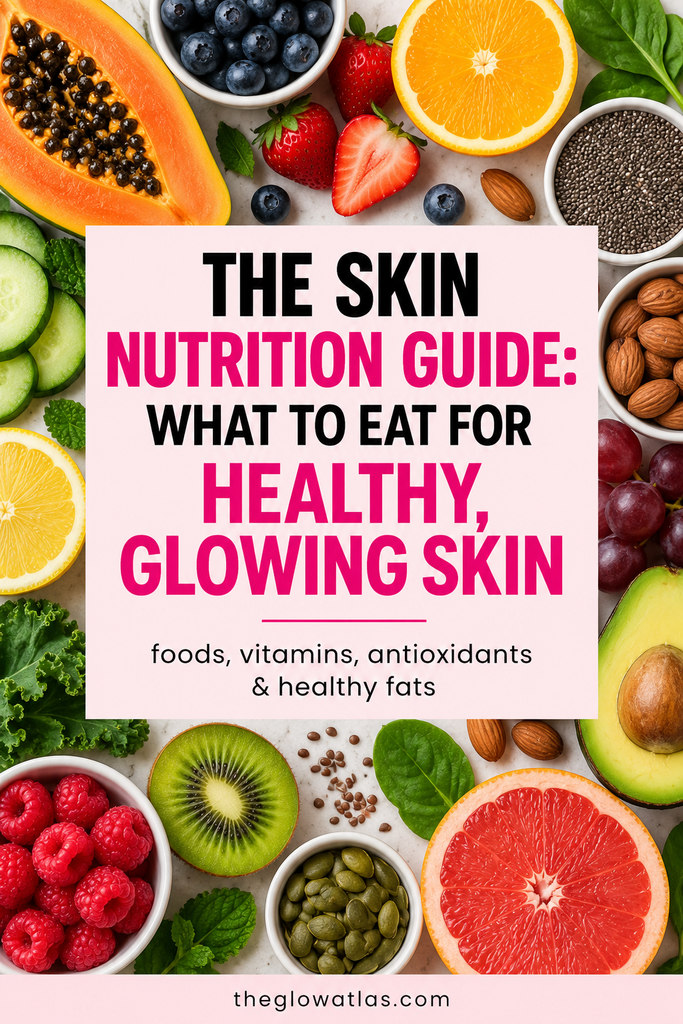
Vitamin C-rich foods include oranges, lemons, grapefruit, guava, kiwi, strawberries, papaya, tomatoes, broccoli and sweet peppers.
Guava deserves a little more attention here. It’s one of those ordinary foods that rarely appears in glamorous skincare content but happens to be a useful vitamin C source.
You don’t need imported superfoods when perfectly good produce is sitting nearby.
For adult women, the recommended dietary amount of vitamin C is generally 75 mg per day, with higher requirements during pregnancy and breastfeeding. Needs also increase for people who smoke.
The easier strategy? Eat fruits and vegetables every day rather than micromanaging milligrams.
Vitamin A: Important, Powerful, and Not Something to Megadose
Vitamin A supports cell growth, immune function and the maintenance of epithelial tissues—the tissues that form surfaces and protective barriers throughout the body.
Skin happens to be one of those barriers.
You can get vitamin A in two broad ways.
Animal foods can provide preformed vitamin A, while many colourful plant foods contain carotenoids such as beta-carotene that your body can convert into vitamin A.
Think sweet potatoes, carrots, pumpkin, spinach, kale and other dark leafy greens.
That orange colour in pumpkin and sweet potatoes isn’t merely decorative. It’s often a clue that carotenoids are present.
This is also where the advice “eat the rainbow” becomes a little less cliché and a little more useful.
One plate might contain dark leafy greens, orange sweet potato, red tomato and beans. No powders. No beauty gummies. Just food doing what food has always done.
There is one major caution, particularly for pregnant women and women who could become pregnant.
High intakes of preformed vitamin A from supplements can be harmful, and excessive amounts during pregnancy can cause birth defects. NIH guidance advises against high-dose preformed vitamin A supplements during pregnancy unless they are being used under appropriate medical guidance. Beta-carotene from foods does not carry the same reproductive toxicity concern.
So vitamin A is a perfect example of why “more vitamins” doesn’t automatically mean “healthier.”
Enough matters. Excess can be a different story.
Vitamin E: Part of Your Antioxidant Defence System
Vitamin E is a fat-soluble antioxidant.
Its job isn’t to make you “glow overnight,” despite what some supplement marketing might suggest. Biologically, vitamin E helps limit oxidative reactions in the body and also participates in immune and cellular functions.
Oxidative stress sounds like something that happens when your laptop crashes five minutes before a deadline.
A different kind of stress.
In biological terms, it involves an imbalance between reactive molecules and the systems the body uses to manage them. Environmental factors such as cigarette smoke, pollution and ultraviolet radiation can contribute to free-radical exposure.
Vitamin E can be found naturally in foods such as sunflower seeds, almonds, peanuts, avocado and plant oils.
An easy approach is to scatter seeds over oatmeal, add groundnuts or nuts to snacks, or include avocado with a meal.
Nothing fancy required.
And remember, antioxidants work as part of a much larger nutritional system. Eating one antioxidant-rich food doesn’t give your skin an invisible force field.
Sunscreen still has a job.
The American Academy of Dermatology recommends broad-spectrum SPF 30 or higher for outdoor protection and stresses that sunscreen remains a central tool for reducing UV-related skin damage.
Zinc: Small Mineral, Serious Workload
Zinc doesn’t get nearly as much beauty-industry attention as collagen, but physiologically, it’s busy.
Zinc is involved in hundreds of enzyme reactions and plays roles in DNA and protein synthesis, cell division, immune function and wound healing. Zinc deficiency can affect the skin and delay wound healing.
Food sources include meat, seafood, poultry, dairy products, beans, nuts, seeds and fortified foods.
Plant-based eaters can still get zinc, though zinc from some plant foods is not absorbed as efficiently because compounds called phytates can reduce absorption.
Does that mean everyone eating beans needs a zinc supplement?
No.
It means dietary variety matters, particularly if you follow a fully plant-based diet or have digestive conditions that affect nutrient absorption.
And high-dose zinc supplementation comes with its own problems. Long-term excessive intake can interfere with copper status, among other effects.
Again, we’re back to the same principle: nutrition isn’t a competition to see who can swallow the largest dose.
Omega-3 Fatty Acids: Skin Needs Fat Too
For years, “fat-free” was treated as the holy grail of healthy eating.
Your skin would disagree.
Fat is essential to normal physiology. Fatty acids form part of cell membranes, and omega-3 fatty acids also contribute to signalling pathways involved in inflammatory processes. Severe essential fatty acid deficiency can produce rough, scaly skin and dermatitis.
Useful omega-3 sources include oily fish such as sardines, salmon, trout, herring and mackerel. Plant sources include chia seeds, flaxseeds and walnuts.
And you don’t need salmon flown halfway around the planet to eat well.
Depending on where you live, local fish may be a far more affordable choice. Small fish eaten regularly can provide valuable protein and fats while fitting into normal family meals.
Omega-3 supplements are heavily marketed for everything from heart health to glowing skin, but supplementation research doesn’t justify treating fish-oil capsules as a universal beauty prescription.
Food first remains a sensible starting point for most healthy adults.
Vitamin D: Important, but Please Don’t Sunbathe for It
Vitamin D plays multiple roles throughout the body, including functions related to bones, immune activity and cell processes.
You’ll find modest amounts naturally in foods such as fatty fish and egg yolks, while some milks, cereals and other products are fortified with vitamin D.
Now, there’s an awkward wrinkle here.
Your skin can produce vitamin D after UV exposure. But deliberately exposing unprotected skin to ultraviolet radiation isn’t considered a safe vitamin D strategy.
The American Academy of Dermatology recommends obtaining adequate vitamin D through food, fortified foods and supplements when medically appropriate rather than intentionally seeking UV exposure, because UV radiation from sunlight and tanning devices increases skin cancer risk.
So no, “I’m getting my vitamin D” isn’t a sunscreen exemption.
If you’re concerned about vitamin D deficiency, especially if you have limited dietary sources or other risk factors, a healthcare professional can advise whether testing or supplementation makes sense.
Selenium: You Need It Just Not Much of It
Selenium is a trace mineral involved in antioxidant defence, thyroid hormone metabolism, DNA synthesis and other processes. It forms part of proteins called selenoproteins, including enzymes that help protect cells from oxidative damage.
Food sources can include fish, seafood, eggs, meat, poultry, grains and certain nuts.
The keyword here is trace.
Your body needs selenium in relatively small amounts. More isn’t necessarily helpful, and excessive selenium intake can be harmful.
This is another reason why casually stacking multivitamins, hair supplements, skin gummies and separate mineral tablets can become messy.
Check labels.
A nutrient may already be hiding in three products you’re taking.
What About Biotin? The Beauty Vitamin With a Bigger Reputation Than Evidence
Walk down a supplement aisle, and you’d think biotin personally invented healthy skin, hair and nails.
The evidence is less dramatic.
Biotin is a B vitamin involved in normal metabolism, and genuine biotin deficiency can cause skin rashes, hair thinning and other symptoms. But deficiency is uncommon in people eating a normal mixed diet. Research supporting high-dose biotin supplements for improving the skin, hair or nails of people who aren’t deficient is limited.
There’s another issue.
High-dose biotin supplements can interfere with certain laboratory tests and produce misleading results, including tests involving some hormones.
Imagine taking a supplement because you want better nails and accidentally complicating your thyroid blood test.
Not exactly the beauty outcome anyone had in mind.
Eggs, fish, meat, seeds and nuts naturally contain biotin, and most people can meet their needs through food.
Iron, Copper and the Supporting Cast
Skin nutrition isn’t really a story about eight celebrity nutrients.
Many minerals and vitamins operate behind the scenes.
Iron supports oxygen transport in the blood and numerous cellular functions. Copper takes part in connective-tissue formation and several enzyme systems. B vitamins contribute to energy metabolism and cellular processes. Nutritional deficiencies can sometimes produce visible changes involving the skin, hair, mouth or nails.
The important word is “sometimes.”
Dry skin doesn’t automatically mean you’re iron deficient. A breakout doesn’t prove you’re missing zinc. Pale skin isn’t enough to diagnose anaemia.
Skin symptoms overlap with dozens of conditions.
If you suspect a nutritional deficiency because of persistent skin changes, fatigue, hair loss, unusual nail changes or other symptoms, medical assessment is far more useful than guessing and buying six supplements online.
Don’t Forget the Plant Compounds That Aren’t Vitamins
Some of the most interesting compounds in nutrition don’t fit neatly into the vitamin-and-mineral category.
Plant foods contain carotenoids, flavonoids, polyphenols and many other phytochemicals. Research continues to investigate how these compounds may influence inflammation, oxidative stress, skin ageing and general health. A 2025 review of nutritional dermatology highlighted nutrients and food compounds including vitamins A, C, D and E, zinc, selenium, fatty acids and polyphenols as areas of interest for skin health.
You don’t need to memorise their chemical names.
Here’s the kitchen version: eat more plants, and vary them.
Tomatoes this week.
Pumpkin tomorrow.
Leafy greens with dinner.
Berries when they’re affordable.
Beans, herbs, fruits, nuts, seeds.
Harvard’s 2026 healthy-diet guidance similarly emphasises vegetables, fruits, legumes, whole grains, nuts and seeds as major sources of vitamins, minerals, fibre and phytochemicals.
That’s much more practical than hunting down the latest “beauty superfood.”
And Yes, Water Matters, but There’s a Catch
You knew hydration would show up eventually.
Water is essential for life and normal body function. Your skin contains water too.
But drinking huge quantities of water doesn’t automatically moisturise dry skin from the inside or replace a damaged skin barrier.
If your skin feels tight and flaky after every shower, your solution may have more to do with hot water, harsh cleansers, dry air or inadequate moisturiser than with carrying a four-litre bottle everywhere.
Drink enough fluids to meet your body’s needs. More isn’t automatically better.
For the skin itself, topical moisturiser and sensible bathing habits remain important because they directly address water loss through the skin barrier.
Sometimes skincare really is skincare.
So What Should a Skin-Supportive Plate Look Like?
You don’t need a separate “skin diet.”
That’s probably the most useful thing to remember.
A dietary pattern that supports overall health tends to supply many of the same nutrients your skin needs.
Picture a regular plate.
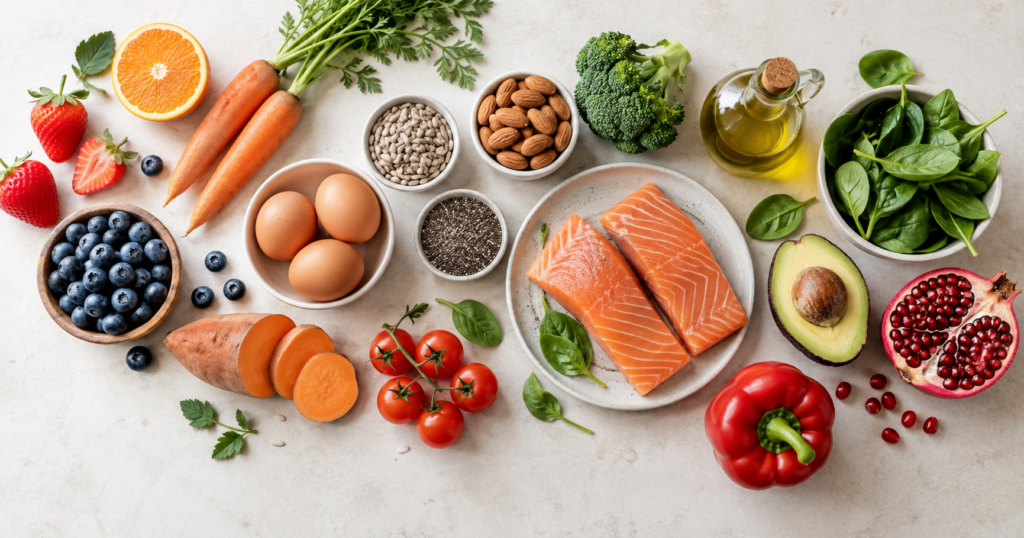
Start with a protein source, fish, chicken, eggs, beans, lentils, tofu or yoghurt.
Add vegetables, ideally with some colour variation.
Include a satisfying carbohydrate such as potatoes, sweet potatoes, rice, oats or whole grains.
Then add a source of healthy fat, which might be avocado, seeds, nuts, groundnuts, olive oil or fish.
Finish with fruit when it fits.
That’s it.
You’re not preparing a dermatology prescription. You’re eating dinner.
Consistency matters far more than whether Tuesday’s lunch contained the latest viral ingredient.
A Realistic Day of Eating for Skin Nutrition
Breakfast could be oatmeal cooked with milk or fortified plant milk, topped with banana, groundnuts and seeds. Add an egg if you want more protein.
Lunch might be beans with rice or another grain, leafy greens, tomatoes and avocado.
For a snack, yoghurt with fruit works well, as does a piece of fruit with nuts or roasted groundnuts.
Dinner could include fish with sweet potato and mixed vegetables.
Notice what’s missing?
No chlorophyll drops.
No collagen-infused coffee requirement.
No cupboard containing twelve beauty powders.
A normal varied diet can deliver protein, essential fats, vitamin A precursors, vitamin C, vitamin E, zinc, selenium and many other nutrients across the day.
That matters because nutrients don’t operate in isolation. They’re more like a project team than individual freelancers. Protein metabolism interacts with vitamins. Vitamin C assists plant-based iron absorption. Dietary fat helps the body absorb fat-soluble vitamins.
Food brings these components together naturally.
But Can Supplements Improve Your Skin?
Sometimes.
That’s not the same as saying everyone needs them.
The American Academy of Dermatology advises otherwise healthy adults to aim to meet nutritional needs through a balanced diet. Supplements may be appropriate when a clinician identifies a deficiency or another medical reason for supplementation.
Research into collagen, fatty acids, antioxidants and other oral interventions is growing. For example, a 2025 systematic review and meta-analysis found improvements in some measures of skin ageing and hydration with several dietary interventions, including collagen, fatty acids and polyphenols. However, results vary between interventions, formulations and studies, and the findings don’t turn every supplement product into a proven treatment.
Supplement marketing is much tidier than nutrition science.
Marketing says: take this gummy and glow.
Science says: well, which ingredient, what dose, which population, what outcome, for how long, and compared with what?
Not quite as catchy.
There’s also a safety issue. Supplements can interact with medications, provide excessive amounts of nutrients, affect laboratory testing or contain combinations you don’t actually need. Dermatologists recommend discussing supplements with a qualified healthcare professional when there are medical conditions, medications or concerns about deficiency.
This is especially important during pregnancy and breastfeeding.
The Bigger Picture: Diet Helps, but It Can’t Do Everything
You could eat vegetables at every meal and still get acne.
You could eat oily fish regularly and still have eczema.
You could meet every vitamin recommendation and still develop hyperpigmentation, rosacea or another skin condition.
Nutrition is one piece of skin health, not the whole puzzle.
Genetics matter.
Hormones matter.
Medications matter.
Stress and sleep can matter.
Climate matters.
Skin conditions matter.
And UV exposure certainly matters.
For most people, a sensible skin-health routine still includes gentle cleansing, regular moisturiser when needed and broad-spectrum sunscreen during UV exposure.
Food supports the system from within. Skincare protects and manages the surface. Medical treatment addresses conditions that need more than either one.
Those approaches can coexist perfectly well.
When Your Skin Might Be Telling You Something More
Occasional dryness or a random breakout isn’t usually a reason to start investigating vitamin deficiencies.
But persistent or unexplained changes deserve attention.
Skin, hair and nail changes can sometimes be clues to underlying health problems, nutritional deficiencies, medications or dermatological conditions. The American Academy of Dermatology notes that dermatologists can sometimes identify signs of broader health issues through changes in the skin, hair and nails.
If you’re experiencing persistent rashes, poor wound healing, significant hair loss, unexplained bruising, dramatic changes in pigmentation, sores that don’t heal or other symptoms that concern you, speak with a healthcare professional.
Don’t try to diagnose yourself from TikTok comments.
Your skin deserves better investigative work than that.
Foods Worth Keeping Around
Instead of building your grocery list around individual nutrients, think in groups.
Keep some colourful vegetables and fruit around. Buy eggs, beans, lentils, fish, yoghurt, or whatever protein foods fit your budget and eating style. Include nuts, seeds, avocado or other healthy-fat sources. Choose whole or minimally processed foods often while leaving room for normal life.
Because normal life includes birthday cake.
And chips.
And those evenings when dinner is whatever can be assembled in eight minutes.
Healthy eating doesn’t stop working because one meal wasn’t nutritionally impressive.
Dietary patterns matter more than individual “perfect” meals.
What Healthy Skin Nutrition Really Comes Down To
Your skin doesn’t need a glamorous diet.
It needs adequate nutrition.
Protein gives the body building materials for tissues. Vitamin C helps make collagen. Vitamin A supports normal epithelial tissue. Vitamin E participates in antioxidant defence. Zinc contributes to wound healing and cellular function. Omega-3 and other essential fats help form cell membranes. Selenium supports antioxidant systems. A varied diet also supplies B vitamins, minerals and plant compounds that participate in countless processes behind the scenes.
The practical lesson is almost boring, and that’s probably why it works.
Eat enough.
Eat varied foods.
Eat vegetables and fruit regularly.
Include protein.
Don’t fear healthy fats.
Don’t assume supplements are automatically safer or more effective because they come in pretty packaging.
And keep wearing your sunscreen.
Healthy skin isn’t built by one “glow food.” It’s supported by hundreds of small choices repeated over time.
A nourishing breakfast here. Vegetables added to dinner there. Fish this week. Fruit instead of skipping lunch altogether. A handful of nuts tossed into your bag before work.
Nothing dramatic.
But your skin, and the rest of your body, gets the materials it needs to keep doing its job.
And really, that’s the goal.
This article is for general educational purposes and isn’t a substitute for personalised medical or nutrition advice. If you suspect a nutrient deficiency, are pregnant or breastfeeding, take medication, or have a persistent skin condition, speak with a qualified healthcare professional before starting high-dose supplements.