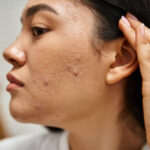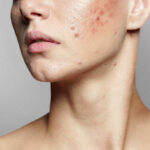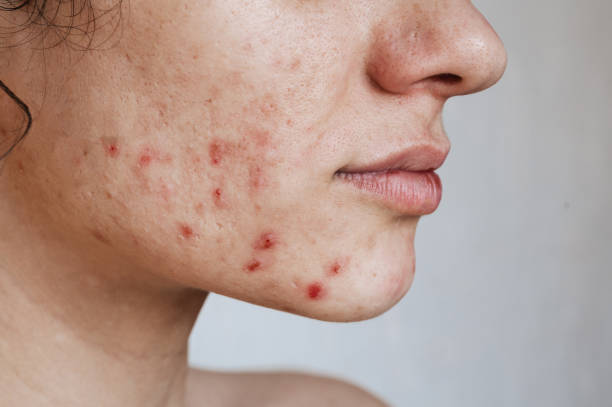

If your skin seems to behave perfectly for a few weeks and then suddenly erupts around your chin, jawline, or cheeks, you may be dealing with hormonal acne.
And no, it isn’t necessarily because you ate chocolate yesterday, forgot to wash your face one night, or “aren’t taking care of your skin.”
Hormonal acne can be stubborn. It can show up in your 20s, 30s, or even later, long after you thought your teenage acne days were behind you. For someone juggling lectures, deadlines, meetings, childcare, commutes, and everything else on the calendar, recurring breakouts can feel like one more thing you really don’t have time for.
Here’s the thing: hormonal acne isn’t simply a skincare problem. Hormonal fluctuations can influence oil production, inflammation, and how easily pores become clogged. That’s why washing your face harder or adding five new products to your routine often doesn’t solve the underlying issue.
The good news? Hormonal acne can be managed.
The trick is understanding what you’re actually dealing with and choosing treatment based on the type and severity of your acne—not whatever happens to be trending on social media.
What Is Hormonal Acne?
Hormonal acne is acne influenced by changes in hormone activity, particularly androgens such as testosterone.
Androgens can stimulate the sebaceous glands, which produce sebum, or skin oil. When oil production increases, pores can become more easily clogged with oil and dead skin cells. Inflammation can then turn those clogged pores into red, swollen pimples.
Hormones aren’t the only cause of acne, though.
Acne develops through several connected processes, including excess oil production, clogged hair follicles, inflammation, and the activity of Cutibacterium acnes, a bacterium associated with acne.
So when people say “it’s hormonal,” that doesn’t mean hormones are the entire story. They may be an important driver.
This distinction matters because hormonal acne often needs more than a stronger cleanser.
The American Academy of Dermatology notes that women with stubborn acne affecting the lower face, jawline, and neck may respond well to hormonal treatments such as certain combined oral contraceptives or spironolactone. Predictable breakouts around menstruation are another common clue.
What Does Hormonal Acne Look Like?
Hormonal acne doesn’t have one universal appearance. Still, there are some patterns worth noticing.
Common signs include:
- Deep, tender pimples
- Cysts or nodules
- Breakouts around the chin and jawline
- Acne on the lower cheeks or neck
- Pimples that flare before or during your period
- Repeated breakouts in roughly the same areas
- Acne that continues into adulthood
- Acne that doesn’t respond well to basic over-the-counter products
- Increased oiliness around the same time as breakouts
The classic pattern is often the lower third of the face.
Think chin. Jawline. Around the mouth. Sometimes the neck.
But don’t treat that location as a diagnosis by itself. Acne in these areas can have other causes too.
Some people also develop hormonal acne on the chest, shoulders, and back.
And then there’s the frustrating part: a breakout may seem to appear overnight. In reality, acne lesions can develop beneath the surface before you notice the visible spot.
So that enormous, painful chin pimple you discover before an important presentation probably didn’t decide to ruin your morning at 7:42 a.m.
It was already developing.
Why Does Hormonal Acne Happen?
Let’s talk hormones without turning this into a biology lecture.
1. Androgens can increase oil production
Androgens are hormones that are present in everyone, although levels and effects vary.
They can stimulate the sebaceous glands. More sebum can make the skin more prone to clogged pores and acne.
You don’t necessarily need to have unusually high hormone levels to experience hormonal acne. Sometimes the issue is how sensitive your skin is to normal hormonal changes.
2. Your menstrual cycle can influence breakouts
Many women notice that acne appears at a predictable point in their cycle.
For example, you might have relatively calm skin for most of the month and then notice several painful spots a few days before your period.
If you’ve noticed this pattern repeatedly, it’s useful information.
Your skin may be giving you a monthly memo.
3. Hormonal contraception can affect acne
Hormonal contraception can change acne in different ways depending on the formulation and the individual.
Some combined oral contraceptives can help reduce acne. Certain other hormonal contraceptive options may not have the same effect.
This is one reason you shouldn’t start, stop, or switch contraception solely because of an acne trend on TikTok or Instagram.
Your overall health, pregnancy plans, medical history, and risk factors matter.
NICE guidance notes that if someone with acne wants hormonal contraception, a combined oral contraceptive may be considered in preference to a progestogen-only pill, depending on the person’s circumstances.
4. Conditions such as PCOS can play a role
Persistent adult acne can sometimes occur alongside polycystic ovary syndrome (PCOS).
PCOS is a hormonal condition that can involve irregular periods, increased androgen activity, excess facial or body hair, oily skin, and acne.
However, having acne does not automatically mean you have PCOS.
Likewise, not everyone with PCOS has every classic symptom.
The American College of Obstetricians and Gynaecologists lists severe acne or acne that begins after adolescence and doesn’t respond to usual treatment among possible PCOS symptoms, along with signs such as irregular menstrual periods and excess hair growth.
If several of these symptoms are occurring together, it’s worth discussing them with a qualified healthcare professional.
Hormonal Acne vs. Regular Acne: What’s the Difference?
Here’s where things get a little less black and white.
There isn’t a simple home test that says, “Congratulations, this is definitely hormonal acne.”
Most acne is influenced by multiple factors.
Still, the pattern can offer clues.
| Feature | Hormonal-pattern acne | Other acne patterns |
|---|---|---|
| Common location | Chin, jawline, lower face, neck | Can occur anywhere |
| Timing | May worsen around menstruation | May not follow a cycle |
| Lesion type | Often deep, tender bumps or cysts | May include blackheads, whiteheads and inflammatory pimples |
| Age | Often persists into adulthood | Common during adolescence too |
| Recurrence | Can return in predictable areas | May be more random |
| Response to basic skincare | May remain stubborn | Some mild acne improves with topical care |
The important word here is pattern.
One jawline pimple doesn’t mean your hormones are out of balance.
A recurring pattern of painful lower-face acne that flares around your period is more suggestive.
The Most Common Hormonal Acne Triggers
Hormones may be the main driver, but everyday life can still influence how your skin behaves.
Stress
Stress doesn’t magically create acne out of thin air, but it can interact with hormonal and inflammatory pathways and make existing acne harder to manage.
And let’s be honest, students, professionals, and parents aren’t exactly living in a stress-free bubble.
Deadlines, exams, work pressure, poor sleep, family responsibilities, and financial worries can all pile up.
That doesn’t mean you need to “relax more” as your acne treatment.
You need realistic strategies.
Poor or irregular sleep
Sleep won’t cure hormonal acne, but consistently poor sleep can affect overall health and make it harder to stick with a sensible treatment routine.
If you’re exhausted, it’s much easier to skip your evening routine, pick at your skin, or fall into the “I’ll fix everything tomorrow” cycle.
Tomorrow has a habit of becoming next Monday.
Certain medications
Some medicines can contribute to acne or acne-like eruptions.
If your acne suddenly changes after starting a medication, don’t stop the medication on your own. Speak with the prescribing clinician.
Skin and hair products
Heavy, pore-clogging products may worsen acne in some people.
This can be especially relevant if you’re using oils, styling products, makeup, sunscreen, or moisturisers that aren’t suited to acne-prone skin.
Look for products labelled non-comedogenic when possible.
Picking and squeezing
That satisfying little squeeze?
Usually not worth it.
Picking can increase inflammation and raise the risk of scarring and lingering dark marks.
And if you have a big event tomorrow, squeezing a painful spot tonight can turn a manageable pimple into a swollen red disaster.
Your future self may not thank you.
How to Treat Hormonal Acne
Treatment depends on your acne type, severity, skin sensitivity, pregnancy plans, other medications, and health history.
There isn’t one magic hormonal acne routine that works for everyone.
A good treatment plan often combines topical skincare with, when appropriate, prescription treatment.
Start with a simple skincare routine
You don’t need twelve products.
For many acne-prone people, a basic routine includes:
Morning
- Gentle cleanser
- Acne-friendly treatment if recommended
- Lightweight moisturizer
- Broad-spectrum sunscreen
Evening
- Gentle cleanser
- Acne treatment
- Moisturizer
That’s it.
You can add other products later if there’s a reason to.
The goal is not to make your bathroom shelf look like a dermatology clinic.
Salicylic acid
Salicylic acid helps exfoliate inside pores and can be useful for acne, especially blackheads and clogged pores.
It can be helpful for oily or combination skin, but more isn’t necessarily better.
If your skin becomes dry, tight, burning, or irritated, reduce frequency.
Benzoyl peroxide
Benzoyl peroxide can reduce acne-causing bacteria and inflammation.
It’s commonly used as part of acne treatment plans and may be particularly useful for inflammatory acne.
It can be drying and may bleach fabrics, so be careful with towels, pillowcases, and clothing.
Retinoids
Topical retinoids such as adapalene help prevent clogged pores and treat acne.
They can be highly useful for ongoing acne management, but they can also irritate when you start.
Begin gradually if appropriate, moisturise, and give your skin time to adjust.
Important: topical retinoids should not be used during pregnancy, and NICE specifically advises that people who are pregnant or planning pregnancy avoid topical retinoids.
If you’re pregnant, trying to conceive, or unsure about pregnancy, speak with a healthcare professional before using acne medication.
Azelaic acid
Azelaic acid can help with acne and may also be useful when dark marks remain after breakouts.
This can be particularly valuable for people whose biggest frustration isn’t just the pimple itself but the brown or dark spot that hangs around afterwards.
The AAD includes azelaic acid among evidence-based topical acne treatment options.
Hormonal Treatments for Acne
When acne follows a strong hormonal pattern, a dermatologist or other qualified healthcare professional may discuss hormonal treatment.
Two commonly used options for women are combined oral contraceptives and spironolactone.
Combined oral contraceptives
Certain combined birth-control pills can improve acne.
They work partly by reducing the hormonal stimulation that contributes to excess sebum and acne formation.
But the pill isn’t suitable for everyone.
Your healthcare professional may need to consider factors such as:
- Smoking
- High blood pressure
- Migraine history
- Cardiovascular disease
- History of blood clots
- Pregnancy or plans for pregnancy
- Other medications and health conditions
The AAD notes that some combined oral contraceptives are FDA-approved for acne treatment and that medical history should be considered before prescribing them.
So if you’re considering the pill specifically for acne, have that conversation with a clinician rather than borrowing someone else’s prescription.
Spironolactone
Spironolactone is a prescription medication that can be useful for hormonal acne in women.
Although it was originally used for conditions such as high blood pressure and fluid retention, dermatologists also use it for acne because of its anti-androgen effects.
It can be especially useful for stubborn acne affecting the lower face, jawline, and neck.
The AAD reports that improvement can begin within several weeks, although acne treatment generally requires patience and ongoing follow-up.
Possible side effects include:
- Irregular periods
- Breast tenderness
- Breast enlargement
- Increased urination
- Fatigue
- Headache
- Dizziness
Spironolactone requires medical supervision. It can also cause serious problems during pregnancy, so people who can become pregnant need appropriate pregnancy prevention while taking it.
Don’t start it because your favorite skincare creator says it “changed her skin.”
Prescription medication isn’t a serum.
What About PCOS-Related Acne?
If hormonal acne appears alongside irregular periods, excess facial hair, or other signs of androgen excess, PCOS may need to be considered.
This doesn’t mean you should diagnose yourself.
Instead, look at the bigger picture.
For example:
Acne + irregular periods + increased facial hair
is more clinically interesting than acne alone.
If PCOS is diagnosed, acne can still be treated using standard acne therapies. NICE recommends starting with usual first-line acne treatment and considering hormonal treatment in appropriate cases when initial treatment isn’t effective.
If you suspect PCOS, a doctor or gynaecologist can assess your symptoms and decide whether further evaluation is appropriate.
Can Diet Cause Hormonal Acne?
This is one of those areas where social media gets ahead of the evidence.
You may see someone claiming that cutting dairy, sugar, gluten, seed oils, or basically everything enjoyable “fixed” their hormones.
Be careful.
Diet may influence acne for some people, but the evidence isn’t strong enough to recommend a universal acne diet. The AAD’s updated acne guidance found insufficient evidence to make a recommendation for dietary changes as an acne treatment.
That doesn’t mean food is irrelevant.
A balanced diet is important for overall health. But you don’t need to panic every time you eat a piece of cake.
And you definitely don’t need to starve yourself into clearer skin.
If you suspect a particular food consistently triggers your acne, keep a simple food-and-skin diary and discuss the pattern with a healthcare professional or registered dietitian.
Does Stress Cause Hormonal Acne?
Stress is another complicated one.
Stress doesn’t mean your hormones are “broken.”
But stress can interact with biological processes involved in inflammation and oil production, and stressful periods often come with other acne-unfriendly habits—less sleep, more touching your face, skipped skincare, and irregular meals.
Imagine your skin routine as a small project at work.
You don’t need a 30-step project plan.
You need something you can actually execute when the week gets chaotic.
A simple routine you follow consistently usually beats an elaborate routine you abandon after five days.
How Long Does Hormonal Acne Take to Improve?
This is where patience becomes part of the treatment.
Acne rarely disappears in three days.
Depending on the treatment, noticeable improvement can take weeks to months.
The AAD notes that people using hormonal therapy may need around two to three months to see meaningful improvement with oral contraceptives, while spironolactone may begin reducing breakouts and oiliness within several weeks.
NICE recommends a 12-week course for several first-line acne treatment options before assessing the response.
So don’t switch products every four days because your skin hasn’t transformed.
That’s how people end up with irritated skin and no clear idea what actually works.
Think in quarters, not days.
What Not to Do for Hormonal Acne
A few habits can make acne harder to manage.
Don’t scrub aggressively
Acne isn’t dirt.
Scrubbing harder doesn’t remove the hormonal component, and harsh friction can irritate the skin.
Don’t dry your skin out
There’s a common belief that oily acne-prone skin needs to be stripped until it feels squeaky clean.
Not necessarily.
Over-drying can make your routine harder to tolerate and may lead to more irritation.
Don’t change everything at once
If you introduce five new products simultaneously and your face reacts, you’ll have no idea which product caused the problem.
Change one major variable at a time when possible.
Don’t squeeze deep cysts
Deep acne lesions are particularly prone to inflammation and scarring.
If a painful cyst isn’t responding, a dermatologist may have options such as an intralesional corticosteroid injection for selected lesions.
Don’t use antibiotics forever
Oral antibiotics can be useful for some types of moderate-to-severe acne, but they aren’t usually a permanent solution.
Acne treatment should be reviewed and adjusted by a healthcare professional.
When Should You See a Dermatologist?
You don’t need to wait until your acne becomes severe before seeking professional help.
Consider making an appointment if:
- Your acne is painful or deep
- You’re developing scars
- Breakouts keep returning despite consistent treatment
- Acne is affecting your confidence or mental wellbeing
- Your acne suddenly becomes much worse
- You have irregular periods alongside acne
- You notice new excess facial or body hair
- Over-the-counter products aren’t helping
- You’re unsure whether your acne is actually hormonal
- You are considering prescription treatment
Acne can affect quality of life, and clinical guidelines recognise the emotional and psychological impact of the condition.
You don’t have to earn the right to see a dermatologist by having “bad enough” skin.
If it’s bothering you, that’s enough reason to ask for help.
Hormonal Acne and Pregnancy
Pregnancy changes the skincare conversation.
Some acne medications that are commonly used outside pregnancy are not appropriate during pregnancy or while trying to conceive.
For example, NICE states that topical retinoids and oral tetracyclines are contraindicated during pregnancy and when planning pregnancy.
This is especially important if you’re a busy mother planning another pregnancy or you’re already pregnant and suddenly experiencing hormonal breakouts.
Don’t assume that a product is safe because it’s available over the counter.
Check the active ingredients and ask your healthcare professional.
Pregnancy is not the time for experimentation.
How to Build a Practical Hormonal Acne Routine
If you’re working full-time, studying, raising children, or doing all three, your routine needs to be realistic.
Here’s a simple framework.
Morning
Cleanse
Use a gentle cleanser that doesn’t leave your skin painfully tight.
Treat
Use your prescribed or chosen acne treatment.
Moisturize
Choose a lightweight, non-comedogenic moisturiser.
Protect
Use broad-spectrum sunscreen.
Sunscreen matters even when you’re mainly worried about acne because inflammation and acne lesions can leave dark marks that become more noticeable with UV exposure.
Evening
Cleanse
Remove makeup, sunscreen, sweat, and the day’s grime.
Treat
Apply your acne medication as directed.
Moisturize
Support your skin barrier.
And then go to bed.
Seriously.
You don’t need to spend another 45 minutes researching a new toner.
A Weekly Check-In Can Help
Instead of staring at your face in the mirror every morning wondering whether your skin looks better, take a more objective approach.
Once a week, ask:
- How many new inflammatory spots appeared?
- Are they less painful?
- Are breakouts following my menstrual cycle?
- Is my skin becoming more irritated?
- Am I developing new dark marks or scars?
- Have I actually been consistent with treatment?
Taking occasional photos under similar lighting can also help you see changes that are difficult to notice day to day.
This is especially useful because acne improvement tends to be gradual.
You might not notice the difference on Tuesday.
Three months later, you might.
Frequently Asked Questions About Hormonal Acne
Is hormonal acne only found on the jawline?
No. The jawline and lower face are common areas, but hormonal-pattern acne can also appear on the cheeks, neck, chest, shoulders, and back.
Location is a clue, not a diagnosis.
Can you have hormonal acne without PCOS?
Yes.
PCOS is one possible cause of hormonal imbalance associated with acne, but many people with hormonal-pattern acne don’t have PCOS.
Can hormonal acne start after age 25?
Absolutely.
Adult acne is common, and hormonal fluctuations can contribute to breakouts well beyond the teenage years.
Does hormonal acne ever go away?
It can improve significantly, but the course varies from person to person.
Hormonal changes, medications, pregnancy, contraception, age, and underlying health conditions can all affect acne.
Some people need ongoing maintenance treatment.
Does drinking more water cure hormonal acne?
No.
Hydration is important for general health, but drinking large amounts of water isn’t a proven cure for hormonal acne.
Should I stop eating dairy?
Not automatically.
Current acne guidelines don’t support a universal diet that everyone with acne should follow, and evidence isn’t strong enough to recommend dietary changes as a standard acne treatment.
Can skincare alone treat hormonal acne?
Sometimes, particularly when acne is mild.
But stubborn, deep, recurring hormonal-pattern acne may require prescription treatment.
Is spironolactone safe?
Spironolactone can be an effective acne treatment when prescribed and monitored appropriately, but it isn’t suitable for everyone. Pregnancy considerations, other medications, medical conditions, and potential side effects all matter.
How quickly can hormonal acne improve?
Give treatment time.
Many acne therapies require several weeks to months before their full benefit becomes clear. NICE commonly recommends evaluating first-line acne treatments over a 12-week course.
The Bottom Line
Hormonal acne can feel unpredictable, but it usually isn’t random.
If your breakouts repeatedly appear around your chin and jawline, become painful before your period, or continue despite a sensible skincare routine, hormones may be playing a role.
But don’t fall into the trap of assuming every adult pimple is caused by “bad hormones.”
Acne is a multifactorial condition.
The most useful approach is to look at the whole picture: your breakout pattern, menstrual cycle, medications, skincare routine, symptoms, medical history, and how severe the acne is.
For mild acne, evidence-based topical treatments such as benzoyl peroxide, salicylic acid, retinoids, or azelaic acid may help. For persistent hormonal-pattern acne, a dermatologist may discuss options such as combined oral contraceptives or spironolactone.
And if acne comes with irregular periods, excess facial hair, or other signs of androgen excess, don’t ignore the bigger picture. Conditions such as PCOS may need to be assessed.
Most importantly, don’t let acne convince you that your skin is somehow failing you.
Your skin is responding to biology, not judging your appearance.
A good treatment plan isn’t about chasing perfectly clear skin overnight. It’s about finding something evidence-based, tolerable, and realistic enough to keep doing when life gets busy.
And yes, life will get busy.
Your skincare routine should be able to survive that too.