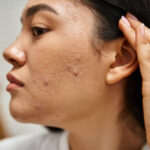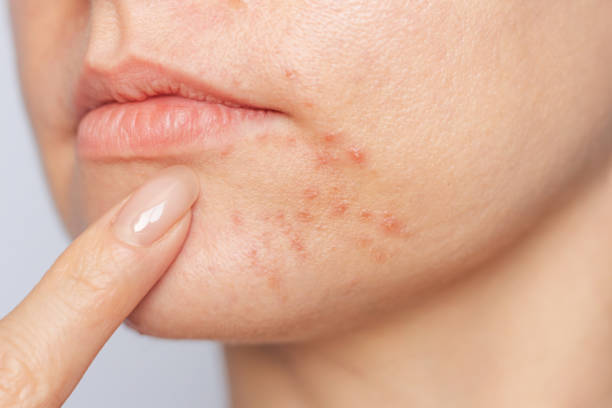

Waking up to a new breakout is frustrating. Finding another spot before an important meeting, class, date, family event, or presentation? Even worse.
And if you’ve tried three different cleansers, a homemade face mask, a drying spot treatment, and perhaps even toothpaste, you might be wondering: Why won’t my acne go away?
Here’s the thing. Acne isn’t a sign that you’re dirty, lazy, or doing something wrong.
Acne develops when hair follicles become blocked with oil and dead skin cells. Inflammation and changes in the skin’s normal bacteria can then contribute to pimples, blackheads, whiteheads, nodules, and cysts. Hormones also play a major role, which is one reason acne can continue well beyond the teenage years.
The good news? Acne can usually be controlled with the right treatment and a little patience.
The trick isn’t finding the harshest product on the shelf. It’s finding a routine that targets the causes of acne without constantly irritating your skin.
So, let’s make this simple.
First, Why Do You Get Acne?
Before talking about how to get rid of acne, it helps to understand what’s actually happening under the skin.
Think of each hair follicle as a tiny doorway.
Your sebaceous glands produce sebum, an oily substance that helps keep your skin and hair from becoming too dry. When your skin produces excess sebum and dead skin cells build up, that tiny follicle can become blocked.
A closed blockage can form a whitehead. An open blockage can become a blackhead. If inflammation develops, you may get red pimples, pustules, nodules, or cysts.
Several things can influence this process, including:
- Hormonal changes
- Genetics
- Excess oil production
- Dead skin cell buildup
- Certain medications
- Some cosmetic or hair products
- Stress and lifestyle factors
- Diet patterns in some people
And no, acne isn’t simply caused by having “dirty skin.”
In fact, washing your face too often or scrubbing aggressively can irritate your skin and make things worse.
That’s an important distinction.
Clean skin and healthy skin aren’t always the same thing.
Your goal isn’t to strip every trace of oil from your face. Your goal is to keep pores clear while protecting your skin barrier.
Step 1: Figure Out What Kind of Acne You Have
Not every breakout needs the same treatment.
Blackheads
These are small, dark-looking spots caused by open clogged pores.
The dark colour isn’t simply dirt. It develops when the material inside the pore reacts with air.
Ingredients that help unclog pores, such as retinoids and salicylic acid, can be useful here.
Whiteheads
Whiteheads form when a clogged follicle remains closed at the surface.
Again, ingredients that help prevent clogged pores can make a difference.
Papules and pustules
These are the red, inflamed spots most people think of when they hear “acne.”
Pustules may contain visible pus.
Benzoyl peroxide and retinoids are among the treatments dermatologists commonly use for acne.
Nodules and cysts
These are deeper, painful lesions that can feel hard or tender beneath the skin.
This is where things change.
If you’re getting lots of painful nodules or cysts, don’t keep buying stronger over-the-counter products and hoping for a miracle. Severe acne can cause permanent scarring and often needs prescription treatment.
Step 2: Build a Simple Morning Acne Routine
You don’t need a 12-step skincare routine.
Honestly, if you’re rushing to work at 7:30 a.m. or trying to get children ready for school, a 12-step routine isn’t exactly realistic.
Keep your morning routine simple.
1. Use a gentle cleanser
Wash your face with a gentle cleanser.
You don’t need to scrub until your skin feels “squeaky clean.” That tight feeling isn’t proof that the cleanser worked. It may simply mean you’ve removed too much of the skin’s natural oil.
If your skin becomes very dry or irritated after cleansing, consider switching to a gentler product.
2. Add one acne treatment
Depending on your skin and the type of acne you’re dealing with, this might include:
- Benzoyl peroxide
- Salicylic acid
- Azelaic acid
- Another treatment recommended by a healthcare professional
Don’t throw everything onto your face at once.
More products don’t automatically mean faster results.
In fact, piling several irritating ingredients together can leave you with redness, peeling, burning, and a damaged skin barrier.
3. Moisturize
Yes, even if you have oily skin.
Acne-prone skin still needs moisture.
Look for a lightweight, non-comedogenic moisturiser if heavier products tend to clog your pores.
4. Finish with sunscreen
Use a broad-spectrum sunscreen with SPF 30 or higher, particularly if you’re using acne treatments that can increase sensitivity or if you have dark marks after breakouts. The American Academy of Dermatology recommends non-comedogenic sunscreen as part of acne-friendly skin care.
This step matters for another reason.
You may clear the pimple only to be left with a stubborn dark mark. Protecting your skin from UV exposure can help reduce additional discolouration.
Step 3: Build an Evening Routine
Nighttime is where many acne routines become unnecessarily complicated.
You don’t need to turn your bathroom counter into a laboratory.
Try this:
Cleanser → acne treatment → moisturizer
That’s the basic framework.
If you’re using a topical retinoid such as adapalene, it’s generally applied in the evening. Retinoids help prevent clogged pores and can treat blackheads, whiteheads, and some pimples.
But start carefully.
Retinoids can cause dryness, peeling, irritation, and stinging, especially when you first begin treatment. Applying more won’t make acne disappear faster.
A thin layer is enough.
And there’s an important exception: topical retinoids should not be used during pregnancy because of potential fetal risk. If you’re pregnant, trying to become pregnant, or unsure whether a particular acne treatment is appropriate, speak with a healthcare professional before using it.
The Acne-Fighting Ingredients Worth Knowing
Skincare labels can feel like they’re written in another language.
Let’s translate the important ones.
Benzoyl Peroxide
Benzoyl peroxide is one of the most established acne treatments.
It helps reduce acne-causing bacteria and also has anti-inflammatory effects. It’s especially useful for inflammatory pimples.
You can find it in washes, gels, and creams.
If you’re new to it, starting with a lower concentration may help reduce irritation. The American Academy of Dermatology notes that 2.5% benzoyl peroxide can be a useful starting strength for mild-to-moderate adult acne.
One small annoyance: benzoyl peroxide can bleach fabrics.
So don’t use your favourite expensive pillowcase immediately after applying it.
Adapalene
Adapalene is a topical retinoid that helps keep pores from becoming clogged.
It’s particularly useful for blackheads, whiteheads, and pimples and may also be used as maintenance treatment after acne improves.
It can irritate your skin at first, so consistency matters more than quantity.
Salicylic Acid
Salicylic acid helps exfoliate the skin and unclog pores.
It’s often useful for blackheads, whiteheads, and some mild acne.
But here’s a common mistake: using a strong salicylic acid cleanser, exfoliating toner, scrub, and acne mask all in the same routine.
That’s not a skincare strategy.
That’s a skin barrier SOS.
Azelaic Acid
Azelaic acid is another useful option.
It can help unclog pores, reduce inflammation, address acne-causing bacteria, and improve the appearance of dark marks left after acne.
This makes it particularly interesting for people who are dealing with both breakouts and post-acne discolouration.
What About Hormonal Acne?
If your acne seems to arrive on a schedule, hormones may be part of the story.
Some women notice breakouts around their menstrual cycle, particularly around the lower face, jawline, or chin.
Hormonal factors can also contribute to adult acne.
If you’re suddenly developing acne as an adult, especially alongside irregular periods or increased facial or body hair, it’s worth discussing the pattern with a healthcare professional. These symptoms can sometimes point to an underlying hormonal issue.
Hormonal treatments may be appropriate for some women.
Depending on the individual, healthcare professionals may consider treatments such as combined oral contraceptives or spironolactone. The American Academy of Dermatology includes both among recommended systemic options for selected patients.
This isn’t a situation for social-media diagnosis, though.
Your skin may be giving you a clue, but a clinician needs to interpret it in context.
Don’t Make These Acne Mistakes
Sometimes the problem isn’t that you’re doing too little.
You’re doing too much.
Stop picking your pimples
I know.
That little whitehead looks like it is practically begging to be squeezed.
Don’t.
Picking and squeezing can worsen inflammation and increase the risk of scarring.
If you absolutely cannot leave a spot alone, an acne patch can serve as a physical reminder to keep your fingers away.
Don’t scrub aggressively
A rough scrub won’t physically scrub acne out of your pores.
Your skin isn’t a dirty frying pan.
Aggressive scrubbing can irritate the skin and worsen inflammation.
Don’t use toothpaste
This one refuses to disappear from the internet.
Toothpaste isn’t a recommended acne treatment. It contains ingredients designed for teeth, not facial skin, and can cause irritation and damage.
Keep the toothpaste on your toothbrush.
Your face will thank you.
Don’t change products every three days
This is one of the biggest problems with acne routines.
You try a new cleanser.
Three days later, nothing.
So you add another serum.
A week later, you buy a new cream.
Then another.
Now your skin is irritated, and you have no idea which product caused what.
Acne treatment usually takes time. Depending on the treatment, improvement can take several weeks, and many treatment plans are assessed over roughly 8 to 12 weeks.
Think of it like a work project.
You can’t change the strategy every morning and then complain that you don’t have meaningful performance data.
Give an appropriate treatment time to work.
Does Diet Cause Acne?
This question comes up constantly.
The honest answer is more nuanced than “chocolate causes pimples.”
The American Academy of Dermatology’s current acne guideline notes that evidence was insufficient to make a recommendation for dietary changes as an acne treatment.
That doesn’t mean diet can never matter.
Some research has linked high-glycemic dietary patterns with acne, and the NHS lists high-GI diets among possible acne triggers.
But don’t suddenly cut out half your diet because someone on TikTok said dairy is destroying your skin.
Instead, pay attention to patterns.
If you notice that your acne repeatedly changes after a particular dietary habit, keep a simple record and discuss it with a healthcare professional if needed.
And remember: eating a balanced diet is worthwhile even when it doesn’t magically clear every pimple.
What About Stress?
Stress isn’t simply a switch that turns acne on.
But stress and acne can feed into each other.
You’re stressed, your sleep suffers, your routine becomes chaotic, you’re touching your face more, you’re eating differently, and suddenly your skin is acting up.
Then the breakout makes you more stressed.
Lovely little cycle, isn’t it?
You don’t need to become perfectly calm to have clear skin. That’s unrealistic.
Instead, focus on the basics:
- Get enough sleep when you can.
- Exercise regularly.
- Wash after heavy sweating.
- Avoid constantly touching your face.
- Keep your skincare routine manageable.
- Give yourself breaks from work and screens.
- Treat the acne instead of blaming yourself for it.
The NHS notes that exercise may not directly improve acne, but it can support mood and self-esteem; showering after exercise can also help prevent sweat from irritating acne-prone skin.
How Long Does It Take to Get Rid of Acne?
This is where patience becomes part of the treatment.
Most acne treatments don’t work overnight.
Depending on the treatment, you may need several weeks before you see meaningful improvement. NHS guidance notes that many acne treatments take around 2 to 3 months to show their full effect, while NICE recommends assessing many first-line treatment courses over 12 weeks.
So don’t judge a treatment after four days.
You might experience some dryness or irritation early on, too. That doesn’t automatically mean the treatment isn’t working, but significant irritation is a reason to speak with a pharmacist, doctor, or dermatologist.
A useful mindset is:
Treat the acne you’re seeing today while preventing the acne you’ll see next month.
That second part is important.
Acne treatment isn’t only about shrinking existing pimples. Good treatment also helps prevent new clogged pores and inflammation from forming.
A Simple 12-Week Acne Plan
If you’re overwhelmed, start here.
Weeks 1–2: Simplify
Morning:
- Gentle cleanser
- One acne treatment
- Moisturizer
- SPF 30+ sunscreen
Evening:
- Gentle cleanser
- Appropriate acne treatment
- Moisturizer
Don’t add five new products.
Weeks 3–6: Stay Consistent
This is the stage where many people quit.
Don’t.
If your treatment is tolerable and you’re using it correctly, keep going.
Watch for changes in:
- Number of new breakouts
- Size of pimples
- Inflammation
- Blackheads and whiteheads
- Skin texture
- Dark marks
Don’t expect flawless skin overnight.
Look for progress.
Weeks 7–12: Assess
By this point, you should have a clearer idea of whether your routine is helping.
If your acne is improving, keep going.
If it isn’t improving, or it’s getting worse, it’s time to speak with a healthcare professional rather than endlessly buying new products.
NICE recommends 12-week first-line treatment courses for many people with acne, with treatment choice based on acne severity and individual circumstances.
When Should You See a Dermatologist?
You don’t have to wait until your acne is “bad enough.”
Consider getting professional help if:
- You have painful nodules or cysts.
- Acne is leaving scars.
- Acne is widespread on your chest or back.
- Over-the-counter treatments aren’t working.
- Your acne is getting worse.
- Breakouts are affecting your confidence or emotional wellbeing.
- You’re developing sudden adult acne with other hormonal symptoms.
- You’re unsure which treatment is safe for you.
- You’re pregnant, trying to become pregnant, or breastfeeding and need acne treatment advice.
Moderate and severe acne may require prescription treatment, and severe acne may need specialist care.
For severe acne that hasn’t responded to standard treatments, dermatologists may consider isotretinoin. Because of its significant risks and monitoring requirements, it’s a specialist treatment rather than something to self-prescribe.
What If Acne Leaves Dark Spots?
Here’s another frustrating part of acne: sometimes the pimple disappears, but the evidence remains.
Those flat brown, red, or darker marks can linger after inflammation settles.
This is often called post-inflammatory hyperpigmentation.
The first step is preventing new acne.
Then focus on ingredients that can help improve uneven pigmentation. Azelaic acid and topical retinoids may be useful in appropriate patients.
And sunscreen matters.
If you’re constantly exposed to UV radiation while trying to fade dark marks, you’re making the job harder.
Think of it as repairing a wall while someone keeps putting new scratches on it.
The Best Acne Routine Is the One You Can Actually Maintain
You don’t need an expensive bathroom shelf.
You don’t need 15 products.
You don’t need a miracle mask.
You need a sensible plan and enough consistency to give that plan a fair chance.
For many people, that means:
Gentle cleansing + an evidence-based acne treatment + moisturiser + sunscreen.
The specific treatment depends on your acne, skin sensitivity, age, pregnancy status, other medications, and whether your acne is mild, moderate, or severe.
And sometimes, the right answer isn’t another product.
It’s a dermatologist.
The American Academy of Dermatology’s updated guidelines support several evidence-based acne treatments, including benzoyl peroxide, topical retinoids, salicylic acid, azelaic acid, selected antibiotics, hormonal therapies, and isotretinoin for appropriate severe cases. Combination treatments are often useful because different therapies address different parts of the acne process.
So if your skin isn’t perfect tomorrow morning, don’t panic.
Acne treatment is usually a marathon, not a sprint.
And clearer skin doesn’t require punishing your face into submission.
Frequently Asked Questions About Getting Rid of Acne
How can I get rid of acne fast?
There isn’t a reliable overnight cure for acne. Benzoyl peroxide can help treat inflammatory acne, while retinoids such as adapalene help unclog pores and prevent new breakouts. Most treatments need several weeks to show meaningful improvement.
For a large, painful inflammatory spot, a dermatologist may sometimes use an injectable corticosteroid for faster relief.
What is the best ingredient for acne?
There isn’t one ingredient that’s best for everyone.
Benzoyl peroxide is useful for inflammatory acne, retinoids help prevent clogged pores, salicylic acid can help unclog pores, and azelaic acid can help with acne and post-acne dark marks.
Your acne type should guide your choice.
Can I use benzoyl peroxide and adapalene together?
Combination treatment using a topical retinoid and benzoyl peroxide is an established acne treatment approach. NICE lists adapalene with benzoyl peroxide among first-line options for acne.
However, these products can irritate the skin, so use them according to product instructions or professional advice.
Should I wash my face more often if I have acne?
No.
Washing excessively can irritate the skin. The NHS specifically notes that washing more than twice a day can aggravate acne.
A gentle cleanse twice daily, plus cleansing after heavy sweating when needed, is generally more sensible than repeatedly scrubbing your face.
Does toothpaste remove pimples?
No. Toothpaste isn’t recommended as an acne treatment and can irritate facial skin.
Use an acne treatment designed for skin instead.
Can acne go away permanently?
Acne can often be controlled very well, but it may return, particularly when underlying hormonal or genetic factors remain.
Maintenance treatment may help prevent new breakouts after acne improves.
Is acne caused by poor hygiene?
No.
Acne develops from processes involving clogged follicles, oil production, inflammation, and other biological factors. It isn’t simply a cleanliness problem.
Can I treat acne while pregnant?
Some acne treatments aren’t appropriate during pregnancy.
Topical retinoids should not be used during pregnancy, and other treatments may require professional guidance. If you’re pregnant, trying to become pregnant, or breastfeeding, check with a healthcare professional before starting acne medication.
Final Takeaway
If you’re wondering how to get rid of acne, start by resisting the urge to do everything at once.
Keep your routine simple. Choose evidence-based ingredients. Protect your skin barrier. Don’t pick. Don’t scrub aggressively. Don’t change products every few days.
And give treatment time to work.
For mild acne, pharmacy treatments containing ingredients such as benzoyl peroxide, adapalene, salicylic acid, or azelaic acid may help, depending on your skin and the type of acne you have. More persistent, painful, moderate, or severe acne may need prescription treatment.
Most importantly, don’t let acne convince you that your skin is somehow a reflection of your discipline or worth.
It’s a common skin condition.
Treat it like one, with patience, good information, and the right plan.