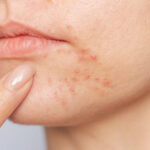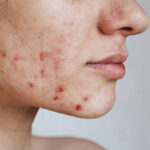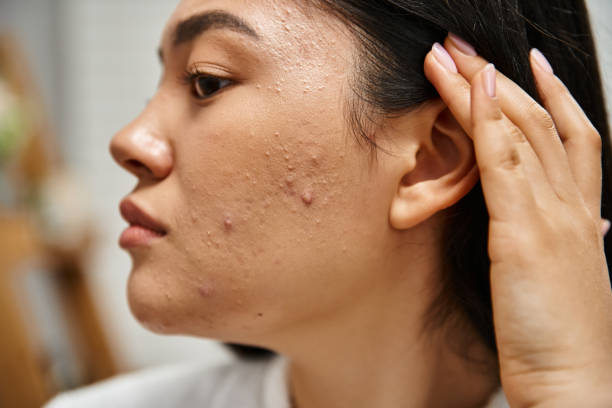

If you’ve ever stared at your skin and thought, “Why is this happening again?”, you’re not alone.
One week it’s tiny bumps across your forehead. The next, you have a painful spot along your jawline that seems to have taken up permanent residence. Then there are those little black dots on your nose that refuse to disappear, no matter how carefully you cleanse.
Here’s the thing: not every acne breakout is the same.
Acne can appear as blackheads, whiteheads, papules, pustules, nodules, or cysts. You can even have several types at the same time. Dermatologists generally group acne lesions into non-inflammatory and inflammatory types, while also looking at the overall pattern and severity of the condition.
And that distinction matters.
The product that helps unclog a whitehead may not be enough for a deep, painful nodule. Scrubbing blackheads harder won’t necessarily make them disappear. Picking a pustule might feel satisfying for five seconds, but it can increase inflammation and the risk of marks or scars.
So before you build a complicated 10-step routine, let’s make one thing easier: figure out what kind of acne you’re actually dealing with.
What Is Acne, Exactly?
Acne is a common inflammatory skin condition involving the pilosebaceous unit, the hair follicle and its associated oil gland.
Your skin naturally produces an oily substance called sebum. Dead skin cells are also shed from the lining of your follicles. When oil and dead skin cells build up and block a follicle, a comedone can form. Inflammation can then develop, producing red or pus-filled lesions.
Several factors can contribute to acne, including:
- Hormonal changes
- Increased sebum production
- Buildup of dead skin cells
- Follicular blockage
- Inflammation
- Changes involving Cutibacterium acnes, bacteria that normally live on the skin
- Genetics
- Certain medications
- Occlusive cosmetics or hair products
- Environmental factors such as high humidity
Acne most often affects the face, but it can also appear on the neck, chest, shoulders, and back.
And despite what your auntie, classmate, coworker, or random TikTok comment may tell you, acne isn’t simply a sign that your face is “dirty.”
In fact, aggressive washing and scrubbing can irritate the skin and make things worse.
The Two Main Types of Acne
At the simplest level, acne can be divided into non-inflammatory and inflammatory acne.
Non-inflammatory acne
This includes:
- Whiteheads
- Blackheads
These are called comedones.
They’re usually clogged follicles without the obvious redness and swelling associated with inflammatory lesions.
Inflammatory acne
This includes:
- Papules
- Pustules
- Nodules
- Cysts
These lesions involve inflammation and tend to be red, swollen, tender, or painful. The deeper forms, particularly nodules and cysts, have a greater risk of scarring.
Now let’s break each one down.
1. Whiteheads: The Tiny Bumps That Never Quite Come to a Head
Whiteheads are one of the most common forms of acne.
Medically, they’re called closed comedones.
They form when oil and dead skin cells block a follicle while the follicle opening remains closed. The result is a small, raised bump that may look white, cream-colored, or close to your natural skin tone.
Whiteheads often appear on:
- The forehead
- Chin
- Cheeks
- Jawline
They can be especially noticeable under makeup because they create an uneven, slightly bumpy texture.
What do whiteheads feel like?
Usually, they’re small and firm. They may not hurt at all.
Sometimes, though, several can appear together, making the skin feel almost like fine sandpaper.
And this is where people often get frustrated.
You cleanse. You exfoliate. You squeeze one. Another appears.
Unfortunately, squeezing isn’t a great strategy. Picking at whiteheads can worsen inflammation and increase the risk of acne marks and scarring.
What helps whiteheads?
Ingredients commonly used for comedonal acne include retinoids, salicylic acid, and benzoyl peroxide, depending on the person’s skin and acne pattern. Adapalene is an over-the-counter retinoid in some countries, while stronger retinoids may require a prescription.
The goal isn’t to attack every bump aggressively.
It’s to keep follicles from becoming clogged in the first place.
2. Blackheads: No, They’re Not Dirt
Blackheads are open comedones.
They form when oil and dead skin cells build up inside a follicle, and the opening remains exposed to air.
The dark colour isn’t dirt.
It’s largely the result of oxidation and changes in the material inside the open follicle.
So if you’ve been scrubbing your nose until it feels raw because you thought those little dots were trapped dirt, you can stop.
Seriously.
Blackheads commonly appear around the:
- Nose
- Chin
- Forehead
- Cheeks
They can also occur elsewhere on the body.
Why do blackheads keep coming back?
Because the underlying tendency toward clogged follicles can remain.
Removing the contents of a blackhead doesn’t necessarily prevent another comedone from forming later. That’s why a consistent acne routine often works better than repeatedly squeezing or extracting spots yourself.
Dermatologists may recommend retinoids to help prevent clogged pores, while other treatments may be added depending on the type and severity of acne.
3. Papules: Red, Tender Bumps Without Pus
Now we’re moving into inflammatory acne.
A papule is a small, raised, inflamed bump. It is usually red or pink, although the appearance can vary significantly depending on your skin tone.
Papules don’t have a visible pocket of pus.
They can feel:
- Tender
- Firm
- Sore
- Rough
If you have lots of them close together, your skin may feel textured even when you’re not looking in the mirror.
According to the American Academy of Dermatology, papules develop when material inside a clogged follicle contributes to inflammation deeper in the pore.
Should you squeeze a papule?
Probably not.
There’s usually nothing useful to “pop” because a papule doesn’t contain the visible pus that you might see in a pustule.
Trying to force it out can increase irritation and potentially leave a lingering mark.
This is especially worth remembering if you tend to develop post-inflammatory hyperpigmentation, which can be more noticeable and persistent in darker skin tones.
4. Pustules: The Classic “Pimple”
When most people picture a pimple, they’re probably thinking about a pustule.
Pustules are inflamed lesions that contain pus. They often have a white or yellow centre surrounded by redness.
They may appear:
- On the forehead
- Around the mouth
- On the cheeks
- Along the jawline
- On the chest or back
Pustules can be small or quite noticeable.
And yes, they’re tempting to squeeze.
But that little white head doesn’t mean your skin is permitting you to attack it with your fingernails.
Picking or squeezing can worsen inflammation and increase the chance of discolouration or scarring.
What can help pustules?
Common acne treatments include ingredients such as benzoyl peroxide and salicylic acid. The right treatment depends on how many lesions you have and whether other acne types are present.
If you’re getting frequent pustules despite consistent treatment, that’s a good reason to speak with a healthcare professional or dermatologist.
5. Nodules: The Deep, Painful Ones
Nodules are where acne becomes much more serious.
Unlike a whitehead sitting close to the surface, an acne nodule develops deep within the skin.
It may feel like a hard lump underneath the surface rather than looking like a typical pimple.
Nodules are often:
- Large
- Firm
- Painful
- Deep
- Inflamed
And sometimes you can feel one before you can really see it.
The American Academy of Dermatology notes that nodules develop deep within the skin and can be extremely painful.
This isn’t the kind of acne you should try to manage with endless squeezing.
Deep inflammatory acne can cause permanent scars, so getting appropriate treatment early matters.
6. Cysts: Deep, Painful Acne With Pus
Cysts are another form of deep inflammatory acne.
They develop deep within the skin and contain pus. They can feel soft or fluctuant compared with the firmer feel of a nodule.
Cystic acne can be particularly frustrating because the breakout may linger beneath the skin for days or weeks.
You might see:
- Significant swelling
- Redness
- Tenderness
- A deep lump
- A visible or invisible pocket of inflammation
And here’s an important distinction:
Not every deep bump is technically a cyst.
Nodules and cysts are related but aren’t identical. A dermatologist can distinguish between them during an examination.
Because deep acne has a higher risk of scarring, professional treatment is often recommended rather than relying on DIY spot treatments.
7. Comedonal Acne: When Clogged Pores Are the Main Problem
Some people don’t get many angry red pimples.
Instead, their main problem is lots of whiteheads, blackheads, and tiny clogged bumps.
That’s generally described as comedonal acne.
It commonly affects areas such as the forehead and chin.
You might notice:
- Rough skin texture
- Tiny flesh-colored bumps
- Numerous blackheads
- Persistent whiteheads
- Few or no painful pimples
Comedonal acne can be subtle, but that doesn’t mean it’s insignificant.
Sometimes the skin looks fine from across the room and frustratingly bumpy when you’re standing two inches from the bathroom mirror.
We’ve all been there.
What causes comedonal acne?
A combination of excess sebum, dead skin cells, follicular blockage, and changes in the follicle can contribute. Hormonal activity also plays a role in acne development.
Hair products can also contribute to clogged pores around the hairline in some people, particularly when they’re oily or occlusive.
8. Inflammatory Acne: When Your Skin Is Red, Swollen, and Angry
Inflammatory acne includes papules, pustules, nodules, and cysts.
This type tends to be more noticeable because inflammation changes the colour and texture of the skin.
You may experience:
- Red or darker swollen bumps
- Tenderness
- Pus-filled spots
- Deep painful lesions
- Multiple breakouts appearing at once
Inflammatory acne doesn’t necessarily mean you have “bad hygiene.”
It’s a complex interaction involving follicular blockage, sebum, inflammation, hormones, and microorganisms within the follicle.
Treatment often requires more than simply washing your face.
9. Nodulocystic Acne: When Deep Lesions Take Over
When someone has numerous deep nodules and cyst-like lesions, dermatologists may describe the condition as nodulocystic acne.
This is a severe form of acne and deserves professional attention.
One particularly severe variant is acne conglobata, which can involve groups of nodules, pustules, comedones, abscesses, and draining lesions. It can leave significant scars.
If you’re experiencing deep, painful acne across the face, chest, back, or other areas, don’t wait until your skin is heavily scarred before seeking help.
Treatment can be much easier to manage when severe acne is addressed early.
10. Adult Acne: Yes, You Can Still Get Pimples After 25
Here’s a mildly annoying fact: acne doesn’t always get the memo that adolescence is over.
Adult acne can persist from the teenage years or begin later in life. It can be predominantly inflammatory, predominantly comedonal, or a mixture of both.
For many women, breakouts may seem to cluster around the:
- Chin
- Jawline
- Lower cheeks
- Neck
Hormonal changes can contribute, although location alone cannot prove that acne is hormonal.
Adult acne can also be influenced by medications, cosmetics, stress, environmental conditions, and other factors.
And honestly, getting a breakout before an important presentation, wedding, interview, or event can feel especially unfair.
You’re trying to manage deadlines, meetings, family responsibilities, and maybe three hours of sleep, and now your chin wants attention too.
11. Hormonal Acne: What Does It Actually Mean?
“Hormonal acne” gets thrown around online a lot.
But acne is influenced by hormones in many people, particularly during puberty and other periods of hormonal change. And the appearance of acne along the jawline doesn’t automatically mean you have a hormonal disorder.
Hormones such as androgens can stimulate sebaceous glands and influence sebum production. Increased oil production and follicular changes can contribute to acne formation.
Hormonal conditions can also contribute to acne in some people.
If acne suddenly appears in adulthood alongside other symptoms such as irregular periods or increased facial hair, it’s worth discussing the pattern with a healthcare professional rather than assuming it’s simply a skincare problem.
12. Acne on Your Chest and Back Is Still Acne
Your face doesn’t have a monopoly on breakouts.
Acne can affect the:
- Chest
- Upper back
- Shoulders
- Neck
Back and chest acne can be particularly annoying because sweat, friction, tight clothing, backpacks, sports equipment, and hair products can all interact with already acne-prone skin.
This is sometimes called truncal acne.
The individual lesions can still include comedones, papules, pustules, nodules, and cysts.
If you’re constantly getting painful spots on your back, especially ones that scar, don’t assume it’s something you simply have to live with.
13. Acne Isn’t Always Acne: Conditions That Can Look Similar
This part is easy to overlook.
Not every red bump is acne.
Conditions such as perioral dermatitis, rosacea, and folliculitis can sometimes resemble acne. DermNet notes that facial rashes can include several different conditions with papules and pustules, making the clinical pattern important for diagnosis.
For example, perioral dermatitis can cause clusters of small bumps around the mouth and nose, while rosacea may cause facial redness, flushing, papules, and pustules.
That’s why a breakout that refuses to respond to normal acne treatments deserves a closer look.
If you’ve been treating “acne” for months and nothing changes, the problem may not be acne at all.
14. What Your Acne Type Says About Treatment
Here’s where the whole classification system becomes useful.
Different lesions respond to different treatment approaches.
For blackheads and whiteheads
Treatment often focuses on preventing and clearing clogged follicles.
Common ingredients include:
- Adapalene and other retinoids
- Salicylic acid
- Benzoyl peroxide
- Azelaic acid
The American Academy of Dermatology recommends retinoids as an important option for unclogging pores and preventing new comedones.
For papules and pustules
Inflammatory acne may benefit from ingredients such as:
- Benzoyl peroxide
- Salicylic acid
- Retinoids
- Azelaic acid
- Prescription treatments when necessary
The exact combination depends on severity and individual factors.
For nodules and cysts
This is where professional care becomes much more important.
Deep acne can scar, and the AAD specifically recommends dermatologic treatment for nodules and cysts.
A dermatologist may consider prescription medications or procedures depending on the severity.
So if you’re dealing with deep, painful acne, adding another random serum to your shopping cart probably isn’t the most efficient next step.
How Severe Is Your Acne?
Acne isn’t classified only by how dramatic it looks in one mirror selfie.
Dermatologists may assess the number and type of lesions when determining severity.
Broadly, acne may be described as:
Mild acne
Mostly comedones and a smaller number of inflammatory lesions.
Moderate acne
More numerous comedones and inflammatory lesions.
Severe acne
Large numbers of inflammatory lesions, numerous deep nodules or pseudocysts, or extensive acne affecting multiple areas.
DermNet describes severity using lesion counts and clinical features, while dermatologists may use different grading systems depending on the situation.
So don’t compare your skin with someone else’s and decide, “Mine isn’t bad enough to get help.”
Severity isn’t always obvious from appearance alone.
Acne Marks vs. Acne Scars: They’re Not the Same
This distinction matters, especially if you have darker skin.
After a pimple heals, you may be left with a red, pink, brown, or darker mark. These are often forms of post-inflammatory colour change rather than permanent scars.
A true acne scar involves a structural change in the skin.
Scars may be:
- Depressed or indented
- Raised
- Thickened
- Uneven in texture
People with darker skin tones can be particularly prone to post-inflammatory hyperpigmentation after acne, and some forms of scarring can also occur more commonly in skin of colour.
This is another reason not to pick at your skin.
The pimple may disappear.
The mark you create by squeezing it can hang around much longer.
Common Acne Mistakes That Backfire
When acne is frustrating, it’s easy to go into full emergency mode.
More cleanser. More exfoliation. More masks. More scrubbing.
Unfortunately, more isn’t automatically better.
Scrubbing too hard
Blackheads aren’t dirt. Scrubbing aggressively won’t solve the underlying follicular blockage and can irritate the skin.
Popping everything
Picking can worsen inflammation and increase the risk of discolouration and scarring.
Changing products every few days
Acne treatments generally need time. The AAD notes that treatments for blackheads and whiteheads may require several weeks to show worthwhile improvement.
Using too many strong ingredients
Throwing retinoids, acids, scrubs, masks, and multiple acne treatments at your face at once can leave your skin irritated.
Ignoring hair products
Greasy or occlusive hair products can contribute to follicular plugging and breakouts around the hairline in some people.
Sometimes the culprit isn’t your face wash.
It’s the styling product sliding down your forehead every day.
When Should You See a Dermatologist?
Consider professional advice if:
- You have deep, painful nodules or cysts.
- Your acne is leaving scars.
- Breakouts cover your face, chest, or back extensively.
- Acne isn’t improving with consistent over-the-counter treatment.
- Your acne suddenly becomes severe.
- Your skin is becoming very painful or inflamed.
- You’re unsure whether the bumps are actually acne.
- Acne is affecting your confidence, social life, work, or emotional wellbeing.
Severe acne can have lasting physical and psychological effects, so seeking treatment isn’t being dramatic. It’s healthcare.
Frequently Asked Questions About Acne Types
What are the main types of acne?
The main acne lesions are whiteheads, blackheads, papules, pustules, nodules, and cysts. They can occur together as part of acne vulgaris.
What type of acne is hardest to treat?
Deep inflammatory acne, particularly nodules and cysts, can be more difficult to treat and has a greater risk of permanent scarring. Dermatologist-guided treatment is often recommended.
Are blackheads caused by dirt?
No. Blackheads become dark largely because the material inside an open follicle reacts with oxygen. They’re not simply dirt trapped in your pores.
Can you have more than one type of acne?
Absolutely. Acne vulgaris commonly involves a mixture of non-inflammatory and inflammatory lesions. You might have blackheads and whiteheads alongside papules and pustules.
Why is my acne painful?
Pain is more common when inflammation extends deeper into the skin. Nodules and cysts can be particularly tender because they develop deep within the skin.
Does popping acne make it heal faster?
Not necessarily. Picking or squeezing can increase inflammation and raise the risk of discoloration, infection, and scarring.
Can adults get acne?
Yes. Acne can persist from adolescence or begin during adulthood. Adult acne can be comedonal, inflammatory, or mixed.
Can acne appear on the back and chest?
Yes. Acne commonly affects the face but can also involve the neck, chest, shoulders, and back.
The Bottom Line: Know Your Breakout Before You Fight It
Acne isn’t one single type of spot.
A blackhead isn’t the same as a whitehead. A papule isn’t the same as a pustule. And a deep, painful nodule isn’t something you should treat like an ordinary little pimple.
Understanding the difference gives you a much better starting point.
If your skin mainly has blackheads and whiteheads, think clogged follicles. If you’re seeing red bumps and pus-filled spots, inflammation is playing a bigger role. If you’re getting deep, painful lumps, it’s time to take the situation more seriously because scarring becomes a bigger concern.
And remember: having acne doesn’t mean you’re doing skincare “wrong.”
Sometimes hormones are involved. Sometimes genetics matter. Sometimes products, medications, environment, or other factors contribute. Often, several things overlap.
Your skin isn’t a failed project that needs fixing overnight.
It’s a biological system. Give it the right information, the right treatment, and enough time to respond.
Most importantly, don’t let one bad breakout convince you that clear skin is out of reach. Effective acne treatments exist, and even persistent acne can be managed with the right approach.
The first step isn’t buying another product. It’s knowing what you’re treating.
Sources
The medical distinctions and treatment guidance in this article were checked against resources from the American Academy of Dermatology and DermNet.