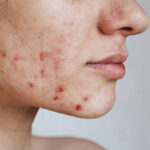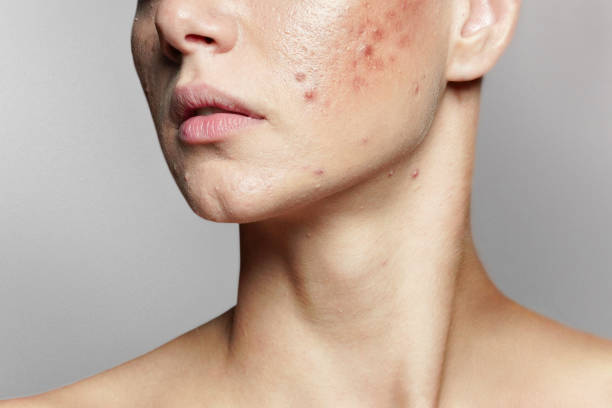

You thought acne was something you left behind with school photos, exam stress, and questionable teenage hairstyles.
Then one morning, you looked in the mirror, and there it was: a painful spot on your chin.
Maybe it showed up before your period. Maybe it appeared during a stressful week at work. Or perhaps you’ve never really had acne before, and suddenly your skin seems determined to make its own schedule.
Adult acne is real. And yes, you can develop acne in your 20s, 30s, 40s, and beyond. In fact, some people experience acne for the first time as adults. Women are especially likely to experience adult acne because hormonal changes can influence oil production and inflammation.
The frustrating part? The skincare routine that worked when you were 17 may not work now.
Adult skin has different needs. You’re also dealing with more than hormones. Stress, medications, hair and skincare products, genetics, menstrual cycles, pregnancy, and certain health conditions can all play a role.
So, what actually causes adult acne? And what can you do about it without turning your bathroom into a chemistry lab?
Let’s break it down.
What Is Adult Acne?
Adult acne is acne that continues into adulthood or begins for the first time during adulthood.
It can include:
- Blackheads
- Whiteheads
- Small red pimples
- Pustules
- Deep, painful nodules
- Cysts
- Acne-related dark spots
- Acne scars
Acne develops when hair follicles become clogged with oil, dead skin cells, and other debris. Inflammation then contributes to the red, swollen, and sometimes painful spots we recognise as pimples. Hormones can influence how much oil the skin produces, which is one reason acne can flare at certain stages of life.
And here’s something worth remembering: acne isn’t caused by being dirty.
Those black dots on your nose aren’t dirt trapped in your pores. They’re open comedones, and scrubbing them aggressively won’t solve the problem. In fact, harsh scrubbing can irritate your skin and make breakouts worse.
Why Am I Suddenly Getting Acne as an Adult?
This is probably the question you’re asking.
You wash your face. You change your pillowcase. You drink water. You bought the expensive serum. So why are you still breaking out?
The answer isn’t always one thing.
Adult acne often comes from a combination of factors.
1. Hormonal changes can stir things up
Hormones are one of the biggest suspects in adult acne, especially for women.
Hormonal fluctuations can occur around:
- Your menstrual period
- Pregnancy
- After starting or stopping hormonal birth control
- Perimenopause
- Menopause
Androgens can stimulate the sebaceous glands, which produce sebum, the oily substance that helps protect your skin. When oil production increases, pores can become more easily clogged.
This is why some people notice a familiar pattern: clear skin for most of the month, followed by several angry pimples around the chin and jaw before their period.
Sound familiar?
Hormonal acne often appears around the lower face, particularly the chin and jawline, although acne can occur anywhere on the face, chest, shoulders, or back.
2. Stress may be making existing acne worse
Stress gets blamed for almost everything these days, but there is a reason it keeps coming up in conversations about acne.
Stress doesn’t necessarily create acne from nothing. However, research and dermatology guidance indicate that stress can worsen acne in people who are already prone to breakouts. Stress-related hormonal changes may influence oil production and inflammation.
Think about those weeks when everything happens at once: deadlines, poor sleep, skipped meals, commuting, family responsibilities, and approximately 47 unanswered emails.
Your skin may notice the chaos too.
That doesn’t mean you need to eliminate every stressful situation before your acne improves. That’s unrealistic. Instead, focus on manageable habits such as getting enough sleep, eating regular meals, moving your body, and finding small ways to decompress.
Your skincare routine doesn’t need to carry the entire workload.
3. Your skincare or hair products could be clogging pores
Sometimes the problem isn’t your skin. It’s what you’re putting on it.
Heavy moisturisers, makeup, sunscreens, hair oils, pomades, and styling products can contribute to clogged pores in some people.
Look for labels such as:
- Non-comedogenic
- Oil-free
- Non-acnegenic
- Won’t clog pores
These products are less likely to contribute to clogged pores.
Pay particular attention if you’re getting small bumps around your forehead or hairline. Hair products can migrate onto facial skin, especially overnight.
And no, this doesn’t mean you need to throw away every product you own tonight.
Instead, change one product at a time. Otherwise, if your skin improves, or gets worse, you won’t know which change made the difference.
4. Your medication may be involved
Certain medications can contribute to acne or make existing acne worse.
Examples can include medicines containing corticosteroids, testosterone, or lithium.
If you suspect that a medication is affecting your skin, don’t stop taking it on your own.
Talk to the healthcare professional who prescribed it. They can determine whether acne is a known side effect and whether another option is appropriate.
5. Genetics matter more than you might think
If your parents or close relatives had significant acne, you may have a higher chance of developing it too.
Genetics can influence how your skin responds to hormones, how much oil it produces, and how easily your pores become clogged.
So if you’ve ever wondered why your friend can sleep in makeup once and wake up looking perfectly fine while your skin declares war after one wrong product, genetics may be part of the answer.
It’s not fair.
Skin rarely is.
What Does Adult Acne Usually Look Like?
Adult acne isn’t one single type of breakout.
Understanding what you’re dealing with can make treatment much easier.
Blackheads
Blackheads form when a clogged pore remains open. The dark appearance isn’t caused by dirt; it’s related to the material inside the pore reacting with air.
Don’t attack them with aggressive scrubs or squeeze them repeatedly.
Whiteheads
Whiteheads occur when a clogged pore remains closed. They usually look like small white or flesh-colored bumps.
Papules
Papules are small, raised, inflamed red bumps. They don’t usually contain visible pus.
Pustules
These are the classic pimples many people recognise: inflamed bumps containing pus.
Nodules and cysts
These are deeper, larger, and often painful.
They’re also the type of acne you shouldn’t try to manage with endless drugstore experiments. Deep acne can increase the risk of scarring, and dermatologists can provide treatments that target more severe disease.
Adult Acne vs. Hormonal Acne: Are They the Same?
Not exactly.
Adult acne describes acne that occurs during adulthood.
Hormonal acne refers to acne influenced by hormonal changes.
There can be plenty of overlap.
For example, an adult woman may experience acne that becomes noticeably worse in the week before her period. That pattern suggests a hormonal component, but it doesn’t mean hormones are the only factor involved.
Stress, genetics, skincare products, medications, and other factors may still contribute.
This distinction matters because treating acne isn’t about finding one magical ingredient. It’s about understanding what is driving your particular breakouts.
How to Treat Adult Acne
Here’s where things get practical.
You don’t need a 12-step routine.
In fact, adding product after product can make it harder to figure out what’s working. Dermatologists commonly recommend using an acne treatment consistently for several weeks rather than constantly switching products. Improvement may take around 4 to 8 weeks, while fuller clearing can take longer.
Think of acne treatment more like a work project than a fire drill.
You need a plan, consistency, and enough time to judge the results.
Step 1: Use a gentle cleanser
Wash your face gently, generally twice a day and after heavy sweating.
Avoid harsh scrubbing, rough brushes, and very hot water.
Your goal is to remove excess oil, sweat, sunscreen, makeup, and debris without damaging your skin barrier.
If your face feels painfully tight after cleansing, that’s not necessarily a sign that your cleanser is “working.”
It may simply be too harsh.
Step 2: Choose one main acne-fighting ingredient
There are several evidence-based ingredients used for acne.
The right choice depends on your type of acne and skin tolerance.
Adapalene
Adapalene is a topical retinoid that helps prevent clogged pores and can treat blackheads, whiteheads, and pimples. It’s also available without a prescription in some places.
Because retinoids can cause dryness and irritation, start carefully and follow product directions.
And remember: more isn’t better.
Applying a thick layer won’t make acne disappear overnight.
Benzoyl peroxide
Benzoyl peroxide helps reduce acne-causing bacteria and inflammation and is particularly useful for inflammatory pimples. The American Academy of Dermatology lists topical benzoyl peroxide among strongly recommended acne treatments.
For people starting an over-the-counter product, dermatologists may recommend beginning with a lower concentration, such as 2.5%, to reduce irritation.
One practical warning: benzoyl peroxide can bleach fabrics, so don’t be surprised if your favourite dark towel suddenly develops mysterious pale patches.
There has also been recent discussion about benzoyl peroxide products and potential benzene formation under certain storage conditions. The FDA testing cited by the AAD found that more than 90% of tested products had undetectable or extremely low benzene levels, while a small number had elevated levels and were voluntarily recalled.
Keep benzoyl peroxide products away from excessive heat and follow storage instructions.
Salicylic acid
Salicylic acid helps unclog pores and exfoliate the skin. It’s particularly useful for blackheads and whiteheads.
It’s commonly found in cleansers, toners, gels, and leave-on treatments.
But again, don’t pile every acid you own onto your face.
A cleanser containing salicylic acid plus a strong exfoliating serum plus a retinoid may be far more irritating than helpful.
Azelaic acid
Azelaic acid is another useful acne ingredient. It can help unclog pores, reduce inflammation, and address acne-related dark spots.
This can make it particularly appealing if your acne tends to leave behind lingering brown or dark marks.
And for people with deeper skin tones, preventing and treating post-inflammatory hyperpigmentation can be an important part of acne care.
What About Acne Dark Spots?
Sometimes the pimple disappears.
The mark doesn’t.
That lingering brown, grey, or darker patch is often post-inflammatory hyperpigmentation (PIH) rather than an active acne lesion.
PIH can be especially noticeable in people with darker skin tones. The American Academy of Dermatology notes that significant inflammation can increase the likelihood of these dark spots.
This is one reason treating acne early matters.
You aren’t only trying to clear today’s pimple. You’re also trying to reduce the cycle of inflammation that can leave marks behind.
Azelaic acid and retinoids can be useful in acne treatment plans, while daily sunscreen helps protect discolored areas from becoming more noticeable.
And please resist the urge to pick.
I know.
Easier said than done.
But squeezing or repeatedly touching inflammatory acne can increase irritation and raise the risk of marks and scars.
A Simple Adult Acne Routine
If your routine currently looks like a small department store, simplify it.
Morning
1. Gentle cleanser
Wash without scrubbing.
2. Acne treatment, if appropriate
Depending on your skin and treatment plan, this might include benzoyl peroxide, salicylic acid, or azelaic acid.
3. Moisturizer
Choose a lightweight, non-comedogenic moisturiser.
4. Sunscreen
Use a broad-spectrum sunscreen during the day.
This is particularly important if you’re dealing with post-acne dark spots.
Evening
1. Gentle cleanser
Remove sunscreen, makeup, sweat, and daily buildup.
2. Acne treatment
A retinoid such as adapalene may be appropriate for some adults with acne.
3. Moisturiser
Support your skin barrier and reduce dryness.
That’s it.
Simple doesn’t mean ineffective.
Actually, a routine you can stick with usually beats an elaborate routine you abandon after five days.
What If You Have Sensitive Skin?
This is where patience becomes your secret weapon.
Many acne treatments can cause dryness, redness, peeling, or irritation when you first start.
Don’t respond by adding five soothing products and three more actives.
Instead:
- Introduce one new active at a time.
- Follow the product instructions.
- Give your skin time to adjust.
- Use moisturiser regularly.
- Avoid harsh scrubs.
- Stop or seek professional advice if you develop significant irritation.
Your skin barrier matters.
Clear skin and healthy skin aren’t competing goals. Ideally, you want both.
When Should You See a Dermatologist?
You don’t have to wait until your acne becomes severe.
Consider seeing a dermatologist if:
- Your acne is deep or painful.
- You’re developing nodules or cysts.
- Acne is leaving scars.
- You’re developing persistent dark spots.
- Over-the-counter treatment hasn’t helped.
- Breakouts are affecting your confidence or daily life.
- Your acne suddenly becomes severe as an adult.
- You suspect a medication or health condition may be contributing.
Large, painful, deep acne is less likely to respond well to ordinary over-the-counter products and may require prescription treatment.
A dermatologist can also check whether what looks like acne is actually another condition. Folliculitis and perioral dermatitis, for example, can sometimes resemble acne but require different treatment.
What Prescription Treatments Are Available?
If your acne is moderate, severe, persistent, or scarring, a dermatologist may recommend prescription treatment.
Depending on your situation, options can include:
- Prescription retinoids
- Combination topical treatments
- Topical antibiotics
- Oral antibiotics
- Hormonal treatments
- Combined oral contraceptives for appropriate patients
- Spironolactone for some women
- Isotretinoin for severe or treatment-resistant acne
- Other newer prescription options
The American Academy of Dermatology’s acne guidelines support several topical and systemic treatments, including retinoids, benzoyl peroxide, certain antibiotics, and combination approaches.
The important point is that prescription treatment isn’t automatically “stronger skincare.”
It’s medical treatment.
Your dermatologist will consider your acne type, severity, medical history, medications, pregnancy plans, and risk of scarring before choosing an approach.
Adult Acne and Pregnancy: A Very Important Note
If you’re pregnant, trying to become pregnant, or breastfeeding, don’t start an acne medication without checking with your healthcare professional.
Some acne medications should not be used during pregnancy.
The American Academy of Dermatology specifically advises avoiding medications such as isotretinoin, tazarotene, and spironolactone during pregnancy. Experts also generally recommend stopping topical retinoids such as adapalene and tretinoin during pregnancy.
Some ingredients may be considered appropriate in limited circumstances, but pregnancy changes the risk-benefit calculation.
Azelaic acid is generally considered a pregnancy-compatible option, while benzoyl peroxide and salicylic acid may be used in limited amounts with professional guidance.
If you’re pregnant or planning a pregnancy, tell your dermatologist and obstetrician about everything you’re using, including prescription creams, over-the-counter acne products, and cosmetic treatments.
Can Diet Cause Adult Acne?
This question gets people arguing faster than a group chat about pineapple on pizza.
The honest answer is more nuanced.
Research suggests that certain high-carbohydrate foods may worsen acne for some people, but the evidence isn’t strong enough to say that everyone with acne needs to follow a specific restrictive diet. More research is still needed.
So don’t automatically blame chocolate, dairy, or one innocent slice of cake.
Instead, look at your overall eating pattern.
A balanced diet, regular meals, adequate protein and fibre, fruits and vegetables, and enough fluids are sensible foundations for general health. If you notice a consistent connection between a particular food and your breakouts, discuss it with a qualified healthcare professional rather than cutting out entire food groups based on social media advice.
Does Stress Really Cause Adult Acne?
Stress is complicated.
It isn’t accurate to say, “You’re stressed, therefore you have acne.”
But if you’re already acne-prone, stress may worsen your breakouts.
And here’s the annoying part: acne itself can create stress.
You wake up with a breakout.
You worry about it.
You cover it with makeup.
You check it in the mirror.
You worry about whether everyone else notices.
That emotional load can become its own cycle.
So don’t underestimate the mental side of acne. Treating acne isn’t vanity. If breakouts are affecting your confidence, social life, work, relationships, or willingness to leave the house, that matters.
Common Adult Acne Mistakes to Avoid
Scrubbing your face harder
Acne isn’t a stain on a plate.
Scrubbing doesn’t remove the root cause. It can irritate already inflamed skin.
Using toothpaste on pimples
Please don’t.
Toothpaste is formulated for teeth, not facial skin. Dermatologists recommend clinically proven acne ingredients instead.
Changing products every few days
Acne treatments need time.
Dermatologists commonly recommend giving an acne treatment around 6 to 8 weeks before deciding whether it’s helping, unless you’re experiencing significant irritation or another problem.
Picking your skin
That satisfying little squeeze can become tomorrow’s dark mark, or, in some cases, contribute to scarring.
Hands off whenever possible.
Using too many active ingredients
More acids don’t automatically equal clearer skin.
Sometimes the fastest way to calm an irritated face is to stop throwing new products at it.
Skipping moisturiser because you have oily skin
Oily skin still needs hydration.
When acne treatments dry out the skin, a suitable non-comedogenic moisturiser can help support the skin barrier.
Ignoring sunscreen
If you have acne-related pigmentation, daily sunscreen is especially useful because ultraviolet exposure can make discolouration more noticeable.
How Long Does Adult Acne Take to Clear?
Unfortunately, acne treatment isn’t usually an overnight project.
Some treatments may begin producing improvement within several weeks. The AAD notes that adults using appropriate acne treatments may see fewer breakouts within about 4 to 8 weeks, with clearer skin taking longer.
Mayo Clinic also notes that prescription acne treatments often take four to eight weeks to show results, while complete control may take considerably longer.
That’s why consistency matters.
Think months, not miracles.
If someone promises flawless skin tomorrow with one secret ingredient, keep your wallet firmly in your pocket.
Can Adult Acne Go Away Permanently?
It can improve dramatically, but acne is a chronic skin condition for many people.
Some adults eventually experience long periods of clear skin. Others need ongoing maintenance treatment to prevent new breakouts.
The goal isn’t always to find one treatment and never think about acne again.
Sometimes the goal is:
fewer breakouts + less inflammation + fewer dark marks + no new scars + a routine you can maintain.
That’s a very worthwhile result.
Frequently Asked Questions About Adult Acne
Why am I getting acne in my 30s?
Adult acne can be influenced by hormonal fluctuations, stress, genetics, medications, and skincare or hair products. Women may experience breakouts around menstruation, pregnancy, perimenopause, menopause, or changes in hormonal birth control.
Is adult acne always hormonal?
No. Hormones can be an important factor, but adult acne can have several contributing causes. Genetics, stress, products, medications, and other factors may also matter.
Why is my acne mostly on my chin and jawline?
The lower face is a common location for hormonal breakouts, particularly around menstrual cycles. However, location alone can’t prove that your acne is hormonal.
Can stress make adult acne worse?
Yes. Stress may worsen acne in people who are already prone to breakouts, although stress isn’t considered the sole cause of acne.
What is the best ingredient for adult acne?
There isn’t one ingredient that works best for everyone. Adapalene, benzoyl peroxide, salicylic acid, and azelaic acid are among the evidence-based ingredients commonly used for mild adult acne.
Should I moisturise acne-prone skin?
Yes. Choose a moisturizer labeled non-comedogenic or oil-free, especially if your acne treatments cause dryness.
Can I use retinoids while pregnant?
Retinoids such as adapalene, tretinoin, and tazarotene are generally avoided during pregnancy. If you’re pregnant or trying to conceive, speak with your dermatologist or obstetrician before using acne medication.
When should I see a dermatologist for adult acne?
See a dermatologist if you have painful deep acne, scarring, persistent dark spots, severe or sudden adult acne, or acne that isn’t improving with appropriate over-the-counter treatment.
The Bottom Line: Adult Acne Doesn’t Mean You’ve Done Something Wrong
Adult acne can feel strangely personal.
You can be doing everything “right” and still wake up with a breakout.
That’s because acne isn’t a simple hygiene problem. It involves clogged pores, oil production, inflammation, hormones, genetics, and sometimes medications or other health factors.
So don’t punish your skin for misbehaving.
Start with a simple routine. Choose evidence-based ingredients. Give treatments enough time to work. Avoid picking and harsh scrubbing. Use non-comedogenic products. And if your acne is painful, persistent, scarring, or affecting your quality of life, get professional help.
Most importantly, don’t let the fact that you’re an adult convince you that you’re supposed to have “outgrown” acne.
You haven’t failed at skincare.
Your skin is simply responding to biology.
And biology can be treated.