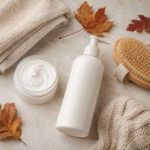
There’s a certain point in fall when your skin quietly changes the rules.
One week, your regular body lotion feels perfectly fine. Then suddenly your legs look a little ashy by lunchtime, your elbows feel rough, your hands seem permanently thirsty, and stepping out of a hot shower leaves your skin feeling oddly tight.
It can feel like your body lotion has stopped working overnight.
Usually, it hasn’t.
Your environment has changed.
Cooler weather, lower humidity, indoor heating, hotter showers, heavier clothing, and simple seasonal habits can all make it harder for skin to hold onto moisture. Cold or dry weather, harsh cleansers, frequent bathing, and excessive scrubbing are all recognised contributors to dry skin.
That’s why a fall body care routine doesn’t need to be dramatically different from your summer routine. It simply needs to become a little gentler, a little richer, and much better at keeping water inside your skin.
And no, this doesn’t mean turning your bathroom into a mini beauty store.
If you’re balancing classes, meetings, commuting, children, deadlines, grocery shopping, laundry, and the occasional attempt at having a social life, a 14-step body routine probably isn’t happening.
A good routine should work on an ordinary Tuesday morning when you have approximately seven minutes before you need to leave.
So let’s make this practical.
Why Does Your Skin Feel So Different When Fall Arrives?
Your skin has a protective outer layer commonly called the skin barrier.
Think of it like the weatherproof coating on a house.
When that barrier is working well, it helps keep moisture inside while keeping irritants outside. When it becomes dry or disrupted, water escapes more easily. Skin may begin feeling tight, rough, itchy, flaky, or uncomfortable.
Then fall walks in.
The air may become cooler and less humid. Heating systems start running indoors. Showers mysteriously get hotter because, well, standing under lukewarm water when the bathroom feels freezing isn’t exactly inviting.
Meanwhile, you might still be using the lightweight gel lotion and heavily fragranced body wash that felt wonderful in July.
That combination can leave skin struggling to keep up.
Dry skin is medically known as xerosis, and common triggers include low humidity, cold weather, hot showers, harsh soaps, and frequent washing.
The good news?
You usually don’t need to rebuild your entire routine.
You need to change the pressure points.
Your Summer Body Routine Might Need a Small Promotion
Summer body care is often about lightness.
Light lotions. Cooling gels. Frequent showers. Sweat removal. Shaving. Maybe a scrub before wearing shorts.
Fall asks for something slightly different.
Your cleanser should remove dirt without leaving your skin squeaky. Your moisturiser should stay around longer. Exfoliation may need to become less aggressive. And certain areas- hands, knees, elbows, heels- may need extra attention.
Basically, your routine moves from clean and refresh toward clean, protect, and replenish.
That distinction matters.
A squeaky-clean feeling is often treated as evidence that a cleanser “worked.” For dry or sensitive skin, though, that stripped feeling can be exactly what you’re trying to avoid.
Your skin should feel comfortable after washing.
Not like shrink-wrap.
Start With the Shower Because This Is Where Fall Dryness Often Begins
A steaming shower on a cold morning is one of life’s small pleasures.
Unfortunately, your skin may disagree.
Hot water can remove some of the natural oils that help your skin retain moisture. Dermatology guidance commonly recommends keeping showers around five to ten minutes and using warm rather than very hot water when dryness is an issue.
You don’t have to take a cold shower.
Please don’t make yourself miserable for skincare.
Just turn the temperature down slightly.
If your bathroom looks like a sauna when you open the door, your shower may be hotter than your dry skin would prefer.
Try keeping showers comfortably warm rather than steaming hot, especially if your legs, arms, or back already feel itchy.
And resist the temptation to stand there for twenty-five minutes mentally rehearsing arguments from three years ago.
Your skin has places to be.
Your Body Cleanser Doesn’t Need to Attack Your Skin
Fall is a good time to look at what you’re actually washing with.
A strongly fragranced gel that gives you clouds of foam may feel luxurious, but fragrance and aggressive cleansing ingredients can sometimes become irritating when skin is already dry.
Dermatologists commonly recommend gentle, fragrance-free products when dry or sensitive skin is acting up. The American Academy of Dermatology also points out that “unscented” does not necessarily mean fragrance-free; an unscented product may still contain ingredients used to disguise fragrance.
Look for words such as:
- Fragrance-free
- Gentle
- Moisturizing
- Cream cleanser
- For dry or sensitive skin
- Ceramides
- Glycerin
- Shea butter
- Hyaluronic acid
You don’t need every ingredient in one bottle.
This isn’t ingredient bingo.
A simple creamy cleanser that leaves your skin comfortable can be enough.
And here’s another small adjustment that can make a surprising difference: you don’t necessarily need to aggressively soap every inch of your body every time you shower.
Concentrate cleansing where sweat, odour, sunscreen, or dirt collects most, such as your underarms, groin, feet, and areas where you’ve been sweating.
For the rest of your body, gentle cleansing is usually plenty.
Put the Scrub Down for a Second
Fall dryness creates a strange temptation.
Your legs become flaky, so you scrub them.
They still look flaky, so you scrub harder.
Two days later they’re somehow rough and irritated.
The problem isn’t always that you need more exfoliation.
Sometimes you need more moisture.
Physical scrubs can make smooth skin feel wonderful, but rough exfoliating gloves, pumice stones, harsh scrubs, and frequent buffing may aggravate already-dry skin. Mayo Clinic recommends avoiding aggressive tools such as loofahs or pumice stones when managing significant dryness.
You can still exfoliate in fall.
Just treat exfoliation like seasoning rather than the entire meal.
For many people, once or twice a week may be plenty. Sensitive or very dry skin may need even less.
Chemical exfoliating body products can also be useful. Ingredients such as lactic acid, glycolic acid, salicylic acid, and urea can help improve rough texture depending on your skin concern.
For example, lactic acid or urea body lotions can be helpful for rough, dry areas. Salicylic acid is often found in products designed for bumpy skin or clogged pores.
But more isn’t automatically better.
If your skin burns, stings, looks red, or feels painfully tight, forget about chasing perfectly smooth legs for the moment.
Repair first.
Polish later.
The Most Important Fall Step Happens Right After Your Shower
Here’s the thing: moisturising is partly about timing.
Your skin has just been exposed to water. Instead of drying completely, walking around your bedroom, answering three messages, choosing an outfit, making coffee, and remembering lotion twenty minutes later, moisturise while your skin is still slightly damp.
Dermatologists recommend applying moisturiser shortly after bathing because it helps trap water in the skin.
Pat yourself dry rather than rubbing your towel aggressively across your skin.
Leave a little moisture.
Then apply your body cream.
This tiny habit may matter more than buying the fanciest moisturizer on the shelf.
And it takes no additional time.
That’s the kind of skincare efficiency busy people deserve.
Fall Is Usually Cream Season
You know that featherlight lotion you loved during summer?
Keep it if your skin still feels good.
There is no skincare law saying everyone must switch products on September 1.
But if your lotion disappears within minutes and your skin feels dry again before lunch, move toward something richer.
Moisturisers generally fall somewhere along a spectrum.
Lotions are lighter.
Creams are thicker.
Ointments and petrolatum-based products are heavier and better at reducing water loss.
For very dry skin, dermatologists often recommend creams or ointments rather than lightweight lotions because they tend to hold moisture more effectively.
Look for ingredients that support hydration and help reduce moisture loss, such as ceramides, glycerin, hyaluronic acid, dimethicone, petrolatum, mineral oil, shea butter, fatty acids, or urea.
Again, you don’t need all of them.
Choose texture based on your skin.
Normal skin might love a medium-weight cream.
Dry skin may prefer a thick cream.
Very dry elbows and heels may appreciate an ointment.
Acne-prone areas might do better with lighter, non-comedogenic formulas.
Your arms and your back don’t necessarily need the same product either.
Skin is annoyingly specific like that.
Meet the “Damp Skin Rule”
If you remember one thing from this entire routine, make it this:
Water first. Moisturiser second.
A moisturiser doesn’t literally pour water deep into your skin. Much of its job is helping attract, replenish, and reduce the loss of moisture.
That means applying it to slightly damp skin gives it something useful to work with.
Try putting your moisturiser beside your towel rather than keeping it buried inside a drawer.
That sounds almost too simple, but visibility matters.
The product you remember to use beats the beautifully packaged one you forget exists.
For busy mornings, I like what could be called the 90-second body routine: shower, pat dry, moisturise the driest zones first, then quickly cover everything else.
Start with your legs, arms, elbows, and knees before you get distracted.
Because once the laptop opens or somebody asks where their socks are, skincare can disappear from the schedule.
Body Serum: Necessary or Just Another Pretty Bottle?
Body serums have become much more common, borrowing ingredients and language traditionally associated with facial skincare.
Niacinamide. Hyaluronic acid. Retinol. Peptides. Vitamin C. Acids.
Suddenly your shoulders have a skincare routine worthy of a facial.
Do you need a body serum?
No.
Can one be useful?
Absolutely.
Think of body serum as a targeted treatment rather than a requirement.
If you’re dealing with dehydration, uneven-looking tone, rough texture, body acne, or specific areas of discolouration, a treatment product may make sense.
But don’t build a seven-product body routine because social media convinced you your knees need a serum wardrobe.
For basic fall dryness, cleanser plus moisturiser often does most of the heavy lifting.
If you use a serum, apply it before your thicker body cream.
Simple.
The Elbows-Knees-Heels Situation Deserves Its Own Strategy
Some body parts refuse to cooperate.
Your arms may be perfectly soft while your heels look like they’ve survived a desert expedition.
That’s normal.
Areas such as elbows, knees, hands, ankles, and heels tend to need stronger moisture support.
After applying your regular body cream, add a thin layer of a petrolatum-based ointment to stubborn dry patches.
This is basically spot sealing.
You don’t necessarily need to cover your entire body in petroleum jelly unless your skin loves that feeling.
Focus on the places losing moisture fastest.
At night, thick foot cream followed by cotton socks can also work well for dry heels.
Not glamorous.
Very effective.
Sometimes good skincare looks less like a luxury spa and more like putting socks on moisturised feet before bed.
We’re okay with that.
Your Hands May Need More Attention Than the Rest of Your Body
Hands have a rough job during fall.
You wash them repeatedly. Use sanitiser. Touch cleaning products. Wash dishes. Handle laundry. Sit in air-conditioned or heated rooms.
Then cold weather removes even more moisture.
If your hands start feeling dry, don’t wait until they’re cracked.
Keep hand cream where you actually need it.
At your desk.
Beside your bed.
In your handbag.
Near the sink.
After washing your hands, apply a small amount while they’re still slightly damp.
The American Academy of Dermatology specifically recommends applying hand cream after hand washing when dry skin is a problem.
If your knuckles become painfully cracked or bleeding, though, that’s beyond a cute seasonal skincare inconvenience. Persistent cracking, itching, redness, or irritation can indicate dermatitis or another skin condition and deserves professional evaluation.
Don’t Forget Your Neck and Chest Just Because Sweater Weather Has Arrived
Fall clothing can create an “out of sight, out of mind” problem.
Your shoulders disappear under knitwear.
Your chest gets covered.
Your legs live inside jeans.
Suddenly sunscreen feels unnecessary.
But ultraviolet radiation didn’t check your wardrobe calendar.
The American Academy of Dermatology recommends broad-spectrum, water-resistant SPF 30 or higher on exposed skin, and sun protection remains relevant throughout the year.
You don’t have to coat every covered inch of your body in sunscreen before sitting in an office.
Focus on exposed areas.
Your hands.
Neck.
Chest.
Arms if they’re uncovered.
And don’t forget sunscreen when you’re spending substantial time outside, even when the weather feels cool.
Cloudy doesn’t mean UV-free.
Your Fall Night Routine Can Be Ridiculously Simple
Nighttime is when people sometimes make skincare harder than it needs to be.
You watch someone’s “everything shower” video and suddenly feel like you should be dry brushing, shaving, exfoliating, masking, oiling, moisturising, doing lymphatic massage, and somehow answering emails at the same time.
No.
A normal weeknight routine can take three minutes.
If your skin feels dry before bed, apply another layer of moisturiser to your driest areas.
Add hand cream.
Use thicker cream or ointment on heels, elbows, or cracked patches.
Done.
Nighttime is particularly useful for heavier textures because nobody cares if your feet are slightly greasy while you’re sleeping.
Your sheets certainly aren’t judging you.
And What About Body Oil?
Body oils can be lovely in fall.
But here’s a common misunderstanding: oil and moisturiser aren’t always interchangeable.
Oil is excellent at helping reduce moisture loss and giving skin that smooth, luminous finish. But if your skin is dehydrated, applying oil to completely dry skin may not provide the same hydration support as applying a proper moisturiser.
Try layering.
Apply body cream to damp skin first.
Then use a small amount of body oil over especially dry areas.
Think of the cream as filling the envelope and the oil as sealing it.
You can also mix a drop or two of oil into your body cream in your palm if you prefer one quick application.
Just be careful around slippery bathroom floors.
Glowing legs aren’t worth an accidental gymnastics routine.
Fall Body Care for Oily or Acne-Prone Skin
Dry-weather advice tends to assume everyone wants the thickest cream possible.
Not quite.
If you’re prone to body acne, heavy occlusive products may feel uncomfortable or worsen congestion in certain areas.
You can still protect your barrier.
Choose a lightweight, non-comedogenic body moisturiser for acne-prone areas such as your chest or back while using richer products on drier areas such as your legs.
If body acne is an issue, a salicylic acid or benzoyl peroxide wash may be useful for some people, though active treatments can also cause dryness.
This creates a balancing act.
Treat the breakouts without turning the surrounding skin into parchment.
If you’re using acne medication or prescription treatments, follow your clinician’s instructions rather than stacking random trending actives.
More ingredients don’t always create better skin.
Sometimes they create a very irritated Thursday.
Sensitive Skin? Fall Is Not the Time to Experiment With Everything
When your skin barrier is already struggling, novelty can become expensive chaos.
New scrub.
New scented body butter.
New exfoliating acid.
New retinol lotion.
New shower gel.
All in one weekend.
Then your skin starts burning, and you have no idea which product caused it.
If your skin is sensitive, introduce new products slowly.
Fragrance-free formulas are often a safer starting point for dry or reactive skin. Ceramide-rich moisturisers and simple creams can be especially useful when your goal is comfort rather than correcting five concerns at once.
And remember the difference between dry skin and irritated skin.
Dry skin may feel rough or flaky.
Skin that becomes persistently red, intensely itchy, painful, cracked, bleeding, or inflamed deserves more attention. Cleveland Clinic dermatology guidance notes that redness and itching can signal conditions such as eczema or dermatitis rather than ordinary seasonal dryness.
Sometimes the smartest skincare step is seeing a dermatologist.
Your Clothing Can Quietly Affect Your Skin Too
Here’s one of those little fall details nobody talks about enough.
You moisturise beautifully.
Then you put a scratchy wool sweater directly against your skin.
By lunch, you’re itching.
Some fabrics can irritate already-sensitive skin through friction. If you’re prone to dryness or eczema, consider wearing a soft cotton layer beneath rougher knits.
Also pay attention to laundry detergent.
A strongly fragranced detergent or fabric softener may become more noticeable when your skin barrier is irritated.
This doesn’t mean everyone needs to replace every household product.
But if you’ve changed your skincare routine and you’re still mysteriously itchy, look beyond the bathroom shelf.
Sometimes the culprit is sitting in the laundry basket.
Heating Season Changes the Room, Not Just Your Routine
Indoor heating can reduce humidity.
Your skin notices.
Running a humidifier can increase moisture in dry indoor air and is commonly recommended as one supportive measure for seasonal dryness.
This can be especially useful in bedrooms or spaces where you spend many hours.
Just keep the humidifier clean according to its manufacturer’s instructions. A neglected humidifier isn’t a skincare accessory; it’s a science experiment.
And while drinking water is important for general health, don’t expect an extra bottle of water alone to fix skin that’s being stripped by long hot showers and never moisturised.
External care still matters.
The Busy-Person Version of a Fall Body Care Routine
If all of this sounds like a lot, reduce it to four priorities.
Clean gently.
Keep showers warm rather than extremely hot.
Moisturise while skin is damp.
Protect exposed skin from the sun.
Everything else- serums, oils, scrubs, masks, speciality creams- is extra.
Useful extra, perhaps.
Still extra.
That distinction can save you money and make your routine much easier to maintain.
Consistency wins here.
A basic body cream applied every day will usually contribute more to comfortable skin than an elaborate body treatment you remember twice a month.
What Should Your Fall Body Care Schedule Actually Look Like?
Your everyday routine can stay wonderfully boring.
In the morning, take a short warm shower if you need one, use a gentle cleanser, pat your skin until it’s still slightly damp, apply moisturiser, and put sunscreen on exposed areas.
At night, assess rather than automatically adding products.
Skin comfortable?
Leave it alone.
Legs dry?
Add cream.
Heels rough?
Use something thicker.
Exfoliation day?
Use your treatment, then moisturise.
The goal isn’t performing every possible skincare step.
The goal is noticing what your skin needs.
That’s a much more sustainable routine.
Your Skin Doesn’t Need to Feel Perfect Every Single Day
This part matters.
Skin fluctuates.
One day your legs feel soft. Two days later, the weather changes, you’ve taken an extra-hot shower, shaved, worn scratchy tights, and suddenly everything feels dry again.
That doesn’t mean your routine failed.
Adjust.
Use a little more cream.
Skip exfoliation.
Lower the shower temperature.
Add ointment to rough patches.
Think of fall body care more like changing layers of clothing than following a rigid protocol.
Sometimes a light jacket is enough.
Sometimes you need the coat.
Your skin works similarly.
A Few Fall Body Care Mistakes Worth Avoiding
Perhaps the biggest mistake is reacting to every flake with exfoliation.
Dryness doesn’t always mean dead skin needs to be scrubbed away.
Another common mistake is waiting until skin feels painfully dry before moisturising. Preventing moisture loss is much easier than trying to calm cracked, irritated skin later.
Then there’s the perfume problem.
Fall is full of delicious body-care scents: vanilla, amber, pumpkin, cinnamon, sandalwood, caramel.
Use them if your skin tolerates them.
But if your skin suddenly starts itching, your heavily scented body butter deserves a place on the suspect list.
And finally, don’t assume expensive means effective.
A plain fragrance-free moisturiser containing glycerin, ceramides, petrolatum, or shea butter may outperform the beautifully packaged jar with fourteen botanical extracts and a poetic name.
Your skin cannot read branding.
When Dry Skin Is More Than Seasonal Dryness
Most mild fall dryness improves with gentler bathing and consistent moisturising.
But some symptoms shouldn’t be ignored.
If your skin becomes severely itchy, swollen, painful, persistently red, cracked, bleeding, or develops a rash, get medical advice.
The same applies when dryness keeps getting worse despite adjusting your routine.
Conditions such as eczema, psoriasis, contact dermatitis, infections, medication side effects, and other health issues can sometimes look like ordinary dry skin.
There’s no prize for trying seventeen moisturisers before asking for help.
The Real Secret to Good Fall Body Care Is Less Exciting Than TikTok
Your fall body care routine doesn’t need twelve products lined up aesthetically on a marble shelf.
It needs a few habits that actually happen.
A shorter shower.
A gentler cleanser.
A richer moisturiser.
A little extra care for hands and heels.
Sunscreen where your skin is exposed.
Maybe a treatment product if you have a specific concern.
That’s it.
Something is reassuring about that, isn’t there?
Skin care gets complicated very quickly because the beauty industry gives us endless possibilities. Body retinol, resurfacing serums, exfoliating washes, oils, masks, overnight treatments- the choices aren’t necessarily bad.
But the foundation stays surprisingly simple.
Protect the barrier.
Keep water in.
Avoid unnecessary irritation.
Pay attention when your skin tells you something has changed.
Fall doesn’t require a complete beauty overhaul. It asks for a seasonal adjustment.
Swap the scorching shower for warm water. Reach for cream when lotion isn’t cutting it. Give your elbows some attention before they start protesting. Keep hand cream where you’ll actually use it.
Then get dressed, grab your coffee, find the missing keys, answer that message you forgot about, and move on with your day.
Your body care routine should fit into your life.
Not become another job on your calendar.