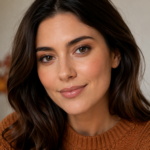
Fall makeup can look slightly intimidating when you’re a beginner.
You open Instagram or Pinterest looking for a simple autumn makeup idea, and five minutes later you’re watching someone apply three shades of contour, carve out a cut crease, glue on individual lashes, line their lips with two pencils, and casually mention their seventh face product.
Meanwhile, you’re holding one mascara and wondering whether concealer goes before or after foundation.
Been there.
The good news? Fall makeup for beginners doesn’t need to be complicated. You don’t need an overflowing makeup bag, professional brushes, or twenty minutes of blending before work. A good fall routine can be soft, warm, polished, and surprisingly forgiving.
Actually, fall is one of the nicest seasons for learning makeup.
The colours are easy to wear. Think cinnamon brown, muted rose, warm peach, soft plum, cocoa, burgundy, bronze, and creamy neutrals. The finishes can be softer too. You don’t have to chase glass-like skin or perfect razor-sharp eyeliner.
And that fits nicely with the wider makeup mood of 2026. Lightweight skin, blurred lips, diffused colour, and less rigid makeup are having a moment. Current beauty coverage has also leaned toward makeup that looks lived-in rather than painstakingly perfect.
Translation?
If your eyeliner isn’t perfectly symmetrical, autumn is willing to forgive you.
So, if you’re learning makeup from scratch, or you simply want an easy routine that works before class, work, school drop-off, brunch, or a hurried Monday morning- this guide will walk you through it.
No makeup degree required.
First, What Actually Makes Makeup Feel “Fall”?
Technically, you can wear any makeup colour during any season.
Blue eyeliner in October? Fine.
Pink gloss in November? Also fine.
Makeup isn’t a seasonal law book.
Still, fall tends to bring a change in texture, colour, and mood. Summer makeup often feels sheer, juicy, bronzed, glossy, and sun-soaked. When cooler weather arrives, people naturally start reaching for colours with a little more depth.
Your coral blush may become dusty rose.
Golden bronzer may shift toward soft neutral brown.
Clear gloss might turn into a berry stain.
Champagne shadow may become bronze or cocoa.
Even fashion plays into it. Burgundy, red, royal purple, peach, and other saturated shades are appearing strongly across fall 2026 fashion coverage, which makes them easy reference points for makeup too.
But here’s the part beginners often miss: you don’t need to change your entire makeup bag for fall.
Keep the products that already work.
Then add seasonal character through one or two details.
Maybe it’s a brown eyeliner.
Maybe it’s a muted berry lip.
Maybe it’s warm blush.
Maybe it’s nothing more dramatic than swapping your bright summer gloss for a rosy balm.
Small changes can make the whole face feel more autumnal.
Before Buying Anything, Build a Small Beginner Makeup Kit
Beauty aisles are designed to make everything look necessary.
Primer! Setting spray! Bronzer! Contour! Highlighter! Brow wax! Brow pencil! Brow pen! Lip oil! Lip stain! Lip liner!
Suddenly your “simple beginner makeup kit” costs as much as a utility bill.
You don’t need all of it.
Recent beginner guidance from makeup artists makes the same basic point: makeup can be effective without being complicated, and beginner-friendly products usually work best when they are easy to blend and difficult to overapply.
A practical starter kit could include:
- A skin tint, tinted moisturiser, BB cream, or light foundation
- Concealer
- Cream or powder blush
- Brow gel or brow pencil
- One small neutral eyeshadow palette
- Brown or black eyeliner, if you enjoy liner
- Mascara
- A tinted balm, lip stain, gloss, or lipstick
- Translucent or pressed powder if you get oily
- A sponge or a few basic brushes
That’s enough.
Really.
Bronzer, highlighter, primer, lip liner, contour, setting spray, false lashes, and speciality brushes can come later if you want them.
Your first makeup bag should feel useful, not like inventory management.
Step 1: Prep Your Skin Before Makeup Touches Your Face
Here’s the thing: sometimes “bad makeup” is actually poorly prepped skin.
Foundation catches around dry patches.
Concealer looks heavy beneath the eyes.
Blush refuses to blend.
The instinct is usually to blame the makeup.
Sometimes the real problem started ten minutes earlier.
Fall air can feel cooler and drier, while indoor heating may make skin feel less comfortable too. So your makeup routine may need a little more hydration than it did during humid summer mornings.
Start with clean skin.
Then apply the skincare you normally use, keeping things simple. For many people, that means moisturiser and sunscreen during the day. If your skin feels dry, a hydrating serum underneath may help, but you don’t need to pile on five skincare layers before foundation.
Too many layers can create another problem: pilling.
You know those annoying little rolls that appear when your sunscreen, moisturiser, and makeup start rubbing against each other? That’s pilling. Giving skincare a little time to settle before makeup can help reduce it. L’Oréal’s current makeup guidance, for example, recommends letting skincare absorb before continuing with complexion products.
And please don’t skip sunscreen because summer ended.
Autumn clouds don’t switch off ultraviolet radiation.
Your fall makeup routine can change. Your sun protection shouldn’t disappear with the sandals.
Step 2: Use Less Base Makeup Than You Think You Need
Beginner instinct says:
More foundation = smoother skin.
Makeup usually has other plans.
Applying a thick layer everywhere can make texture, dryness, and tiny expression lines more obvious. It can also make the whole routine harder because now you have more product to blend.
Start small.
Place a little skin tint or foundation around the centre of your face, usually around the nose, cheeks, chin, and forehead, then blend outward.
Use clean fingers, a damp sponge, or a foundation brush. There is no moral superiority attached to any tool. If your fingers give you the nicest finish, use your fingers.
The goal isn’t to erase your face.
It’s to even things out.
That distinction matters.
Lightweight complexion products are especially relevant in 2026, with beauty coverage continuing to highlight sheer textures and skin that still looks like skin.
For a beginner, that’s convenient. Sheerer bases tend to be easier to correct because small blending mistakes aren’t screaming from across the room.
If you have freckles, let some show.
If a tiny blemish remains visible, that’s fine too.
Your skin is allowed to look like skin.
Step 3: Concealer Is for Strategic Editing, Not Full-Face Painting
Concealer is where beginners often get surprisingly ambitious.
There’s a reason tutorials showing giant triangles beneath both eyes became popular: they look satisfying on camera.
In everyday life, though, you may need much less.
Try placing a small amount where you actually want coverage.
Maybe that’s the inner corners beneath your eyes.
Maybe it’s beside your nose.
Maybe it’s over one breakout that appeared exactly before an important meeting because apparently skin has comic timing.
Tap the concealer into place instead of immediately spreading it everywhere.
If you want more coverage, add another thin layer.
This approach is easier than trying to remove too much product after you’ve already applied it.
For a natural fall look, concealer should quietly help, not announce itself.
Step 4: Set Only Where You Need It
Powder can be helpful.
Powder can also make dry fall makeup look like it has spent three weeks wandering through a desert.
So don’t automatically powder your whole face.
If your forehead, nose, or chin gets shiny, lightly press powder into those areas.
If your cheeks stay dry, you may barely need powder there.
Under the eyes, use a tiny amount if your concealer tends to crease. Tiny means tiny. You aren’t baking a birthday cake.
The goal is balance: control unwanted shine without removing every trace of natural dimension.
This is especially useful right now because softer, blurred finishes are prominent in 2026 makeup, but blurred doesn’t have to mean chalky or flat.
Think soft focus, not drywall.
Step 5: Give Your Brows Some Shape, Without Redrawing Them Entirely
Brows can change the structure of your whole face, which is why even a quick brow step makes simple makeup look more finished.
But please resist the beginner urge to completely invent new eyebrows.
Start by brushing your brow hairs upward and outward.
Already looks better, right?
If your brows are fairly full, tinted or clear brow gel may be enough.
If you have sparse spots, use a fine pencil and make short strokes that imitate hairs. Concentrate on gaps rather than filling every millimetre with solid colour.
Use a lighter hand near the front.
The tail can have slightly more definition.
And don’t worry if your eyebrows aren’t identical.
They’re siblings, as the old beauty saying goes, not photocopies.
Step 6: Your Easiest Fall Eye Look Needs One or Two Shadows
This is where autumn becomes fun.
You do not need a twelve-shade masterpiece.
For an easy beginner fall eye look, choose one medium neutral shade, something like taupe, soft brown, cinnamon, muted bronze, terracotta, cocoa, or dusty mauve.
Sweep it across the lid.
Then blend the edges until you can’t clearly see where the shadow stops.
Done.
Seriously.
If you want more depth, place a slightly darker brown at the outer corner and blend inward.
For evening, tap bronze, copper, champagne, or muted gold shimmer onto the centre of the lid with your finger.
That’s a complete eye look.
And because 2026 makeup is playing with texture and colour, you can also experiment once the basics feel comfortable. Allure has highlighted colourful eye makeup and shimmer among the year’s bigger directions, while Vogue’s fall runway reporting noted pastel blue eye looks as well.
But trends are invitations, not homework.
If blue shadow terrifies you, stay with brown.
You are doing your makeup, not sitting an exam.
Step 7: Brown Eyeliner May Be Your Beginner Best Friend
Black eyeliner can look gorgeous.
It can also be unforgiving when you’re learning.
Brown liner gives you definition with slightly less intensity, which makes little imperfections harder to notice.
Try running a brown pencil close to your upper lash line.
Don’t worry about creating a wing yet.
Then gently blur the line with a cotton swab, small brush, or fingertip.
That soft, slightly smoked effect actually suits fall beautifully, and current fall 2026 runway beauty has included deliberately smudged eyeliner rather than only ultra-clean graphic lines.
See? Your imperfect liner has fashion credentials now.
For more definition, place a little pencil along the outer third of your lower lash line and softly blend.
Stop before the eye starts looking heavy.
With eyeliner, the difference between “soft autumn definition” and “I accidentally joined a rock band” can be about thirty seconds of enthusiastic application.
Step 8: Mascara Does More Work Than It Gets Credit For
Mascara may be the easiest product for making the eyes look more awake.
Curl your lashes first if you like.
Then place the mascara wand near the roots of your upper lashes, wiggle slightly, and sweep upward.
One coat may be enough for daytime.
Add another if you want more volume.
Black mascara gives stronger contrast. Brown mascara can create a softer effect, especially with warm neutral makeup.
If mascara gets onto your eyelid, don’t panic and immediately rub it.
Let the little spot dry.
Then flick it away gently with a clean cotton swab.
Fresh mascara smears.
Dry mascara usually behaves much better.
Another oddly useful life lesson provided by makeup.
Step 9: Blush Is Where Your Face Comes Back to Life
Foundation and concealer even out your skin tone, but they can also remove some of your natural flush.
Blush brings it back.
For fall, try shades like muted rose, warm peach, cinnamon, terracotta, berry, plum, or soft brick depending on your complexion and undertone.
Don’t get too trapped by colour names, though.
“Dusty cinnamon sunset” might be one brand’s way of saying brownish peach.
Look at the actual shade.
Cream blush is especially friendly for beginners because you can tap it on with your fingers and slowly build the colour. Powder blush works beautifully too; just tap excess product from the brush before touching your cheek.
Start around the upper cheek area and blend.
You can bring the colour slightly toward the centre of the face if you like a fresh flush, or keep it higher and farther outward for a lifted effect.
The secret is boring but important:
Use less.
Then add more.
Trying to remove heavily pigmented blush after the fact is like trying to put toothpaste back inside the tube. Technically, there may be a way. Emotionally, nobody needs that challenge at 7:42 a.m.
What About Bronzer and Contour?
You can skip both.
Yes, even in fall.
Bronzer adds warmth.
Contour creates the appearance of shadow and structure.
They’re not the same thing, although the internet occasionally treats them like cousins who keep borrowing each other’s clothes.
If you’re new to makeup and already learning foundation, concealer, brows, eyes, blush, and lips, leave contour for another day.
Once you’re comfortable, try a soft bronzer around the areas where warmth naturally looks flattering—often the upper forehead, temples, and outer cheeks.
But don’t add a product merely because a tutorial says the step exists.
Every makeup routine is editable.
Step 10: Try a Fall Lip Without Making It High-Maintenance
This may be the easiest way to turn basic makeup into fall makeup.
Keep the entire face neutral.
Then change the lip.
Suddenly: autumn.
Beginner-friendly fall shades include rosy brown, caramel nude, muted berry, brick red, plum, warm rose, soft burgundy, and cocoa-toned nude.
Just make sure your “nude” doesn’t erase your mouth. Nude is relative to your complexion.
You also don’t need to begin with an opaque matte lipstick.
Tinted balm is easy.
Gloss is easy.
Sheer lipstick is easy.
Lip stains are particularly useful when you’re busy because they can leave colour behind without requiring the same constant maintenance as some traditional lip products. Lip stains remain a notable 2026 beauty trend for exactly that kind of convenience.
For a softer fall lip, apply lipstick or stain near the centre of your lips and blur the edges with your finger.
That creates a diffused effect rather than a precise, sharply lined mouth, and blurred lips have been part of the broader 2026 soft-focus makeup direction.
It also happens to be much easier when you’re applying makeup in a car mirror before walking into work.
Not that anyone has ever done that.
Obviously.
The Beginner Fall Makeup Look You Can Wear Almost Anywhere
Once you understand each piece, the full routine becomes much less intimidating.
Picture this:
Your skin looks even but still natural.
A little concealer brightens the areas that need it.
Brows are brushed into place.
Soft brown or taupe shadow adds warmth around your eyes.
Brown liner is blurred close to the lashes.
Mascara opens the eyes.
Muted rose or peach blush brings colour back into your face.
A berry balm finishes everything.
That’s fall makeup.
Not theatrical. Not complicated. Just polished.
You could wear it to university, the office, lunch, a parent meeting, a date, church, coffee with friends, or a random Tuesday when you want to feel slightly more put together.
And because the colours are soft, you don’t need an exact hand.
That’s one reason autumn palettes work so well for beginners: many brown, rose, bronze, berry, and muted plum tones blend into each other beautifully.
Wait, Do Fall Colours Work on Every Skin Tone?
Yes, but not every version of the same colour will.
Take nude lipstick.
On fair skin, a rosy beige might look beautifully neutral.
On deeper skin, that exact shade might look pale or grey.
A richer caramel, brown rose, cocoa, or berry-brown may create the same effect of a balanced neutral lip.
The same principle applies to blush.
Soft peach may create visible warmth on lighter skin.
A richer burnt peach or terracotta may create a similar warmth on deeper skin.
Berry shades can also look gorgeous across many complexions, but the depth and undertone matter.
So don’t chase the shade name.
Chase the effect.
Ask yourself: Does this make my face look fresh? Does it suit the contrast in my features? Does it make me want to keep looking in the mirror for another second?
Good.
That’s useful information.
Warm Undertone? Cool Undertone? Neutral? Please Don’t Panic
Beauty content sometimes makes undertones sound like advanced chemistry.
They’re useful, but you don’t need to solve your entire complexion on your first makeup-shopping trip.
As a rough starting point, warm undertones often look harmonious with golden browns, peach, copper, terracotta, and warm reds.
Cool undertones may suit mauve, plum, rosy pink, cool brown, berry, and blue-red shades.
Neutral undertones can often move comfortably between both groups.
But personal preference wins.
Colour can technically “break the rules” and still look fantastic because your hair, eye colour, clothing, contrast level, and personal style all affect the final result.
Wear the lipstick.
See how you feel.
Makeup is allowed to be less scientific than a spreadsheet.
Five Beginner Mistakes That Make Fall Makeup Harder Than It Needs to Be
The first is using too much product too quickly.
Foundation, concealer, blush, shadow, almost everything is easier when you begin with less.
The second is copying someone’s exact shades without considering your complexion.
That beautiful pale beige lip from a tutorial may not translate the same way on everyone.
Third: trying every technique at once.
Don’t learn winged liner, contour, false lashes, overlining, and smoky shadow on the same Monday morning.
Pick one new skill.
Practice it.
Then add another.
Fourth: forgetting about lighting.
Bathroom lighting can lie with remarkable confidence. Check your makeup near a window before leaving when possible.
And fifth: expecting makeup to look like filtered content.
Real skin has pores.
Real concealer can crease a little.
Real lipstick fades.
Real makeup moves when your face moves.
None of that means you’ve failed.
Your Five-Minute Fall Makeup Routine for Busy Mornings
Some mornings aren’t “full routine” mornings.
They’re “where are my keys?” mornings.
Professional makeup artists interviewed by Allure about fast routines consistently focused on high-impact steps such as evening the complexion, adding blush, and defining brows or eyes rather than trying to complete every possible makeup stage.
For your own rushed fall morning, think in the same way.
Apply concealer where you need it.
Brush through your brows.
Tap cream blush onto your cheeks.
Add mascara.
Finish with tinted balm or lip stain.
If you have another minute, smudge a little brown shadow or liner near your lashes.
That’s it.
You can look more awake without turning getting ready into project management.
For students running to lectures, professionals with early commutes, and mothers whose mornings are already packed before breakfast, this kind of routine makes much more sense than a twelve-product performance.
How to Turn Your Day Makeup Into an Evening Fall Look
Don’t start over.
Build.
That word may save you twenty minutes.
If you already have your daytime base on, deepen the outer corners of your eyes with brown, plum, or bronze shadow.
Add a little liner.
Apply another coat of mascara if yours layers well.
Tap on slightly more blush.
Then swap your daytime lip balm for berry, burgundy, brick, or deep rose.
Done.
If you want extra light around the face, add a small amount of shimmer to the inner corners of the eyes or centre of the lids.
Fall evening makeup can have richness without becoming heavy.
Think candlelight, not stage lighting.
And What If You Want to Try the 2026 Trends?
Choose one.
That’s the easiest way.
Current 2026 beauty trends include blurred finishes, stronger colour, shimmer, lip stains, and makeup with an intentionally imperfect or softly undone quality.
You could try a blurred berry lip with otherwise basic makeup.
Or pale blue shadow with soft skin and neutral lips.
Or a touch of metallic shadow.
Or smudged brown liner.
Or a brighter red lip paired with almost nothing else.
Notice the pattern?
One feature gets the attention.
Everything else supports it.
That’s a particularly useful rule when you’re new to makeup because it keeps the face balanced and keeps your routine manageable.
How Often Should You Practice Makeup as a Beginner?
Whenever you feel like it, but don’t save every experiment for the morning of an important event.
Practice when nothing depends on the result.
Try eyeliner before your evening shower.
Experiment with berry lipstick while you’re doing laundry.
Test foundation shades when you have time to walk to a window and look at them in daylight.
Play with eyeshadow on a quiet Sunday.
There’s less pressure when you’re not trying to get somewhere.
You’ll also learn small things tutorials cannot fully teach you.
You’ll learn that your concealer looks better when you use half as much.
You’ll learn that you prefer blush slightly higher.
You’ll discover brown mascara makes your eyes look softer, or that you hate brown mascara and want black forever.
You’ll learn that the lipstick everyone calls “universally flattering” does absolutely nothing for you.
Useful discoveries.
Makeup gets easier when your face becomes your reference point rather than someone else’s tutorial.
Do You Need Expensive Makeup to Get a Good Fall Look?
No.
Technique matters far more than whether your blush came from a luxury counter or the drugstore.
Beginner makeup guidance published this year continues to include accessible, easy-to-use formulas alongside prestige products, which is a useful reminder that a functional routine doesn’t require a luxury budget.
Spend based on your priorities.
If foundation matching is difficult for you, you may care more about finding a complexion range that matches properly.
If lipstick is your favourite part of makeup, maybe that’s where you enjoy spending.
If you barely wear eyeshadow, don’t buy an enormous palette because twelve shades of aubergine looked romantic under shop lighting.
Buy what you’ll actually use.
Your makeup bag doesn’t need to impress anybody while it’s sitting in a drawer.
A Small Fall Makeup Capsule Is More Useful Than a Huge Collection
Here’s a nice experiment.
Imagine you could only keep enough makeup to create three looks:
A quick weekday face.
A polished everyday fall face.
A slightly stronger evening look.
What would you genuinely need?
Probably fewer products than you think.
One flexible base.
One concealer.
One blush.
A brow product.
Mascara.
A small neutral palette.
A brown liner.
Two or three lip colours.
Maybe powder.
That little collection could create dozens of combinations.
Minimal doesn’t mean boring. It means your products earn their place.
And when you’re getting ready before an 8 a.m. lecture or while someone in the next room is asking where their shoes are, fewer decisions can feel surprisingly luxurious.
Fall Makeup for Beginners: Frequently Asked Questions
What makeup should a beginner buy first?
Start with products that make the biggest visible difference and are easy to control: concealer or a lightweight base, blush, brow gel or pencil, mascara, and a lip product you enjoy wearing.
Add eyeshadow and eyeliner once you want more definition.
You don’t need a complete professional kit.
What is the easiest fall eyeshadow colour for beginners?
Soft brown is hard to beat.
Taupe, bronze, muted rose, cinnamon, cocoa, and gentle mauve are also beginner-friendly because they blend easily and work with many autumn looks.
Choose a shade that isn’t extremely dark or intensely pigmented for your first attempts.
Is cream or powder makeup better for beginners?
Neither is automatically better.
Cream formulas often blend easily with fingers and can look fresh on drier skin.
Powders can be quick, tidy, and helpful for oily areas.
Many people use both.
Choose the texture you find easier to control.
Can beginners wear dark fall lipstick?
Of course.
If a deep burgundy lipstick feels intimidating, apply a small amount and tap it out with your finger for a softer stain.
You can gradually build the intensity as you become more comfortable.
Do I need primer for fall makeup?
Not necessarily.
If your skincare and foundation already sit well together, primer may not add much to your routine.
Primer becomes more useful when you’re trying to address a particular issue, such as excess shine, visible texture, dryness, or makeup longevity.
How can I stop makeup from looking dry in fall?
Start with comfortable, moisturised skin.
Use thin complexion layers, avoid excessive powder, and choose formulas that suit your skin type.
Putting more foundation over flaky areas usually makes them more noticeable rather than less.
What’s the easiest everyday fall makeup look?
Try light base makeup, spot concealer, brushed brows, soft brown shadow, mascara, muted rose blush, and a berry or rosy-brown lip balm.
It’s simple, wearable, and easy to adjust.
How long should beginner makeup take?
There is no correct time.
A basic routine can take five to ten minutes once you know your products.
Learning takes longer because you’re still figuring out placement and technique.
Speed comes later.
Don’t rush the useful part.
Your Fall Makeup Doesn’t Have to Look Perfect to Look Good
Maybe that’s the most important beginner lesson.
Your first eyeliner wing may wobble.
Your blush might occasionally become enthusiastic.
You may buy a lipstick that looked mysterious and expensive in the tube but somehow turns orange the second it meets your face.
That’s makeup.
You learn by wearing it.
Fall happens to give beginners a wonderfully forgiving playground: soft browns, warm peaches, muted berries, bronze eyes, blurred lips, brushed brows, and skin that doesn’t need to look airbrushed.
Start simple.
Use less than you think.
Blend.
Look at your face.
Adjust.
Then leave the house.
Because the best beginner fall makeup routine isn’t the one with the most products, the newest trend, or the most complicated technique.
It’s the one you can actually do, on your own face, with your own hands, on an ordinary morning, and still feel like yourself when you look in the mirror.