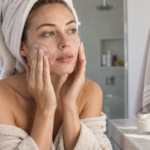
There’s something oddly satisfying about stepping out of the shower with skin that feels ridiculously smooth. Your elbows feel softer. Your legs don’t have that rough, dull texture. Even your body lotion seems to glide on better.
Naturally, exfoliation gets a lot of credit for that feeling.
But body exfoliation is also one of those skincare steps that can go wrong surprisingly fast.
Scrub too hard, exfoliate too often, mix several acids, and suddenly your “smooth skin routine” has turned into redness, itching, burning, tiny bumps, or dark marks.
Not exactly the plan.
The good news? You don’t need an aggressive body scrub or a complicated Sunday-night ritual to exfoliate your body well. In fact, gentler exfoliation is often the smarter approach.
The American Academy of Dermatology (AAD) describes exfoliation as removing dead skin cells from the outer layer of the skin. Dermatologists also caution that exfoliation isn’t suitable for every person or every skin condition, and doing too much can irritate or damage the skin.
So, if you’ve been wondering how to exfoliate your body safely, how often you should do it, or whether chemical exfoliants are really better than scrubs, here’s the practical version.
No sandpaper skin required.
First, What Does Body Exfoliation Actually Do?
Your skin naturally sheds old cells through a process called desquamation. You usually don’t notice it happening. Cells reach the surface, eventually loosen, and fall away.
Very glamorous stuff.
Sometimes, however, dead cells collect on the surface instead of shedding evenly. Your skin may start feeling rough, looking dull, or developing patches where texture seems more noticeable.
Exfoliation helps remove some of that surface buildup.
Depending on the product and your skin, it may make your body feel smoother and help improve the appearance of rough texture.
Some exfoliating ingredients are also useful for conditions involving excess dead-cell buildup. For example, dermatologists may recommend ingredients such as lactic acid, glycolic acid, salicylic acid, or urea for keratosis pilaris, the tiny rough bumps commonly found on the arms and thighs.
Still, exfoliation has limits.
It won’t permanently shrink pores. It won’t magically erase stretch marks. And scrubbing harder won’t make dark spots disappear faster.
That last one matters.
Irritation itself can sometimes make pigmentation more noticeable, particularly in people whose skin tends to develop dark marks after inflammation. The AAD specifically advises caution with aggressive exfoliation in darker skin tones and in people who frequently develop pigmentation after burns, bites, or acne.
So think of exfoliation as maintenance, not punishment.
Physical vs. Chemical Exfoliation: What’s the Difference?
You’ll usually see body exfoliation divided into two categories: physical and chemical.
Both remove surface buildup, but they work differently.
Physical exfoliation
Physical, or mechanical, exfoliation removes dead skin through friction.
That could involve:
- A washcloth
- An exfoliating glove
- A soft body brush
- A sponge
- A body scrub
The appeal is obvious. You can feel it working immediately.
And there’s nothing inherently wrong with physical exfoliation.
The problem is enthusiasm.
It’s incredibly easy to assume more pressure equals smoother skin. Then you scrub the same patch for three minutes because it “still feels rough.”
Your skin would like a word.
The AAD recommends using light pressure with physical exfoliation. When using a scrub, gentle circular motions for around 30 seconds are enough before rinsing with lukewarm water. Brushes and sponges should also be used with short, light movements rather than forceful scrubbing.
Think polishing, not sanding.
Chemical exfoliation
Chemical exfoliants use ingredients that help loosen or shed dead surface cells.
Common body exfoliating ingredients include:
Lactic acid: An alpha hydroxy acid, or AHA. It’s frequently found in lotions designed for dry, rough, or bumpy skin.
Glycolic acid: Another AHA. Because of its exfoliating properties, it appears in toners, body treatments, lotions, and peels.
Salicylic acid: Often called a beta hydroxy acid, or BHA, in skincare. It’s commonly used in products aimed at clogged pores, body breakouts, rough bumps, and oily skin.
Urea: This one wears two hats. Depending on the formulation, urea can help moisturise dry skin while also softening thick, rough surface buildup.
DermNet lists urea, salicylic acid, lactic acid, and fruit acids among commonly used keratolytic ingredients—substances that help loosen excess scale or thickened surface skin.
Chemical exfoliation sounds stronger because, well, “acid” isn’t exactly a soothing word.
But a properly formulated acid body lotion can actually feel gentler than repeatedly rubbing skin with a gritty scrub.
Which brings us to the obvious question.
So, Is Chemical Exfoliation Better Than a Body Scrub?
Not automatically.
Your skin type, skin concerns, product strength, and routine matter more than which camp you join.
If your skin is dry or easily irritated, a mild chemical exfoliant or a soft washcloth may be more comfortable than a grainy scrub. Dermatologists specifically note that dry, sensitive, and acne-prone skin can sometimes find mechanical exfoliation irritating.
If your skin tolerates physical exfoliation well, meanwhile, gently using a washcloth or mild scrub occasionally may be perfectly reasonable.
You also don’t need both methods during the same shower.
This is where skincare routines sometimes become a little… ambitious.
An exfoliating glove followed by an acid body wash followed by a glycolic lotion is not necessarily three times better.
It may simply be three times more irritating.
Pick one main exfoliating method first. See how your skin responds. Add complexity only when there’s a real reason.
Your body-care routine doesn’t need quarterly performance targets.
How to Exfoliate Your Body Safely, Step by Step
Here’s a simple approach that works better than turning your bathroom into a chemistry lab.
Step 1: Look at your skin before you exfoliate
Yes, actually look.
If the area is sunburned, cut, cracked, raw, inflamed, or already irritated, leave it alone.
The AAD advises against exfoliating open wounds, cuts, or sunburned skin.
Also pay attention to unusual rashes, painful bumps, or intense itching. Those aren’t situations where “maybe it needs a scrub” should be your first thought.
Sometimes skin needs treatment.
Sometimes skin needs absolutely nothing except kindness and moisturiser.
Step 2: Take a warm, not scorching, shower
Very hot water can make dry skin feel even tighter afterwards.
Use comfortably warm water and a gentle body cleanser.
This also softens surface buildup before physical exfoliation, meaning you shouldn’t need much pressure.
Step 3: Use one exfoliating method
For physical exfoliation, use your washcloth, glove, sponge, or mild scrub gently.
Don’t press hard.
Don’t scrub until your skin turns pink.
And no, the product doesn’t need to feel painfully “grainy” to work.
For a leave-on chemical exfoliant, follow the product directions. Some exfoliating lotions go onto clean, dry skin after the shower rather than being used while bathing.
More product doesn’t equal faster results.
Follow the label.
The FDA similarly advises users of BHA-containing cosmetics to test products on a small area first, follow application instructions, and stop using them if they experience persistent stinging or irritation.
Step 4: Rinse physical exfoliants completely
Leftover scrub particles aren’t doing overtime for you.
Rinse thoroughly with lukewarm water.
Then gently pat your skin dry rather than rubbing aggressively with your towel.
Step 5: Moisturise
This step deserves more attention than it usually gets.
Exfoliation can leave skin feeling drier, so moisturising afterwards helps support hydration. The AAD recommends applying moisturiser immediately after exfoliating.
Look for body creams or lotions containing familiar barrier-friendly ingredients such as:
- Ceramides
- Glycerin
- Petrolatum
- Shea butter
- Hyaluronic acid
You don’t need every ingredient in one bottle.
A plain moisturiser that your skin tolerates is better than a trendy formula that stings every time you apply it.
How Often Should You Exfoliate Your Body?
There isn’t one magic schedule.
Despite what social media routines may suggest, your body does not need a full-body scrub every evening.
How often you exfoliate depends on the method, product strength, skin type, and area of the body.
The AAD puts it simply: the more aggressive the exfoliation method, the less often it generally needs to be performed.
For many people, starting once a week is sensible.
If your skin remains calm and the product directions allow it, you may gradually increase frequency.
Some gentle exfoliating body lotions are designed for more frequent use. Stronger treatments may be used much less often.
The package matters here.
So does your skin.
If the label says three times weekly but your skin starts burning after the second application, your skin gets the final vote.
How to Exfoliate Dry Skin
Dry skin can benefit from removing flaky buildup, but it also becomes irritated easily.
A harsh scrub plus a long hot shower is rarely a winning combination.
Instead, keep things gentle.
A soft washcloth may be enough. Alternatively, consider a moisturising formula containing lactic acid or urea.
Lactic acid is an AHA used in skincare to encourage surface-cell shedding, while urea is commonly used to soften thick or rough skin.
Afterwards, apply a rich moisturiser.
If your legs look ashy, flaky, and tight after exfoliating, that’s not a sign that you removed “all the dead skin.”
It may simply mean your routine was too drying.
What About Sensitive Skin?
Sensitive skin needs restraint.
Start with the mildest method available, such as a soft washcloth or very gentle chemical formula used infrequently.
Avoid stacking exfoliating products.
And patch test anything new before covering both legs, arms, shoulders, and chest with it.
If you’re thinking, “But I bought the jumbo bottle already,” I know.
Patch test anyway.
Burning, prolonged stinging, swelling, and worsening redness aren’t signs that an exfoliant is “purging” your body.
They’re warning signs.
Stop.
How to Exfoliate Oily or Acne-Prone Body Skin
Body acne often appears on areas such as the back, shoulders, and chest.
For these areas, salicylic acid may be useful because it has exfoliating properties and appears in many acne-focused skincare formulas.
But acne-prone skin still doesn’t need brutal scrubbing.
In fact, aggressive friction can make irritated breakouts even angrier.
If your body acne is persistent, painful, cystic, itchy, or leaving significant scarring, a dermatologist can help determine whether you’re dealing with acne, folliculitis, or another condition.
Those can look frustratingly similar in the bathroom mirror.
Those Tiny Arm Bumps? Let’s Talk Keratosis Pilaris
If your upper arms or thighs have lots of tiny rough bumps that feel a bit like permanent goosebumps, you may have keratosis pilaris.
It’s extremely tempting to scrub them.
Hard.
Please resist.
Keratosis pilaris involves keratin plugging hair follicles, and aggressive scrubbing can irritate the area instead of fixing it.
The AAD recommends gentle exfoliation and notes that products containing ingredients such as glycolic acid, lactic acid, salicylic acid, retinoids, or urea may be used to improve the texture. They also recommend stopping exfoliating medication temporarily if the skin becomes dry or irritated.
Consistency tends to matter more than force.
That’s an annoyingly common theme in skincare, isn’t it?
Can Exfoliation Prevent Ingrown Hairs?
Exfoliation may help keep excess dead skin from collecting around hair follicles, but ingrown hairs have several causes.
Shaving technique matters too.
The AAD recommends shaving in the direction of hair growth, using shaving cream or gel, and changing razor blades regularly to reduce irritation and razor bumps.
If you’re prone to bumps around the bikini line, legs, underarms, or beard area, don’t assume harder exfoliation is the answer.
The cycle often looks like this:
You get bumps.
You scrub harder.
The skin gets inflamed.
Then you notice more discolouration.
So you scrub again.
Not ideal.
Gentle exfoliation, careful shaving, sharp razors, moisturising, and giving irritated skin time to recover usually make more sense.
A Quick Word About Exfoliating and Waxing
Waxing already stresses the surface of your skin.
Freshly waxed skin can be temporarily red and sensitive, and waxing itself may sometimes cause irritation, folliculitis, or pigmentation changes.
So this isn’t the moment to chase silky skin with an aggressive acid treatment.
Give irritated skin time to settle and follow your waxing professional’s aftercare guidance.
There’s another important point: certain medications can make waxing much riskier.
DermNet and the AAD both caution about waxing while using certain retinoid treatments because the skin may become more vulnerable to injury.
If you’re using prescription retinoids or taking isotretinoin, discuss hair removal and exfoliation with your dermatologist.
Can You Exfoliate While Using Retinol or Benzoyl Peroxide?
Be careful.
Retinoids, retinol, benzoyl peroxide, and other active treatments may already cause dryness, peeling, or irritation.
Adding exfoliation can push the skin too far.
The AAD specifically advises considering the products and medications already in your routine before exfoliating because combining exfoliation with retinoids or benzoyl peroxide can worsen irritation and dryness.
You don’t get bonus skincare points for using every active ingredient you own.
Sometimes a basic cleanser, treatment, and moisturiser is the more effective routine.
Do You Need Sunscreen on Your Body After Exfoliating?
On exposed skin, yes, sun protection matters, especially when using AHAs.
The FDA warns that alpha hydroxy acids can increase the skin’s sensitivity to ultraviolet radiation and the possibility of sunburn. Its guidance advises using sunscreen, protective clothing, and limiting sun exposure while using AHA products and for a period after stopping them.
That means shoulders, arms, chest, neck, legs, and feet count when they’re exposed.
We sometimes treat sunscreen like a face-only product.
The sun, inconveniently, has not agreed to that arrangement.
If you’re heading to class, commuting to work, doing the school run, having lunch outside, or spending your weekend outdoors, exposed body skin needs protection too.
Signs You’re Exfoliating Too Much
Skin usually gives warnings before things become disastrous.
Listen early.
Possible signs of over-exfoliation include:
- Persistent redness
- Burning or stinging
- Unusual tenderness
- Increased dryness
- Flaking
- Itching
- A tight, shiny appearance
- Products that suddenly sting
- Worsening bumps
- Increased sensitivity
Over-exfoliation can leave the skin barrier irritated. Cleveland Clinic notes that excessive exfoliation can contribute to sensitivity and irritation, which is exactly why more exfoliation isn’t always better.
If your skin starts protesting, stop exfoliating for a while.
Keep the routine boring.
Use a gentle cleanser.
Moisturise.
Avoid experimenting with new actives.
Let your skin recover.
Boring skincare has saved many dramatic skincare situations.
9 Body Exfoliation Mistakes That Can Sabotage Your Skin
1. Scrubbing harder because the skin feels rough
Pressure isn’t a treatment plan.
Repeated friction can make irritation worse.
2. Exfoliating every day without checking your product
Some formulas are made for frequent use. Others absolutely aren’t.
Read the instructions instead of creating your own schedule based on enthusiasm.
3. Using several exfoliants together
Acid cleanser.
Body scrub.
Exfoliating glove.
Glycolic toner.
Lactic acid lotion.
All in one evening?
Your skin did not request this meeting.
Start with one exfoliating product.
4. Exfoliating irritated skin
Sunburn, cuts, active irritation, and broken skin need recovery—not scrubbing.
5. Skipping moisturiser
Smooth skin isn’t just about removing dead cells.
Hydration matters.
Quite a lot, actually.
6. Ignoring your skin tone
If your skin readily develops dark marks after irritation, aggressive exfoliation can be especially frustrating.
Gentler methods are usually safer than repeatedly scrubbing discoloured patches.
7. Expecting instant results from chemical exfoliants
Physical scrubs provide immediate tactile smoothness.
Chemical exfoliants often work gradually.
That doesn’t mean they’re failing.
Give them time.
8. Using exfoliation to treat every bump
Some bumps are acne.
Some are keratosis pilaris.
Some could be folliculitis.
Some are irritation.
Treating every mystery bump with acid isn’t a great diagnostic system.
9. Treating stinging as proof that a product works
A slight sensation with some products may occur.
Persistent burning is different.
Pain isn’t a skincare achievement.
Should Your Exfoliation Routine Change With the Seasons?
Probably.
Your skin doesn’t behave the same throughout the year.
During cold or dry weather, skin often loses moisture more easily. You may find that a routine you tolerated during humid summer months suddenly feels harsh.
Reduce exfoliation if your body becomes flaky, itchy, or tight.
Use richer moisturisers.
And be careful with very hot showers, the tempting kind when the weather gets chilly.
In hot or humid climates, sweat, sunscreen, friction from clothing, and workouts may make rough texture or body breakouts feel more noticeable.
Still, don’t answer sweat with aggressive exfoliation.
Cleanse after heavy sweating when practical, change out of damp clothes, and use targeted products where needed.
Your skin wants consistency more than warfare.
A Simple Weekly Body Exfoliation Routine for Busy People
Between work, lectures, deadlines, childcare, commuting, dinner, gym sessions, and whatever else landed on the calendar, a 12-step body routine is unlikely to survive.
Try something simpler.
Once or twice during the week: Use your chosen gentle exfoliating method according to the product directions and your skin’s tolerance.
After every shower: Apply moisturiser, particularly to areas that get dry or rough.
During the day: Protect exposed skin from the sun.
Before shaving or waxing: Pay attention to irritation and avoid piling multiple potentially irritating treatments onto the same area.
Once a month: Look at your routine. Is your skin smoother and more comfortable? Great. Is it burning, flaky, itchy, or darker in patches? Scale things back.
That’s enough.
Body care should fit into your life, not become another task you’re failing to complete.
Frequently Asked Questions About Body Exfoliation
Should I exfoliate before or after washing my body?
For physical exfoliation, cleansing first is usually practical because it removes sweat, sunscreen, oil, and dirt before you gently exfoliate.
Leave-on chemical exfoliants may have different instructions, so follow the product label.
Should I exfoliate on wet or dry skin?
Most traditional body scrubs are designed for damp skin.
Some brushes and exfoliating tools may have different instructions.
Chemical body lotions are often applied to clean, dry skin.
Again, the product directions win.
Can I exfoliate my body every day?
Some gentle products are formulated for frequent use, but daily exfoliation isn’t automatically necessary.
Frequency depends on your skin and the product. Dermatology guidance emphasises that stronger exfoliation generally needs to happen less often.
What is the best exfoliant for dry body skin?
A gentle formula containing lactic acid or urea can be useful for rough, dry skin because these ingredients help soften surface buildup, and urea can also support hydration depending on the formulation.
What is the best exfoliant for body acne?
Salicylic acid is commonly used in products designed for clogged pores and acne-prone skin.
Persistent or severe body acne deserves medical advice rather than endless product experimentation.
Can exfoliation remove strawberry legs?
“Strawberry legs” isn’t one single medical condition. The dark dots may relate to visible follicles, keratin buildup, shaving, clogged pores, or follicular irritation.
Gentle exfoliation may improve texture for some people, but shaving technique and moisturising matter too.
Does exfoliation lighten dark skin?
Exfoliation removes surface cells; it does not bleach your natural skin tone.
If you’re trying to treat hyperpigmentation, especially after acne, shaving bumps, eczema, or irritation, aggressive exfoliation may actually make the problem worse.
Should I exfoliate before applying body lotion?
You can exfoliate during your shower and moisturise afterwards.
In fact, moisturising after exfoliation is recommended because exfoliation may contribute to dryness.
The Bottom Line: Gentle Wins
Body exfoliation can be incredibly useful.
It can help rough skin feel smoother. It can improve the look of flaky surface buildup. Ingredients such as lactic acid, glycolic acid, salicylic acid, and urea can also play useful roles in routines for concerns like rough texture and keratosis pilaris.
But your skin isn’t a kitchen counter.
You don’t need to scrub until every bit of texture disappears.
Choose one sensible exfoliating method. Start slowly. Moisturise afterward. Protect exposed skin from the sun. And pay attention when your skin starts feeling uncomfortable.
Most importantly, don’t confuse irritation with progress.
Smooth, healthy-looking body skin usually comes from surprisingly unexciting habits: gentle cleansing, measured exfoliation, regular moisturising, sun protection, and enough patience to let the routine work.
Simple?
Yes.
But sometimes simple is exactly what skin needs all along.