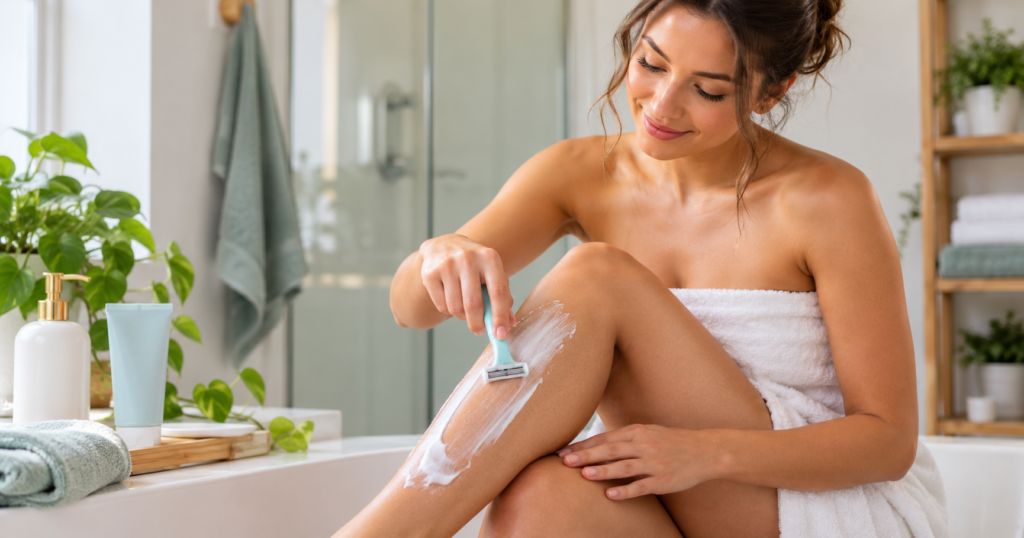

You finish shaving, rinse your skin, and everything seems fine.
Then comes the sting.
A few minutes later, your legs feel unusually warm. Your underarms start itching. Maybe your bikini line develops angry-looking patches, or your face feels as though someone rubbed it with sandpaper.
Hello, razor burn.
It’s one of those small skin problems that can ruin an otherwise perfectly good morning. And when you’re already trying to get dressed, pack lunch, find your keys, answer messages, or get everyone out of the house on time, dealing with burning skin isn’t exactly on the agenda.
The good news? Razor burn isn’t something you simply have to accept as part of shaving.
Small changes in how you prepare your skin, handle your razor, and care for your skin afterwards can make shaving far more comfortable.
And no, the answer isn’t necessarily buying the fanciest razor on the shelf.
Technique matters. Timing matters. Your skin barrier matters too.
Here’s how to prevent razor burn without turning a five-minute shave into a complicated skincare project.
First, What Exactly Is Razor Burn?
Razor burn is skin irritation that develops after shaving.
It may appear as redness, tenderness, itching, burning, small irritated patches, or a generally raw feeling across the shaved area. Depending on your skin tone, the irritation may not always look bright red. It can appear darker, slightly purple, ashy, swollen, or simply feel sore.
Razor burn can happen anywhere you shave, including your:
legs, underarms, face, neck, arms, bikini area, and pubic region.
Shaving itself removes hair, but the blade also travels across the outermost layers of your skin. When there isn’t enough lubrication, when the blade is dull, or when you repeatedly scrape the same patch, that friction can disrupt the skin barrier.
Think of your skin barrier like the protective finish on a wooden table. One gentle wipe? Fine. Scrub the same area over and over with something rough, and eventually that protective surface starts looking unhappy.
Your skin works in much the same way.
DermNet notes that wet shaving can cause razor burn, cuts, itching, folliculitis, ingrown hairs, and irritant contact dermatitis when shaving technique or skin conditions aren’t ideal.
Fortunately, razor burn usually settles once the skin gets a chance to recover.
The smarter approach, though, is preventing it before the burning starts.
Razor Burn and Razor Bumps Aren’t Quite the Same Thing
People often use “razor burn” and “razor bumps” interchangeably, but they’re different problems.
Razor burn is mainly irritation from shaving.
Razor bumps are usually related to hairs growing back into the skin. Dermatologists call this pseudofolliculitis barbae when it affects shaved hair follicles, especially around the beard and neck.
After a close shave, a cut hair can curve back toward the skin instead of growing cleanly outward. The body reacts to that trapped or re-entering hair with inflammation.
That creates those familiar bumps.
People with tightly curled or coarse hair are particularly prone to them because curved hairs can more easily grow back toward the skin. Mayo Clinic notes that tightly curled hair is a major risk factor for ingrown hairs, while DermNet reports that pseudofolliculitis is particularly common among people of African ancestry.
You can have razor burn without razor bumps.
You can also have both simultaneously, which is particularly unpleasant.
Thankfully, several prevention techniques work for both.
The Real Problem May Start Before Your Razor Touches Your Skin
One of the biggest shaving mistakes is treating preparation as optional.
You’re running late.
You spot some stubble.
You grab a razor.
A few quick strokes over dry skin and you’re done.
Technically, yes.
Your skin may file a complaint later.
Dry hair is harder for a razor to cut. Dry skin also creates more friction between the blade and your body. That combination encourages tugging, scraping, and irritation.
Instead, soften both your hair and skin first.
The American Academy of Dermatology recommends wetting the skin and hair before shaving. Shaving after a shower is particularly useful because warmth and moisture soften the hair while helping remove oil and dead skin that could otherwise collect around the razor.
If you’re shaving your legs, underarms, or bikini area, try leaving shaving until near the end of your shower.
Not after twenty-five minutes under steaming water; you don’t need to turn yourself into a raisin.
A few minutes of warm water is enough.
For facial shaving, a warm shower or clean warm washcloth can accomplish something similar.
This tiny adjustment can make the blade glide instead of drag.
And that difference matters.
Please Stop Dry Shaving When You Can
We’ve all done it.
Maybe there’s one tiny patch you missed on your ankle.
Maybe you’re wearing a sleeveless dress in ten minutes.
Maybe your schedule has simply betrayed you.
One quick dry shave seems harmless.
Occasionally, your skin may tolerate it. But if razor burn keeps appearing, dry shaving deserves a place near the top of your suspect list.
You need something between your skin and that blade.
Shaving cream or shaving gel creates slip. It reduces friction and allows the razor to move more smoothly across the surface.
Dermatologists recommend applying a moisturising shaving product and allowing it to soften the hair before shaving. DermNet suggests letting shaving cream or gel sit for roughly two to three minutes when possible.
That means you can apply your shaving gel, wash your hair, hum half a song, question several of your life choices, and then shave.
No complicated routine required.
If you have sensitive or dry skin, choose a gentle shaving cream without heavy fragrance.
And if your current shaving product makes your skin sting before you’ve even picked up the razor?
That’s useful information.
Your skin is telling you something.
Your Razor Might Be the Villain Here
A dull razor doesn’t simply become less efficient.
It changes how you shave.
Instead of cutting the hair cleanly, an old blade can tug. You press harder. Then you pass over the same area again.
And again.
Suddenly, a task that should require one or two light strokes has become a small-scale demolition project.
The American Academy of Dermatology recommends changing disposable razors or blades after around five to seven shaves to help reduce irritation.
Of course, five to seven shaves isn’t a magic number for every person or every razor.
How much hair you remove, how coarse that hair is, how large an area you shave, and how well you rinse the blade all affect its lifespan.
Pay attention to performance.
If the blade starts pulling hair instead of cutting smoothly, feels rough, shows rust, or suddenly requires pressure, retire it.
Your skin has done nothing to deserve a rusty razor you’ve kept since last semester.
More Blades Don’t Automatically Mean Better Skin
Five blades!
Six blades!
A lubricating strip!
A pivoting head that appears capable of navigating the moon!
Razor marketing can become surprisingly dramatic.
But a very close shave isn’t always ideal for irritation-prone skin.
Multiple blades may provide an extremely smooth result for some people, but others, especially people who frequently develop razor bumps, may do better with fewer blades or an electric trimmer that leaves a tiny amount of hair above the skin.
The American Academy of Dermatology suggests that people who regularly experience razor burns, bumps, or ingrown hairs may want to try a single- or double-blade razor instead of a very close multi-blade shave.
There’s a mild contradiction here: smoother sounds better.
For appearance, perhaps.
For certain skin types, shaving too close can create trouble.
That ultra-smooth finish may allow freshly cut curly hairs to retract toward the follicle and grow inward.
Sometimes leaving the tiniest hint of stubble is actually the skin-friendly move.
Shave With the Grain, Not Against It
This is one of the most important changes you can make.
Shave in the direction your hair naturally grows.
Going against the grain often gives an instantly closer shave. That’s why it’s tempting.
You run your hand across your leg afterwards and think, Oh, that’s smooth.
Nice for ten minutes.
Potentially irritating for the next two days.
Shaving against hair growth increases friction and can contribute to razor burn and ingrown hairs. Dermatology guidance consistently recommends shaving with the direction of hair growth to reduce irritation.
The tricky part?
Hair doesn’t always grow in one neat direction.
Underarm hair is particularly rebellious. Bikini-area hair may also grow diagonally, sideways, or in several patterns.
Before shaving, spend a few seconds looking and feeling for the direction of growth.
You don’t need an engineering diagram.
You simply want your first shaving pass to follow the general direction of the hairs instead of fighting them.
Light Pressure Wins
Pressing harder doesn’t make shaving more professional.
Usually it just makes the razor scrape closer against your skin.
Let the blade do the cutting.
Hold your razor comfortably and use light pressure with short strokes.
If you have to push down to remove the hair, something else probably needs attention—the blade may be dull, the hair may need more softening, or you may need more shaving cream.
Also resist stretching your skin tight while shaving.
It may seem like stretching creates a smoother surface, but it can encourage the freshly cut hair to retract beneath the skin afterwards. That increases the possibility of ingrown hairs, particularly for coarse or curly hair. Mayo Clinic specifically advises against pulling the skin while shaving for this reason.
Gentle wins here.
Not aggressive.
Not rushed.
Not “I need every microscopic hair gone immediately.”
One Pass Is Better Than Five
You know that tiny patch you keep shaving because you can still feel one hair?
That patch is probably begging you to move on.
Repeated strokes over the same skin increase friction.
DermNet recommends aiming for a one-pass shave where possible because repeated passes increase the likelihood of irritation.
Realistically, you may need a second pass in some places.
Fine.
Reapply shaving cream first.
What you don’t want is dragging a relatively dry blade over the same strip of skin five or six times.
Perfection is expensive when your skin barrier is paying the bill.
Rinse Your Razor More Often Than You Think
A razor clogged with hair and shaving cream can’t glide properly.
It starts skipping.
You add pressure.
Your skin suffers.
Rinse your razor after each stroke or every few short strokes, especially when shaving dense hair.
The AAD and Mayo Clinic both recommend frequent blade rinsing during shaving.
Use running water to clear trapped hair and product from between the blades.
And please don’t repeatedly smash the razor against the sink.
We’ve all seen people do it.
That can damage the razor and isn’t necessary.
A good rinse usually does the job.
Your Razor Needs Somewhere Dry to Live
Leaving your razor permanently sitting in a wet shower corner isn’t ideal.
Water, humidity, leftover hair, shaving cream, and skin debris create a pretty unpleasant little environment.
After shaving, rinse the razor thoroughly and allow it to dry.
The American Academy of Dermatology recommends storing razors in a dry place rather than leaving them in the shower or on a wet sink, partly to discourage bacterial growth.
A simple razor holder outside the direct shower spray works.
You don’t need a special sterilisation cabinet.
Just clean, dry, sensible storage.
And never share razors.
A razor is a personal grooming tool, not communal bathroom property.
What You Do Immediately After Shaving Matters Too
The shave is over.
Your skincare isn’t.
Freshly shaved skin has just experienced mechanical friction, so this isn’t necessarily the moment for your strongest skincare products.
Start simple.
Rinse away shaving cream thoroughly.
Cool or comfortably lukewarm water can feel soothing. You can also hold a clean, cool damp washcloth against irritated areas for a few minutes. Both the AAD and Mayo Clinic recommend a cool compress after shaving when razor bumps or irritation are a concern.
Then moisturise.
A gentle moisturiser helps reduce dryness and supports your skin barrier after shaving.
Look for fragrance-free formulas if your skin irritates easily. Ingredients commonly used in barrier-friendly moisturisers include glycerin, ceramides, hyaluronic acid, and other humectants or emollients.
The AAD notes that moisturisers help trap water in the skin and recommends fragrance-free products for irritation-prone skin.
Apply moisturiser while your skin is slightly damp rather than waiting until it feels tight.
That tight feeling isn’t a sign that your skin is “extra clean.”
It often means it wants moisture.
Your Aftershave Shouldn’t Feel Like Fire
There’s an old-fashioned idea that if aftershave burns, it must be working.
No.
Pain isn’t proof of effectiveness.
Products containing high levels of alcohol, strong fragrance, essential oils, or other irritating ingredients may make freshly shaved skin sting.
If a product repeatedly burns after application, stop using it.
Choose something calmer.
A lightweight fragrance-free lotion, soothing gel, or simple facial moisturiser can be more comfortable than a highly scented traditional aftershave.
The same idea applies to body care.
Your freshly shaved bikini line does not require a cloud of perfume.
Your underarms do not need five fragranced products stacked one after another.
Sometimes boring skincare is excellent skincare.
Be Careful With Exfoliation Around Shaving Day
Exfoliation can be useful.
It helps remove dead skin cells and may reduce the chance of hairs becoming trapped beneath the surface. Ingredients such as salicylic acid and glycolic acid are often used in routines for ingrown hairs.
But timing matters.
Using a strong exfoliating acid immediately after aggressive shaving can make already-sensitive skin burn.
The same goes for rough body scrubs.
Imagine lightly sanding a wall and then sanding it again because you’re worried you missed something.
There comes a point where “more” stops being helpful.
If you’re prone to razor bumps, gentle exfoliation on non-shaving days may work better than piling acids onto freshly shaved skin.
Start slowly, particularly around the bikini line and underarms.
And never apply an exfoliant to broken or visibly raw skin.
Sensitive Skin? Simplify the Whole Routine
Sensitive skin doesn’t necessarily mean you can’t shave.
It means your margin for error may be smaller.
Reduce unnecessary variables.
Use warm rather than very hot water.
Choose a mild cleanser.
Choose a fragrance-free shaving cream designed for sensitive skin.
Use a sharp razor.
Take slow, short strokes.
Rinse.
Moisturize.
Done.
The AAD recommends sensitive-skin shaving creams for people with dry or easily irritated skin and also advises fragrance-free moisturisers for people prone to irritation.
You don’t need a ten-product post-shave ritual.
In fact, freshly shaved sensitive skin may appreciate you leaving it alone.
Coarse or Curly Hair Needs a Slightly Different Strategy
If your hair is tightly curled, getting the closest possible shave may actually work against you.
The shorter that curved hair is cut, the easier it may be for the growing tip to re-enter the skin.
That can trigger inflammation, bumps, dark spots, and, in persistent cases, scarring.
This is especially relevant for Black skin, where pseudofolliculitis is common and post-inflammatory hyperpigmentation can linger long after the original bump disappears. DermNet notes that razor bumps are more common among people with darkly pigmented skin and curly, coarse hair.
Consider a single-blade razor or electric trimmer if multi-blade shaving repeatedly causes bumps.
Avoid stretching your skin.
Don’t shave extremely close.
Follow the direction of hair growth.
And don’t keep passing over an area trying to achieve glass-smooth skin.
Smooth skin today isn’t much of a victory if you’re fighting bumps for the next three weeks.
Preventing Razor Burn on Your Legs
Leg shaving can feel straightforward, yet several habits quietly create irritation.
Rushing is one.
Shaving upward against the hair is another.
So is shaving without enough gel because most of it washed down the drain halfway through your shower.
Let your leg hair soften under warm water first. Apply enough shaving cream or gel to maintain slip. Use long enough strokes to be efficient, but don’t press hard.
Take extra care around the ankle and knee, where the skin surface curves.
Those are classic “why am I bleeding?” areas.
Afterwards, moisturise.
If you’re immediately putting on tight jeans, leggings, or textured trousers, irritated skin may experience extra rubbing. When possible, give your legs a little breathing room.
Preventing Razor Burn Under Your Arms
Underarms are more complicated because hair often grows in multiple directions.
The area also deals with sweat, deodorant, friction, and tight clothing.
That’s a busy workload for a small patch of skin.
Use good lighting and notice the direction of growth before shaving.
You may need to change direction between sections rather than dragging the razor upward across everything.
After shaving, rinse well and moisturise if your skin tolerates it.
If deodorant normally stings immediately after shaving, consider shaving at night and applying deodorant later once your skin has settled.
That little schedule change can make mornings much more comfortable.
And Then There’s the Bikini Line
The bikini line deserves patience.
The hair tends to be coarse. The skin experiences friction from underwear and clothing. Curved hairs may grow inward.
Basically, it’s an irritation perfect storm.
If the hair is long, trim it first rather than forcing your razor through it.
Soften the area with warm water.
Use generous shaving gel.
Shave with the growth pattern using light strokes.
Don’t repeatedly scrape until every hint of hair has disappeared.
Afterwards, rinse and use a simple fragrance-free moisturiser if your skin tolerates one.
Loose underwear or clothing can also reduce friction right after shaving. Cleveland Clinic specifically recommends avoiding tight clothing over recently shaved areas when razor burn is a concern.
That may not sound glamorous.
Your skin does not care.
Don’t Shave Over Already Angry Skin
If your skin is currently covered in razor burn, shaving again tomorrow probably won’t improve negotiations.
Give the area time to recover.
Cleveland Clinic reports that uncomplicated razor burn often clears within a few hours to several days and recommends avoiding shaving the irritated area until it heals.
During that time, keep things gentle.
Skip harsh scrubs.
Avoid picking.
Avoid strong fragrance.
Use a cool compress when needed and apply a bland moisturiser.
If your skin develops significant pain, swelling, spreading redness, pus-filled bumps, warmth, or irritation that doesn’t improve after several days, get medical advice.
What looks like ordinary razor burn can occasionally be folliculitis, contact dermatitis, infected ingrown hairs, or another condition needing different treatment.
What If Razor Burn Keeps Coming Back?
Recurring irritation deserves investigation.
Not panic.
Investigation.
Ask yourself what stays consistent every time you shave.
Is it the same razor?
Are you shaving dry?
Do you automatically shave against the grain?
Are you using the blade for weeks?
Does your shaving gel sting?
Do bumps happen only when you shave extremely close?
Are you applying perfume, strong deodorant, retinoids, or exfoliating acids immediately afterwards?
Sometimes the culprit becomes obvious once you look at your routine as a system rather than blaming your skin.
If you keep developing painful bumps or dark marks even after improving your shaving technique, a dermatologist can help determine whether you’re dealing with pseudofolliculitis, folliculitis, dermatitis, or another issue.
Persistent razor bumps matter because chronic inflammation may cause hyperpigmentation or scarring.
You don’t have to keep cycling through irritation, healing, shaving, and irritation again.
The Simple Razor-Burn Prevention Routine
If everything above feels like a lot, the core routine is surprisingly short:
Warm. Lubricate. Shave gently. Rinse. Moisturize.
Start with warm water so the hair softens.
Apply enough shaving cream or gel to create good slip.
Use a clean, sharp blade.
Follow the direction of hair growth with light pressure.
Rinse your razor frequently.
Avoid repeatedly shaving the same patch.
Rinse your skin afterwards.
Use a cool compress if you’re especially irritation-prone.
Then apply a gentle moisturiser.
That’s the foundation.
Everything else is fine-tuning.
A Few Things You Really Don’t Need to Do
You don’t need to scrub your skin aggressively before every shave.
You don’t need the razor with the highest blade count.
You don’t need to press hard.
You don’t need to shave against the grain because social media told you that’s how to become dolphin-smooth.
You don’t need a burning aftershave.
And you definitely don’t need to keep using a dull blade because “it still technically works.”
Skin care often becomes unnecessarily complicated.
Preventing razor burn is mostly about reducing friction and respecting the skin barrier.
Give the razor less resistance.
Give your skin less trauma.
Give irritation fewer opportunities.
Simple.
Frequently Asked Questions About Razor Burn
How long does razor burn usually last?
Mild razor burn often disappears within a few hours to several days. Avoid shaving over the irritated area while it heals. If symptoms continue, become painful, appear infected, or repeatedly return, speak with a healthcare professional.
Why do I get razor burn every time I shave?
Common causes include dry shaving, using a dull blade, pressing too hard, shaving against hair growth, repeatedly shaving the same spot, irritating shaving products, or shaving very close to the skin.
Your hair texture may also influence your risk of bumps and irritation.
Does shaving cream really prevent razor burn?
It can significantly help reduce friction between your razor and skin.
The goal isn’t simply creating foam. You want enough lubrication for the blade to glide smoothly instead of scraping across the surface.
Should I shave before or after showering?
During or near the end of a warm shower is often ideal.
Your skin and hair have had time to become wet and soft, which can make shaving easier. Dermatologists commonly recommend shaving after the hair has been softened by warm water.
Is a single-blade razor better for razor burn?
Not universally.
Some people get excellent results with multi-blade razors.
However, people who frequently develop razor bumps or ingrown hairs may benefit from using fewer blades or switching to an electric razor because extremely close shaving can increase problems for certain hair types.
Can I shave against the grain?
You can, but it may increase your risk of irritation and ingrown hairs.
If razor burn is already a problem, shaving with the direction of hair growth is the safer starting point.
Should I exfoliate before shaving?
Gentle exfoliation can help remove dead surface skin, but aggressive scrubbing immediately before shaving may irritate sensitive skin.
If you use chemical exfoliants such as salicylic acid or glycolic acid, introduce them carefully and consider using them on non-shaving days if your skin tends to sting.
Can moisturiser prevent razor burn?
Moisturiser won’t compensate for poor shaving technique, but it can help reduce post-shave dryness and support the skin barrier.
Choose a gentle, fragrance-free formula if irritation is common.
Why does my bikini line burn after shaving?
The bikini area combines coarse hair, sensitive skin, close shaving, sweat, and clothing friction.
Shaving with the grain, using good lubrication, reducing repeated passes, avoiding an overly close shave, and wearing less restrictive clothing afterwards can help.
Are razor bumps dangerous?
Most aren’t dangerous, but repeated ingrown hairs can become inflamed and may sometimes become infected.
Long-term pseudofolliculitis may also cause dark marks and scars, particularly when bumps are repeatedly picked or shaved over.
When should I see a dermatologist?
Seek professional advice if shaving irritation keeps returning despite changing your technique, if the area becomes very painful or swollen, if you develop pus-filled bumps, if you notice significant scarring or pigmentation, or if the rash doesn’t improve after several days.
Smooth Skin Shouldn’t Have to Hurt
A comfortable shave isn’t about chasing the closest shave humanly possible.
It’s about removing the hair you want gone without treating your skin like an obstacle.
Wet the hair.
Use enough lubrication.
Keep your blade sharp.
Follow the direction of growth.
Use light pressure.
Stop repeatedly shaving the same patch.
Moisturize afterward.
Those habits sound almost too simple, but they address the major triggers behind shaving irritation.
And if you’re busy, which, realistically, most of us are, the simplicity is part of the appeal.
You don’t need another elaborate beauty ritual squeezed between breakfast and answering emails.
You need a shaving routine that works quietly in the background.
No burning.
No frantic search for something soothing ten minutes later.
Just comfortable skin and one less annoying thing to deal with.


