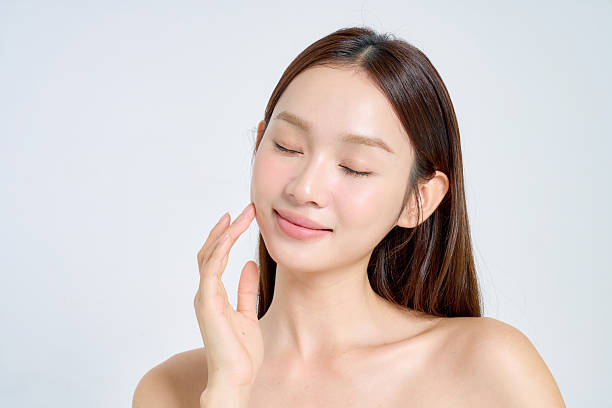

Korean skincare has a way of making skincare look almost effortless.
Soft, hydrated skin. A healthy glow. Lightweight layers. Beautiful packaging. Ingredients you may have never heard of before.
And then you look up a traditional Korean skincare routine and see ten steps.
Ten.
For someone rushing to class, getting ready for work, packing lunches, answering emails, or trying to get out the door before the morning traffic gets wild, that can sound less like self-care and more like another item on the to-do list.
But here’s the thing: you don’t need ten products to follow a Korean skincare routine.
The heart of K-beauty is less about counting steps and more about caring for the skin consistently. Modern Korean skincare has also been moving toward simpler routines with effective, multifunctional products rather than piling on product after product.
So, what does a good Korean skincare routine actually look like?
It can be as simple as cleansing, hydrating, treating your main skin concern, moisturising, and protecting your skin from the sun.
The rest is optional.
Let’s make it practical.
What Is Korean Skincare?
Korean skincare, often called K-beauty, refers to skincare products, routines, ingredients, and beauty philosophies that originated in South Korea.
One of its biggest ideas is prevention and consistent care rather than waiting for a skin problem to become severe before doing something about it.
Instead of relying on one aggressive product, Korean routines often use gentle layers of hydration and targeted treatments.
Think of it like building a good work wardrobe.
You don’t need twenty jackets. You need a few pieces that work well together.
Skincare can be the same way.
A gentle cleanser, hydrating product, moisturiser, and sunscreen can form the foundation. Then you can add a serum, exfoliant, essence, or mask when your skin actually needs one.
Dermatologists also emphasise that consistency matters more than having a huge number of products. The American Academy of Dermatology recommends a simple foundation built around gentle cleansing, moisturiser, and daily broad-spectrum sunscreen.
That idea fits beautifully with modern K-beauty.
The Korean Skincare Philosophy: Hydrate, Protect, Repeat
Korean skincare is often associated with “glass skin”.
But glass skin isn’t a medical skin type, and you don’t need perfectly poreless skin to have healthy skin.
The phrase usually describes skin that looks smooth, hydrated, fresh, and luminous.
The goal shouldn’t be perfection.
Instead, think healthy-looking skin with a comfortable skin barrier.
That distinction matters.
If you spend every evening exfoliating because you want perfectly smooth skin, you may end up with irritation, dryness, or sensitivity. More products aren’t automatically better.
Your skin has limits.
And your schedule probably does too.
Your Morning Korean Skincare Routine
A practical morning Korean skincare routine can be surprisingly short.
Step 1: Cleanse
Start with a gentle cleanser.
If your skin is dry or sensitive, you may not need a strong foaming cleanser every morning. Some people prefer simply rinsing with water and saving a full cleanse for the evening.
For oily or combination skin, a gentle water-based cleanser can help remove overnight sweat and excess oil.
The goal is clean skin, not skin that feels tight or squeaky.
That tight feeling isn’t a trophy.
It’s often a sign that you’ve removed too much oil.
Step 2: Toner
Korean toners are often different from the harsh, alcohol-heavy toners many people remember from older skincare routines.
A modern hydrating toner can add moisture and make the next steps feel more comfortable.
Look for ingredients such as:
- Glycerin
- Hyaluronic acid
- Centella asiatica
- Panthenol
- Rice extracts
- Green tea
You don’t have to use toner, though.
If your cleanser, serum, and moisturiser already keep your skin comfortable, skipping toner is completely reasonable.
Step 3: Essence
Essence is one of the products most associated with Korean skincare.
It usually has a lightweight texture and sits somewhere between a toner and a serum.
An essence can provide hydration and prepare your skin for the products that follow.
But again, it’s optional.
If you’re a student running late for class or a busy professional staring at the clock before work, don’t feel guilty about skipping this step.
Skincare should fit your life.
Your life shouldn’t revolve around skincare.
Step 4: Serum or Ampoule
Now comes the targeted part of your routine.
Choose a serum based on what you actually want to address.
For example:
For hydration:
Look for hyaluronic acid, glycerin, beta-glucan, or panthenol.
For uneven-looking skin tone:
Niacinamide and vitamin C are common choices.
For redness or sensitivity:
Centella asiatica, also called cica, is a popular K-beauty ingredient.
For antioxidant support:
Green tea and other antioxidant-rich ingredients may be useful additions.
For barrier support:
Ceramides and soothing ingredients can help support dry or stressed skin.
You don’t need five serums.
One well-chosen serum is enough.
Actually, starting with one is often smarter because you’ll know which product is doing what.
Step 5: Moisturiser
Moisturiser helps keep water in the skin and supports the skin barrier.
Yes, even oily skin can benefit from moisturiser.
If you have oily or acne-prone skin, a lightweight, non-comedogenic moisturiser may feel more comfortable. The AAD recommends looking for labels such as “oil-free” or “non-comedogenic” when you’re concerned about clogged pores.
For dry skin, a richer cream may work better.
For combination skin, you might find that different areas of your face need different amounts.
There’s no prize for using the thickest cream available.
Choose what makes your skin feel comfortable.
Step 6: Sunscreen
This is the morning step you don’t want to treat as optional.
Use a broad-spectrum sunscreen with SPF 30 or higher.
Korean sunscreens are popular because many have lightweight textures that sit comfortably under makeup, but the most important thing is that the sunscreen works for you and that you use it consistently.
Dermatologists consider sun protection one of the most important parts of a daily skincare routine.
And no, your vitamin C serum isn’t a substitute for sunscreen.
Vitamin C can provide antioxidant support, but it doesn’t replace UV protection.
So your morning order is simple:
Cleanser → Toner → Essence → Serum → Moisturizer → Sunscreen
You can remove any step you don’t need.
Your Evening Korean Skincare Routine
Nighttime is where the classic Korean double cleanse becomes especially useful.
If you’ve worn sunscreen or makeup during the day, cleansing properly helps remove those layers before you apply your nighttime products.
Step 1: Oil Cleanser or Cleansing Balm
An oil cleanser or cleansing balm can help dissolve sunscreen, makeup, and oil-based products.
Massage it gently over dry skin, then rinse according to the product instructions.
Don’t scrub.
Your face isn’t a kitchen countertop.
Gentle pressure is plenty.
Step 2: Water-Based Cleanser
Follow with a gentle water-based cleanser.
This second cleanse removes remaining residue and leaves the skin ready for your next products.
Double cleansing doesn’t necessarily mean you need to do it every morning and night.
It’s mainly useful in the evening when you’ve worn sunscreen, makeup, or other long-wearing products.
If your skin feels dry or irritated, reconsider whether you actually need such an intensive cleansing routine every night.
Step 3: Toner
After cleansing, apply a hydrating toner if you use one.
This can be a refreshing step, especially if your skin feels dry after washing.
Pat it in gently rather than rubbing aggressively.
Step 4: Essence
Apply your essence if it’s part of your routine.
This is where Korean skincare often gets its signature “layering” feel.
Rather than applying one heavy product, you’re using several lightweight products to build hydration.
It’s a little like adding thin layers of clothing on a cool morning instead of wearing one enormous coat.
You have more control.
Step 5: Serum or Ampoule
Apply your targeted treatment.
At night, you may choose a hydrating serum or another active ingredient depending on your skin goals.
Don’t introduce several strong actives at once.
If you’re trying a new exfoliant, retinoid, or other treatment, introduce it gradually and pay attention to irritation.
And if you’re pregnant or breastfeeding, check with your healthcare professional before using certain active ingredients. Retinoids, in particular, require special caution during pregnancy.
Step 6: Eye Cream Optional
Eye cream is one of those products that gets a lot of attention in K-beauty.
But you don’t have to own a separate eye cream.
A gentle moisturiser may be enough for some people.
If you enjoy eye cream and your skin tolerates it, that’s perfectly fine.
Just remember that expensive packaging doesn’t automatically equal better results.
Step 7: Moisturiser
Finish with moisturiser.
At night, you may prefer something richer than your daytime moisturiser, especially if your skin is dry.
Applying moisturiser after cleansing can help trap water in the skin. Dermatologists generally recommend moisturising after washing, especially when skin feels dry.
And then you’re done.
No seventeen-step ceremony required.
The Famous 10-Step Korean Skincare Routine. Simplified
You’ve probably seen lists claiming that a “real” Korean skincare routine must have ten steps.
That’s not quite right.
The classic 10-step structure often looks something like this:
- Oil cleanser
- Water-based cleanser
- Exfoliator
- Toner
- Essence
- Serum or ampoule
- Sheet mask
- Eye cream
- Moisturizer
- Sunscreen
Notice something?
Not every step needs to happen every day.
Exfoliation, for example, is generally something to use according to the product and your skin’s tolerance rather than automatically every day.
A sheet mask can be occasional.
Eye cream is optional.
Sunscreen belongs in the morning, not as a nighttime step.
So instead of asking, “How do I complete all ten steps?”
Ask:
“Which steps does my skin actually need?”
That’s a much better question.
Korean Skincare Ingredients Worth Knowing
K-beauty is famous for interesting ingredients, and some have become global skincare staples.
Centella Asiatica
Often called cica, centella is a botanical ingredient commonly used in soothing skincare products.
It’s especially popular in products designed for skin that feels irritated or stressed.
Current K-beauty coverage continues to highlight centella as a major ingredient.
Snail Mucin
Yes, snail mucin.
It sounds unusual, but it’s been a major K-beauty ingredient for years.
It’s commonly used in hydrating and skin-conditioning products.
If the idea makes you uncomfortable, don’t worry. There are plenty of snail-free Korean skincare options.
You don’t need to use every trendy ingredient.
Rice
Rice extracts have a long history in Korean beauty traditions and are now common in modern skincare.
They’re often included in products aimed at hydration and a brighter-looking complexion.
Rice-based products can be especially appealing if you enjoy lightweight, nourishing formulas.
Ginseng
Ginseng is another ingredient strongly associated with Korean beauty.
Modern products use ginseng extracts in formulas designed to support a healthy-looking complexion and provide antioxidant benefits.
Green Tea
Green tea is valued for its antioxidant properties and is found in many soothing skincare formulas.
It’s particularly appealing for people who want a simple antioxidant-focused addition to their routine.
Niacinamide
Niacinamide is vitamin B3 and one of the easiest ingredients to find across both Korean and non-Korean skincare.
It’s commonly used in products targeting uneven-looking skin tone, excess oil, and barrier support.
The nice part?
It doesn’t have to be complicated.
A simple niacinamide serum may be enough.
PDRN
PDRN has become one of the buzziest ingredients in Korean skincare in 2026.
It’s receiving a lot of attention in current K-beauty coverage, particularly around skin hydration, firmness, and repair-focused products.
But remember: trendy doesn’t automatically mean necessary.
A skincare ingredient can be interesting without becoming your next must-buy.
Korean Skincare for Different Skin Types
Your skin type should influence your routine more than a TikTok trend.
If You Have Dry Skin
Focus on hydration and barrier support.
A simple routine could include:
Gentle cleanser → Hydrating toner → Essence → Hydrating serum → Cream → Sunscreen
Avoid using too many exfoliating products.
Your skin doesn’t need to be stripped before it can be hydrated.
If You Have Oily Skin
You don’t need to dry out oily skin.
That can actually make your routine uncomfortable and harder to maintain.
Try:
Gentle cleanser → Lightweight toner → Serum → Lightweight moisturizer → Sunscreen
Look for lightweight and non-comedogenic products when appropriate.
If You Have Combination Skin
Combination skin can feel like it has two different personalities.
Your forehead may be oily while your cheeks feel dry.
Keep the routine simple and adjust product amounts by area.
You don’t necessarily need separate products for every part of your face.
If You Have Sensitive Skin
Less is usually more.
Choose gentle, fragrance-free products when possible, especially if fragrances tend to irritate your skin.
Introduce one new product at a time.
The American Academy of Dermatology recommends testing new skincare products on small areas before applying them more widely; its guidance suggests testing twice daily for seven to ten days.
That’s not glamorous advice.
It is useful advice.
A Korean Skincare Routine for Busy Students
Let’s be realistic.
You may have an 8 a.m. lecture, an assignment due, a part-time job, and approximately zero interest in spending 30 minutes in front of the bathroom mirror.
Your routine can be:
Morning
- Gentle cleanse or water rinse
- Moisturizer
- Sunscreen
Night
- Cleanser
- Serum
- Moisturizer
That’s enough to build a foundation.
Once that routine becomes automatic, you can add toner or essence if you want.
Start small.
Consistency beats enthusiasm that lasts four days.
A Routine for Busy Professionals and Moms
When you’re balancing work, family, errands, and approximately 900 tiny tasks, elaborate skincare can become another chore.
Keep a few reliable products within easy reach.
Five-minute morning routine
Cleanser → Serum → Moisturizer → Sunscreen
Five-minute evening routine
Cleanser → Serum → Moisturizer
If you wear makeup or water-resistant sunscreen, consider double cleansing at night.
And if you miss a night?
Don’t panic.
One missed routine won’t erase your progress.
Simply continue the next day.
Common Korean Skincare Mistakes
Mistake 1: Copying Someone Else’s Entire Routine
Someone else’s skin isn’t your skin.
A routine that looks wonderful on social media may be completely unnecessary for you.
Mistake 2: Adding Everything at Once
This is one of the easiest ways to become confused.
If your skin suddenly becomes irritated, how will you know which product caused it?
Introduce products one at a time.
Mistake 3: Thinking More Steps Mean Better Skin
They don’t.
The American Academy of Dermatology specifically notes that more isn’t necessarily better and that consistent use of a smaller number of products can be preferable to an elaborate routine.
Mistake 4: Skipping Sunscreen
You can spend a lot of money on serums, essences, and creams.
But if you’re skipping daily sun protection, your routine has a major gap.
Use broad-spectrum SPF 30 or higher as part of your morning routine.
Mistake 5: Exfoliating Too Much
Smooth skin can be tempting.
But aggressively exfoliating every day isn’t the answer.
If your skin becomes sore, unusually dry, burning, or irritated, step back and simplify.
How Long Does Korean Skincare Take to Work?
This is where patience matters.
You may notice hydration fairly quickly, especially if your skin was dehydrated.
Other concerns take longer.
Acne, uneven pigmentation, texture, and signs of sun damage generally require a consistent routine over time.
Don’t judge your entire routine after three days.
Skin isn’t a software update.
You can’t install version 2.0 overnight.
Give your routine time, and change only one major variable at a time when possible.
Do You Really Need Korean Skincare Products?
No.
You can absolutely have healthy skin without using Korean brands.
Korean skincare is popular because it offers a wide range of textures, formulas, ingredients, and product types.
But the principles are more important than the country printed on the bottle.
Gentle cleansing.
Moisturizing.
Sun protection.
Thoughtful use of treatments.
Consistency.
Those ideas can be found across many skincare brands.
So don’t feel pressured to replace your entire bathroom shelf just because K-beauty is trending.
A Simple Beginner Korean Skincare Routine
If you’re completely new to K-beauty, start here.
Morning
1. Gentle cleanser
Remove sweat and excess oil without stripping the skin.
2. Hydrating toner or essence
Optional, but useful if your skin likes extra hydration.
3. Serum
Choose one based on your main concern.
4. Moisturiser
Use a texture that feels comfortable for your skin.
5. Sunscreen
Broad-spectrum SPF 30 or higher.
Night
1. Oil cleanser or cleansing balm
Especially if you’ve worn makeup or sunscreen.
2. Water-based cleanser
3. Toner or essence
4. Serum
5. Moisturiser
That’s it.
Once you know how your skin responds, you can decide whether you want to add occasional exfoliation, sheet masks, eye products, or other treatments.
The Bottom Line: Korean Skincare Doesn’t Have to Be Complicated
The most useful lesson from Korean skincare isn’t that you need ten steps.
It’s that skincare can be intentional.
You don’t need to chase every new ingredient or buy every product that goes viral. You don’t need a shelf packed with matching bottles.
Start with the basics.
Cleanse gently. Keep your skin moisturised. Treat specific concerns thoughtfully. Protect your skin from the sun. Then give your routine time to work.
For students, young professionals, career women, young mothers, and busy parents, that approach makes much more sense than trying to recreate a 12-step routine every morning before the day begins.
And honestly, that’s one of the nicest things about modern K-beauty.
It can be elaborate if you enjoy that.
Or it can be beautifully simple.
Your skincare routine should support your life not become another job.
Frequently Asked Questions About Korean Skincare
Is the Korean 10-step skincare routine necessary?
No. A simple routine can be highly effective. Cleanser, moisturiser, and sunscreen form the basic foundation, while toners, essences, serums, masks, and exfoliants can be added according to your needs.
Can I do Korean skincare if I have sensitive skin?
Yes, but keep your routine simple. Choose gentle products, introduce new products gradually, and consider patch testing before using a product widely.
What is the most important Korean skincare step?
There isn’t one magic step. For everyday skin health, gentle cleansing, moisturising, and sun protection are the foundation.
Do I need an essence?
No. Essence is optional. If your routine already provides enough hydration without one, you don’t need to add it.
Can I use Korean skincare products with products from other countries?
Yes. Skincare products don’t need to come from the same country or brand to work together. Focus on the ingredients, your skin’s needs, and how your skin responds.
Is glass skin realistic?
“Glass skin” is a beauty term rather than a medical standard. Healthy skin can have pores, texture, blemishes, and natural variation. Aim for skin that feels comfortable and well cared for rather than trying to erase every natural feature.
Can I use Korean skincare every day?
Many gentle Korean skincare products are designed for regular use, but not every product should automatically be used every day. Exfoliants and stronger treatments require more care and should be used according to their instructions and your skin’s tolerance.
What’s the easiest Korean skincare routine for beginners?
Start with:
Morning: Moisturizer + sunscreen
Night: Cleanser + moisturizer
Then add a serum or hydrating toner if you want more targeted care.
That’s a perfectly valid Korean skincare routine.
Sometimes simple really is enough.



Pingback: Japanese Skincare Routine: Simple J-Beauty Steps