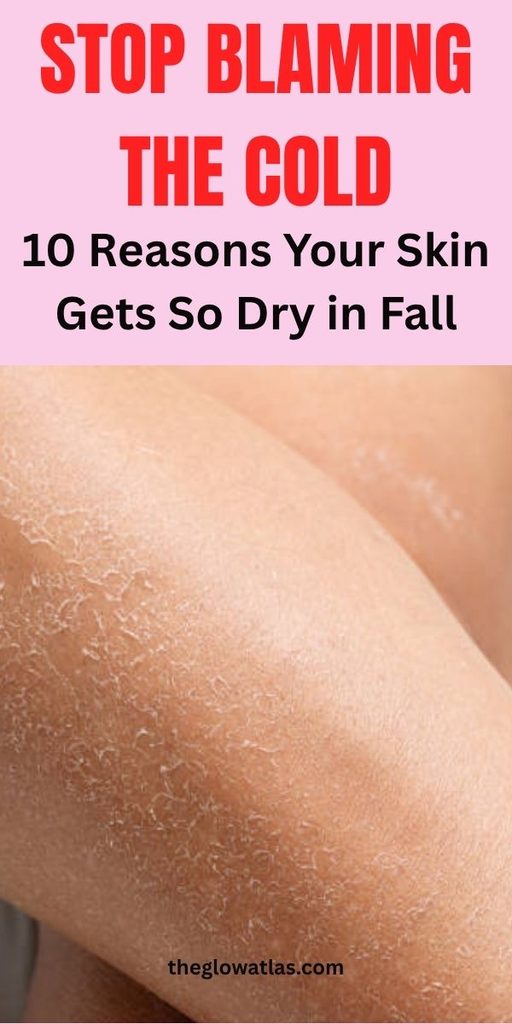
You know that strange moment when September or October rolls around, and your skin suddenly decides it has opinions?
Your moisturiser, which worked perfectly well a few weeks ago, disappears into your face as water poured onto dry soil. Your cheeks feel tight after cleansing. Makeup starts catching around your nose. Your hands feel rough. Maybe your lips are peeling even though you swear you’re applying lip balm every twenty minutes.
And you think:
Why does my skin get so much drier in fall?
No, you’re not imagining it.
Seasonal changes can affect how much water the outermost layer of your skin holds. Lower humidity, cooler temperatures, indoor heating, wind, longer hot showers, and changes in your skincare habits can all pile on at once. The result is skin that feels tighter, rougher, itchier, or simply less comfortable than it did during summer.
The American Academy of Dermatology notes that low humidity and indoor heating can contribute to dry, chapped skin, while Cleveland Clinic dermatologists also point to colder outdoor air and heated indoor spaces as major seasonal dryness triggers.
The slightly annoying part?
Fall itself isn’t always the only problem.
Sometimes your skincare routine is still behaving as though it’s July.
Let’s explain what’s actually happening.
First, Your Skin Isn’t Suddenly Being Difficult
Your skin’s outer layer is called the stratum corneum.
Picture it a little like a brick wall.
The skin cells are the bricks. Between those cells sit fats, including ceramides, cholesterol, and fatty acids, which help form the “mortar.” Together, they create the protective skin barrier that helps keep useful water in and irritating substances out.
Ceramides are especially important components of this lipid structure. Research has linked reduced ceramide content with dry, barrier-impaired skin, which is one reason ceramides appear in so many moisturisers marketed for dry and sensitive skin.
When that protective wall is functioning well, your skin tends to feel soft, flexible, and fairly calm.
When the environment changes, however, maintaining that balance can become harder.
Less moisture in the surrounding air can change the water content of the stratum corneum. Research into humidity and skin health suggests that environmental humidity affects several aspects of skin hydration and barrier function, although the exact biological response isn’t identical in every study or every person.
That’s worth mentioning because skincare gets oversimplified online.
Low humidity doesn’t magically “suck every drop of water from your face” in some dramatic vacuum effect.
What it can do is create conditions in which your skin has a harder time staying comfortably hydrated, especially if your barrier is already irritated.
And fall gives that process plenty of help.
Fall Air Usually Contains Less Moisture
This is the biggest piece of the puzzle.
As temperatures fall in many climates, humidity often falls too.
Your skin is constantly interacting with the air around it. When the surrounding environment becomes dry, the outer layers of your skin tend to contain less water.
Harvard Health notes that the water content of the epidermis reflects environmental humidity to some degree, which helps explain why skin often becomes rougher and more uncomfortable during colder months.
Think about the difference between leaving a towel in a steamy bathroom and leaving one beside a heater.
Same towel.
Very different environment.
Your skin is obviously far more sophisticated than a towel, but the basic idea helps.
And fall doesn’t look identical everywhere.
For some people, autumn means crisp winds, coats, radiators, and dramatically colder mornings. Elsewhere, the seasonal shift may be gentler, with changes in humidity, rain patterns, air-conditioning, wind, or time spent indoors.
Your skin cares less about the pumpkin-spice calendar and more about its actual environment.
That’s why one person may become extremely dry by October while another barely notices a difference.
Then We Turn On the Heat
Here’s where things get slightly unfair.
You escape the cold, walk inside and turn up the heating.
Comfortable for you.
Not necessarily comfortable for your face.
Indoor heating can lower indoor humidity, creating another dry environment just when your skin is already dealing with cooler outdoor air. Dermatologists frequently recommend humidifiers during dry-weather months for precisely this reason.
You may notice this most overnight.
You go to bed feeling fine, then wake up with tight cheeks, dry lips, or skin that seems to have swallowed your night cream.
Bedroom heating can be surprisingly drying.
A cool-mist humidifier can help when indoor air is genuinely dry. Harvard Health has suggested indoor humidity around 60% for combating winter dryness, though the ideal level in a home can vary depending on climate, ventilation, and concerns such as mould.
You don’t necessarily need to turn your bedroom into a tropical greenhouse.
You’re simply trying to keep the air from becoming desert-like.
And Then There’s the Long, Hot Shower Problem
Cold morning.
Warm bathroom.
Steam everywhere.
You stand under a hot shower thinking, I deserve this.
Fair.
Unfortunately, your skin may disagree.
Hot water and prolonged bathing can remove some of the natural oils that support the skin barrier. Cleveland Clinic dermatologists recommend keeping showers around five to ten minutes and using lukewarm rather than very hot water when dryness is an issue.
That doesn’t mean bathing is bad for dry skin.
Water itself isn’t the enemy.
In fact, bathing followed quickly by moisturiser can help hydrate the outer skin.
The problem usually involves temperature, duration, cleanser choice, and what happens afterwards.
A quick lukewarm shower followed by moisturiser?
Fine.
Twenty-five minutes under near-boiling water, followed by vigorous towel rubbing and no body cream?
Your skin barrier has had quite a morning.
The American Academy of Dermatology recommends gently patting dry and applying moisturiser while skin is still slightly damp.
That tiny timing change can make a surprisingly noticeable difference.
Your Summer Cleanser May Suddenly Feel Too Aggressive
Here’s another seasonal trap.
During summer, you may be dealing with sweat, sunscreen, humidity, oil, gym sessions, makeup, or more time outdoors.
So perhaps you switched to a foaming cleanser that leaves your face feeling impressively clean.
Then fall arrives.
You’re producing less sweat. The air becomes drier. Your skin feels less oily.
But you’re still cleansing the same way.
Twice a day.
Strong cleanser.
Very warm water.
Maybe a cleansing brush for good measure.
Suddenly that satisfying “squeaky clean” feeling becomes tightness.
That’s your cue.
Clean skin should not feel as though it’s shrinking around your cheekbones.
AAD guidance for very dry skin recommends a gentle cleanser and warns that some soaps can be too harsh for dry, sensitive skin. Fragrance-free products are often better tolerated when irritation is present.
You also don’t need mountains of foam for cleansing to work.
More bubbles don’t necessarily mean cleaner skin.
They mostly mean…more bubbles.
Your Actives Haven’t Changed, but Your Skin Has
This is where a skincare routine can quietly become too much.
Maybe you use retinol Monday and Thursday.
Glycolic acid Wednesday.
Vitamin C every morning.
A clay mask on Sunday.
Salicylic acid whenever your forehead looks suspicious.
Everything was going beautifully in July.
Then cooler weather arrives, and suddenly your face feels prickly when you apply moisturiser.
What happened?
Your products didn’t necessarily become “bad.” Your tolerance may simply have changed because environmental stress has changed.
Dry weather can make already-irritating routines feel far more intense. Cleveland Clinic dermatologists specifically caution that exfoliating and anti-aging products may become more drying during cold-weather months.
This is why seasonal skincare isn’t always about buying something new.
Sometimes the smartest change is using something less often.
If your skin becomes tight, flaky, stingy, or unusually reactive, consider reducing strong exfoliating acids or retinoids temporarily while supporting your barrier.
Not forever.
Just until your skin feels normal again.
Skincare doesn’t award prizes for endurance.
Wait, Is Your Skin Dry or Dehydrated?
These words get thrown around as though they mean the same thing.
They don’t.
Dry skin usually refers to a skin type or state with insufficient surface lipids or oils.
Dehydrated skin is common skincare language for skin that lacks water.
You can therefore have oily skin that feels dehydrated.
Yes, oily and dehydrated at the same time.
Confusing, but possible.
Your forehead may become shiny by lunchtime while the area around your mouth feels tight. Makeup might separate on oily areas while catching on tiny flakes elsewhere.
That’s why aggressively stripping oily fall skin often backfires.
Your first instinct might be, I’m shiny. I need a stronger cleanser.
Meanwhile, your barrier is waving a tiny white flag.
If your skin becomes oilier yet tighter during fall, your routine may need better hydration and gentler cleansing—not another drying toner.
Why Does Makeup Suddenly Look Worse Too?
Because makeup is a snitch.
It reveals texture you didn’t even know was there.
Your bare face may look fine in the bathroom mirror. Then foundation goes on and suddenly every tiny flake around your nose has applied for a starring role.
Dry surface skin changes how makeup sits.
Foundation can cling to flaky areas. Concealer can settle more visibly. Powder may exaggerate texture. Long-wear matte formulas that looked beautiful in humid weather may suddenly feel heavy.
This doesn’t necessarily mean you need a new foundation.
Try fixing the skincare underneath first.
Give moisturiser a few minutes to settle before makeup. Use less powder. Consider a more flexible base formula. And don’t scrub away flakes every morning because you’re annoyed by them.
Aggressive exfoliation can make the underlying irritation worse.
Sometimes the glamorous makeup fix is simply moisturiser.
Not exciting, but useful.
Your Moisturiser May Be Too Light for Fall
Gel moisturiser feels fantastic in summer.
Cool. Weightless. Gone in seconds.
But when humidity falls, that same product may no longer provide enough support.
Moisturisers work through different combinations of ingredients.
Humectants such as glycerin and hyaluronic acid help attract and hold water.
Emollients help soften and smooth rough spaces between skin cells.
Occlusive ingredients such as petrolatum help reduce water loss by creating a protective layer on the skin.
A well-formulated moisturiser may contain more than one category.
AAD guidance notes that creams and ointments generally hold more moisture in the skin than lotions and are often useful for very dry skin.
So your fall change doesn’t need to involve a dramatic ten-product overhaul.
It may be as simple as moving from:
light gel → lotion
lotion → cream
cream → cream plus a small amount of occlusive on especially dry areas
That’s often enough.
Ceramides Become Particularly Interesting Here
You’ve probably seen ceramides printed across moisturiser labels.
They’re not just beauty-industry decoration.
Ceramides are naturally present in the lipid matrix of the stratum corneum and play an important role in barrier function and water retention. Reviews of ceramide-containing formulations have found evidence that they can improve hydration and barrier measures in some dry and barrier-disrupted skin conditions.
You may also see cholesterol and fatty acids in barrier-focused formulas.
Other useful moisturiser ingredients can include glycerin, hyaluronic acid, petrolatum, shea butter, squalane, and urea, depending on the formula and where you’re using it.
And no, expensive automatically doesn’t mean better.
Packaging can be luxurious.
Your skin barrier cannot read the price tag.
Simple fragrance-free creams from widely available brands such as CeraVe, Vanicream, Eucerin, Cetaphil, Aveeno, or La Roche-Posay are common examples people look at when searching for barrier-supporting moisturisers, but formulas vary by country and can change over time.
Check the ingredient list and choose based on your skin rather than the internet’s current favourite jar.
One Small Fall Habit Makes a Big Difference
Moisturise while your skin is still slightly damp.
Not dripping.
Just damp.
After showering or washing your face, pat gently and apply moisturiser rather than waiting until your skin has completely air-dried.
AAD dermatologists repeatedly recommend applying moisturiser shortly after washing because it helps trap water already present in the skin.
It’s one of those skincare tips that sounds almost too basic.
But basic is sometimes exactly what works.
Put your body cream somewhere visible if you always forget it.
Next to the towel.
On your bedside table.
Beside your hand soap.
A perfect moisturiser sitting unopened inside a bathroom cabinet isn’t doing much for anybody.
And Yes, Your Hands Need Their Own Fall Strategy
Face skincare receives all the attention; meanwhile, your hands are washing dishes, sanitising, typing, cleaning, carrying bags, changing nappies, handling laundry, and being washed repeatedly throughout the day.
No wonder they revolt first.
Cold air plus frequent washing can leave hands rough, flaky, or cracked.
Keep a hand cream near places where you naturally wash your hands: the kitchen sink, bathroom, work desk, handbag.
AAD recommends reapplying hand cream after washing when dryness is a problem.
And if your knuckles become painfully cracked, a thicker ointment at night may feel much better than repeatedly applying a watery lotion.
Your hands don’t need an elaborate skincare ritual.
They need consistency.
Fall Wind Isn’t Helping Either
Cold wind can make exposed skin feel rough and irritated.
Your cheeks and lips tend to take the hit because they’re rarely covered.
Think of those crisp windy mornings that look gorgeous through a window but leave your lips feeling like paper by lunchtime.
Physical protection matters.
A scarf, gloves, protective clothing, and a good lip balm can reduce exposure. The AAD specifically recommends protecting exposed skin and lips during colder weather.
Lip balm containing petrolatum or other occlusive ingredients can be particularly useful when lips are cracked.
And try not to lick them constantly.
It feels soothing for approximately four seconds.
Then the moisture evaporates, and you’re back where you started.
Don’t Retire Your Sunscreen Because Summer Ended
This mistake deserves its own little conversation.
Clouds arrive.
Temperatures drop.
Your sunscreen somehow migrates to the back of the cabinet.
But ultraviolet radiation doesn’t disappear because you’re wearing knitwear.
AAD recommends broad-spectrum, water-resistant SPF 30 or higher as part of dry-skin care as well.
If your summer sunscreen starts feeling too matte or drying, rather than skipping SPF completely, look for a sunscreen formula that feels more comfortable over your fall moisturiser.
Your sunscreen can change with the season too.
So, What Should a Fall Skincare Routine Actually Look Like?
Surprisingly boring.
And that’s a compliment.
A good fall routine shouldn’t require forty-five minutes before work.
In the morning, cleanse gently if you need to, or simply rinse if that suits your skin and your dermatologist’s guidance. Follow with a hydrating or treatment serum if you already use one comfortably, then moisturiser and sunscreen.
At night, remove sunscreen and makeup with a gentle cleansing method. Apply treatments only as often as your skin tolerates them. Finish with a moisturiser substantial enough to leave your skin comfortable through the night.
That’s the framework.
Everything else is optional.
For extremely dry patches, some people use a thin layer of petrolatum over moisturiser at night. Petrolatum acts as an occlusive and can help reduce water loss. Cleveland Clinic also suggests petroleum jelly for especially dry areas.
If you’re acne-prone, introduce richer products carefully rather than coating your entire face in the heaviest ointment you can find.
Your cheeks may want more moisture than your forehead.
That’s allowed.
Your skincare routine isn’t required to treat every centimetre of your face identically.
What About “Skin Flooding” and Layering Five Hydrating Products?
You certainly can layer hydrating products.
You don’t have to.
Social media has a talent for turning perfectly ordinary skincare principles into elaborate ceremonies.
Hydrating serum.
Mist.
Essence.
Another serum.
Cream.
Oil.
Occlusive.
If you enjoy that routine and your skin likes it, lovely.
But dehydrated fall skin doesn’t automatically require seven hydrating layers.
A gentle cleanser, well-formulated moisturiser, sunscreen, and thoughtful use of treatments may be enough.
Start there.
Add complexity because it solves a problem, not because a video convinced you your bathroom needs another bottle.
The Fall Skincare Mistakes That Sneak Up on You
The funny thing about seasonal dryness is that we often respond by doing more.
Skin looks flaky?
Scrub it.
Skin looks dull?
Use acid.
Skin feels rough?
Try another active.
Skin feels tight?
Buy six new serums.
Sometimes the better response is the opposite.
Reduce irritation.
Use gentler water temperature.
Shorten your shower.
Moisturise sooner.
Swap a thin lotion for a richer cream.
Use retinoids or exfoliants less frequently if they’re suddenly uncomfortable.
Add moisture to dry indoor air.
Give your barrier time.
It’s not glamorous advice, but irritated skin rarely needs more chaos.
A Note for Oily and Acne-Prone Skin
If you’ve spent years being afraid of moisturiser, fall can be confusing.
Your skin may feel dry around the mouth yet oily across the forehead.
So you skip moisturiser.
Then the tightness gets worse.
You cleanse harder.
Then everything feels worse again.
Moisturiser doesn’t automatically equal greasy skin.
Look for textures that suit your skin type. You may prefer a light cream rather than a thick ointment across acne-prone areas.
And remember that “oil-free” and “hydrating” aren’t opposites.
Your goal isn’t to smother your skin.
It’s to help it feel comfortable and maintain a healthy barrier.
What If You Have Sensitive Skin?
Fall is not the season to become a skincare scientist overnight.
If your skin is already sensitive, simplify changes.
Try one adjustment at a time.
Perhaps first switch to a richer fragrance-free moisturiser.
Give it several days.
Then consider changing your cleanser if you’re still tight.
Then reassess exfoliation.
This makes it much easier to tell which product helps and which one causes trouble.
Fragrance is worth watching too. AAD guidance commonly recommends fragrance-free products for very dry or eczema-prone skin because fragrance can irritate susceptible people.
And there’s an important label distinction: “fragrance-free” and “unscented” aren’t always the same thing. AAD notes that unscented products may still contain ingredients used to mask odour.
Tiny wording difference.
Potentially useful one.
When Fall Dryness Might Be More Than Fall Dryness
Normal seasonal dryness may cause tightness, roughness, mild flaking, or occasional itching.
But don’t automatically blame October for everything.
Persistent redness, intense itching, painful cracks, bleeding, widespread scaling, oozing, swelling, or a rash that keeps returning can point to something that deserves professional evaluation.
Conditions including eczema, psoriasis, contact dermatitis, and other health issues can present with dry or irritated skin.
Cleveland Clinic advises seeing a dermatologist when dryness becomes persistent, red, or itchy because conditions such as eczema or dermatitis may need additional treatment.
The same applies if you’ve changed your skincare routine and the problem keeps getting worse.
You don’t get extra credit for suffering through a product because the internet calls it a “purge.”
Pain and persistent irritation deserve attention.
How Long Does It Take for Fall Dry Skin to Improve?
That depends on what caused it.
If your main problem is a lightweight moisturiser and too-hot showers, you might notice increased comfort fairly quickly after changing those habits.
If your barrier has been irritated by weeks of aggressive exfoliation or strong treatments, recovery may take longer.
Consistency matters more than chasing a dramatic overnight change.
Think of barrier care as maintenance rather than a rescue mission.
Moisturise today.
Moisturise tomorrow.
Use less hot water.
Keep doing the boring stuff.
That’s how many skin improvements happen, quietly.
Do You Need to Drink More Water?
Staying adequately hydrated is important for your health.
But drinking enormous amounts of water isn’t a substitute for treating dry skin from the outside.
Seasonal dryness is strongly influenced by the outer skin barrier and surrounding environment. Moisturisers help because they act directly where that water-loss problem occurs.
So yes, drink water.
But don’t expect three giant bottles before lunch to replace your face cream.
Your kidneys will be impressed.
Your cheeks may not notice.
Can a Humidifier Really Help?
If the air inside your home is dry, yes, a humidifier can be useful.
AAD, Harvard Health, and Cleveland Clinic all include humidifiers among strategies for managing dry-weather skin.
Bedroom use can be particularly convenient because you’re spending hours in the same room.
Just keep the machine clean according to the manufacturer’s directions.
A dirty humidifier isn’t a skincare hack anybody needs.
Should You Stop Retinol During Fall?
Not automatically.
If your skin tolerates retinoids comfortably, you may be able to continue your routine.
But if cooler weather arrives and you’re suddenly experiencing tightness, burning, or flaking, decreasing frequency may help.
For example, someone using retinol four nights a week might temporarily use it twice weekly while increasing barrier support.
The right schedule varies by product, concentration, skin type, other treatments, and medical history.
If you’re using prescription retinoids, follow your prescriber’s advice rather than adjusting treatment based solely on skincare trends.
Can You Still Exfoliate?
Yes.
Fall hasn’t banned exfoliation.
Your skin simply may not tolerate the same frequency it enjoyed during humid weather.
And exfoliation shouldn’t hurt.
Persistent burning isn’t evidence that an acid is “working harder.”
If your face is already flaky and irritated, pause aggressive exfoliation and focus on comfort first.
Once your skin settles, you can slowly reintroduce products if appropriate.
The goal is smooth skin.
Not a chemical arms race.
So Why Does Your Skin Get Drier in Fall?
Because several small changes happen at once.
The air may become colder and less humid.
Indoor heating can dry your environment further.
Wind increases exposure.
Hot showers become more tempting.
Summer cleansers may feel harsher.
Strong skincare treatments become harder to tolerate.
Your lightweight moisturiser may no longer provide enough support.
Put those pieces together and that suddenly tight October face makes much more sense.
Your skin hasn’t betrayed you.
Its working conditions changed.
So change the routine with it.
Not dramatically.
Not with fifteen new products.
Just thoughtfully.
Use lukewarm water. Cleanse gently. Moisturise while your skin is still slightly damp. Choose a richer cream when needed. Scale back irritating treatments if your skin starts protesting. Protect your lips and hands. Keep wearing sunscreen. Consider a humidifier when indoor air becomes very dry.
Simple changes, repeated consistently.
That’s usually the real fall glow-up.
Not adding more.
Giving your skin a little more of what it has been quietly asking for.