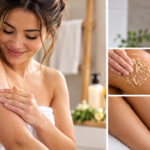
You moisturise. You exfoliate. Maybe you’ve even bought one of those rough body scrubs that promise impossibly smooth skin by next Tuesday.
And yet those tiny bumps on the backs of your arms are still there.
Or maybe yours show up across your thighs, buttocks, or cheeks. They may be skin-colored, reddish, brown, or slightly darker than the surrounding skin. Run your hand over them and the area can feel almost like fine sandpaper.
There’s a good chance you’re dealing with keratosis pilaris, usually shortened to KP.
Despite its rather serious-sounding name, keratosis pilaris is a common and harmless skin condition. The bumps form when keratin and dead skin cells collect around hair follicles. It isn’t contagious, and it isn’t caused by poor hygiene. It can affect people of any age or skin tone, although it often becomes noticeable during childhood or the teenage years.
DermNet estimates that keratosis pilaris affects around 50–70% of teenagers and about 40% of adults, which puts those little bumps in very crowded company.
Still, “harmless” doesn’t automatically mean “I don’t care.”
Maybe you want smoother-looking arms before wearing a sleeveless dress. Maybe the bumps become red after shaving. Perhaps you’re tired of seeing dark dots across your thighs. Or maybe you’ve spent years assuming you simply weren’t exfoliating hard enough.
That’s where things get interesting, because with KP, trying harder can sometimes make things worse.
Let’s make sense of it.
First Things First: What Is Keratosis Pilaris?
Keratosis pilaris is a condition involving the hair follicles, the tiny openings from which body hair grows.
Your skin naturally produces keratin, a protective protein that’s also found in your hair and nails. Normally, old skin cells are shed gradually. With KP, however, keratin and dead skin cells accumulate around the opening of a hair follicle and create a tiny plug.
Multiply that across dozens or hundreds of follicles, and you get the familiar rough, dotted texture.
Think of it like tiny traffic jams occurring at the entrances of your hair follicles. Nothing dangerous is happening, but the normal flow of shedding isn’t quite moving as smoothly as it should.
The American Academy of Dermatology describes the bumps as plugs of dead skin cells, while Mayo Clinic explains that keratin can block the opening of the hair follicle.
That’s also why treating KP as ordinary acne doesn’t always work.
A KP bump may resemble a tiny pimple, but acne and keratosis pilaris are different conditions with different underlying processes.
What Does Keratosis Pilaris Look Like?
KP doesn’t look identical on everyone.
Some people have barely visible, flesh-colored bumps. Others develop noticeable red or brown dots. The surrounding skin may also be dry.
Typical keratosis pilaris can look or feel like:
Tiny raised bumps around hair follicles. Rough or sandpaper-like texture. Dry patches of skin. Redness around individual bumps. Brown or darker spots on deeper skin tones. Mild itching in some people.
The upper arms and thighs are classic locations, but KP can also occur on the buttocks, cheeks, trunk, and other parts of the body. The palms and soles aren’t typical locations.
One person may barely notice the texture until winter. Someone else may deal with obvious bumps year-round.
And yes, it can photograph differently from how it looks in the mirror. That tiny detail has caused plenty of unnecessary bathroom-lighting investigations.
Why Do I Have KP in the First Place?
Here’s the slightly frustrating answer: researchers don’t completely understand why certain people develop excessive keratin buildup around their follicles.
Genetics appears to play a role, and KP often runs in families. It has also been associated with dry skin conditions such as atopic dermatitis.
So if your mother has always had rough upper arms and you’ve started noticing the same texture, there may be more going on than the body wash you bought last month.
Dryness matters too.
Keratosis pilaris commonly looks worse when the skin becomes dry, which is one reason people often notice stronger symptoms during colder or low-humidity seasons. Some people find that their bumps become less noticeable during warmer months and return when the air becomes dry.
That doesn’t mean hot, humid weather magically cures KP. It simply helps explain why the same arms can look fairly smooth one season and dramatically more textured another.
Air-conditioning can contribute to that dry feeling as well. You don’t need freezing winter weather to experience dry indoor air.
So, Can You Get Rid of Keratosis Pilaris Completely?
This is where skincare marketing and dermatology occasionally part ways.
There is no guaranteed permanent cure for keratosis pilaris. Treatment is mainly about controlling the rough texture, dryness, redness, and appearance of the bumps. KP may also become less noticeable naturally as people get older.
That may sound disappointing, but it doesn’t mean treatment is pointless.
Many people can make KP look and feel considerably better with consistent care.
The key word is consistent.
This isn’t usually a “use something twice and wake up smooth” situation. The American Academy of Dermatology notes that visible improvement can take several weeks and suggests speaking with a dermatologist if you’re following a treatment plan without improvement after roughly four to six weeks. Maintenance is often necessary because the bumps can return once treatment stops.
Skincare loves a dramatic before-and-after. KP usually prefers steady project management.
Less glamorous. More realistic.
The Biggest KP Mistake? Scrubbing Like You’re Cleaning a Pan
You know what? Rough skin naturally makes us want to scrub it.
It feels logical.
Skin is bumpy → remove bumps → scrub harder.
Unfortunately, keratosis pilaris doesn’t reward enthusiasm.
Aggressive physical exfoliation can irritate the skin and make redness, sensitivity, and inflammation more obvious. Dermatologists recommend keeping any physical exfoliation gentle rather than vigorously scrubbing the bumps.
That means your KP routine probably doesn’t need an abrasive scrub, stiff brush, exfoliating glove, rough towel, loofah and acid treatment all used during the same shower.
Your skin isn’t a kitchen floor.
A soft washcloth or gentle exfoliating method may work for some people, but pressure matters. If your skin is bright red when you finish, you’re probably doing too much.
And this leads us to a useful little contradiction: KP benefits from exfoliation, but too much exfoliation can make KP look worse.
The goal is controlled exfoliation, not friction for friction’s sake.
A Simple Keratosis Pilaris Routine That Fits Real Life
You do not need a twelve-product body routine.
If you’re getting ready for an 8 a.m. lecture, trying to beat rush-hour traffic, answering work messages before breakfast, or bathing a toddler while wondering where the evening went, complicated skincare isn’t terribly useful.
A practical KP routine can be built around three jobs: clean without stripping, loosen excess dead skin, and replace moisture.
Start in the shower.
Use warm rather than very hot water. Hot water can strip oils from already-dry skin, and long showers don’t help either. Dermatology guidance generally favours shorter showers or baths for people managing KP and dry skin.
Next, use a mild cleanser.
You don’t necessarily need to soap every centimetre of your body aggressively. Focus cleansing where it’s needed, especially if the rest of your skin becomes tight or itchy after bathing.
Pat the skin rather than rubbing it vigorously with your towel.
Then comes the part that usually makes the biggest difference: your treatment lotion or cream.
Chemical Exfoliation Is Usually Where the Real Work Happens
The word chemical makes some people picture something strong enough to strip paint.
That’s not what we’re talking about here.
Certain skincare ingredients are known as keratolytics because they help loosen and remove excess dead skin cells. Dermatologists commonly recommend ingredients such as lactic acid, glycolic acid, other alpha hydroxy acids, salicylic acid, urea, and retinoids for managing keratosis pilaris.
Each one behaves a little differently.
Lactic Acid: Exfoliation With a Softer Side
Lactic acid is an alpha hydroxy acid, or AHA.
It helps loosen dead surface cells and is commonly found in lotions formulated for rough, dry skin. It can be particularly appealing when you want exfoliation without making your body-care routine feel like a chemistry experiment.
Products such as AmLactin are well known for lactic-acid body lotions, although formulas and availability differ between countries. The brand matters less than the ingredient list and how your individual skin tolerates it.
Lactic acid can still sting, especially after shaving or if your skin barrier is irritated.
More isn’t automatically better.
Salicylic Acid: Useful Around Clogged Follicles
Salicylic acid is a beta-hydroxy acid, or BHA.
Because it’s oil-soluble, it’s frequently used in products designed for clogged pores and rough follicular texture.
You may see salicylic acid in body products marketed for rough and bumpy skin, including products in ranges such as CeraVe SA. Again, check the actual label available where you live because product formulas can change.
Salicylic acid may be useful, but stacking it with multiple other acids can leave your arms smoother for about five minutes and irritated for the next five days.
Pick a lane first.
Urea: The Ingredient People Tend to Overlook
Urea doesn’t always get the social-media attention that acids receive, but it can be extremely useful for rough, dry skin.
Depending on its concentration and formulation, urea can help moisturise skin while also softening thickened, rough surface cells. The AAD includes urea among ingredients commonly used to help manage KP.
You’ll find it in body-care ranges from brands such as Eucerin and others that focus on rough or very dry skin.
If you’re someone whose KP comes with significant dryness rather than just visible dots, urea-based moisturising products may be worth considering.
Glycolic Acid: Effective, but Don’t Get Carried Away
Glycolic acid is another AHA commonly used to remove accumulated surface cells.
It can help smooth texture, but stronger isn’t always smarter.
Body skin can tolerate more than facial skin in some situations, yet irritated body skin is still irritated skin. Burning, rawness, persistent redness, or peeling aren’t signs that the treatment is “working extra hard.”
They’re signs to reduce frequency or stop until the irritation settles.
Moisturiser Isn’t the Boring Step, It’s Part of the Treatment
Exfoliating gets all the attention because it sounds active.
Moisturiser sounds… ordinary.
But KP often becomes more noticeable when skin is dry, so moisturising is a core part of treatment rather than an optional finishing touch.
The AAD recommends applying moisturiser after bathing while the skin is still damp and favours thicker creams or ointments over thin lotions for dryness associated with KP.
This is worth remembering.
If you use acids every night but walk around with dry, tight skin all day, you’re solving one part of the problem while quietly feeding another.
Look for moisturising ingredients such as glycerin, ceramides, petrolatum, urea, or other barrier-supporting ingredients your skin handles well.
Mayo Clinic also recommends moisturising while the skin still contains some moisture after bathing.
That small timing trick can make a surprisingly noticeable difference.
Your skin is basically saying, “You’ve already got water here. Help me keep it.”
How Often Should You Exfoliate Keratosis Pilaris?
This is one of those questions where the least satisfying answer is also the safest one:
It depends on the product and your skin.
Follow the instructions on the specific treatment you’re using.
If you’ve never used exfoliating acids before, starting several active ingredients every day is unnecessary. Introduce one product at a time and watch how your skin responds.
The AAD specifically warns that using keratolytic treatments too frequently or applying too much can produce raw, irritated skin. If significant dryness or irritation develops, stopping the product for several days may be necessary.
Think of it like adjusting the volume rather than flipping a switch.
Too little may not change much. Too much becomes noise.
If your skin feels comfortable, gradually follow the labelled schedule. If it burns, cracks, becomes very red, or suddenly feels tender, back off.
Skin irritation isn’t a productivity target.
Can You Use More Than One KP Ingredient?
Eventually, perhaps.
At the beginning? Keep things simple.
A body lotion containing lactic acid plus another acid toner plus a retinoid plus a scrub may look impressive lined up on your bathroom shelf, but your follicles don’t award points for complexity.
Start with one main exfoliating product.
Give it time.
Moisturize consistently.
Then assess.
If results plateau and your skin isn’t irritated, a dermatologist can help you decide whether another treatment makes sense.
This matters even more if you have eczema-prone, very sensitive, or reactive skin.
What About Retinol or Prescription Retinoids?
Retinoids are vitamin A-derived ingredients that increase cell turnover and may help prevent follicular plugging. Dermatologists sometimes recommend topical retinoids such as adapalene, tretinoin, or tazarotene for keratosis pilaris.
They’re not always the first thing you need, though.
Retinoids can cause dryness and irritation, especially when they’re introduced too aggressively.
And there is an important pregnancy note.
Mayo Clinic states that healthcare professionals may recommend delaying topical retinoid treatment during pregnancy or nursing and choosing another approach instead.
If you’re pregnant, breastfeeding, trying to conceive, or unsure whether a particular active ingredient is appropriate for you, speak with your healthcare professional rather than piecing together advice from social media comments.
Shaving With KP: Why Your Legs May Suddenly Look Angrier
Hair removal deserves its own conversation because this is where many otherwise sensible routines fall apart.
Shaving already introduces friction.
If you then exfoliate aggressively before shaving, shave repeatedly over the same area, rinse with hot water, apply a strong acid immediately afterwards, and squeeze any bumps you notice…
Well, your skin may file a formal complaint.
The AAD notes that shaving or waxing can cause more bumps in people with keratosis pilaris.
If you shave, use a lubricating shave product, a clean, sharp razor, light pressure, and as few passes as possible. Moisturize afterward.
Strong exfoliating products may sting freshly shaved skin, so depending on the product directions and your sensitivity, separating shaving and exfoliating treatments may be more comfortable.
And resist picking.
Picking at KP can injure the skin and create the exact discolouration you’re trying to avoid.
The Bumps Are Better, but the Dark Dots Remain. Now What?
This is particularly frustrating.
You smooth the texture but still see small brown, purple, or reddish marks where the follicles were.
Inflammation and repeated irritation can leave discolouration, and it can be especially noticeable in deeper skin tones.
First, stop creating new irritation.
That means reducing aggressive scrubbing, picking, razor burn, and unnecessary product stacking.
Then protect exposed areas from ultraviolet radiation.
Sun exposure can deepen existing pigmentation and make uneven tone hang around longer. Broad-spectrum sunscreen on exposed arms, shoulders, legs, and other treated areas is useful, not just for KP, of course, but for overall skin protection.
Some dermatologist-led laser and light treatments may also be used when redness or discolouration associated with KP is particularly bothersome. The AAD notes that certain laser treatments may help redness, texture, and discolouration when topical measures aren’t enough.
That’s a dermatologist conversation rather than a DIY one.
Do Self-Tanners Hide Keratosis Pilaris?
Maybe not the way you’d hope.
The AAD specifically advises that self-tanners can make KP bumps appear more noticeable instead of disguising them.
That’s one of those annoyingly counterintuitive skincare facts.
If you use self-tanner, test it on a small KP-prone area first rather than covering both legs the night before an event and discovering the result under bright bathroom lights.
Future you will appreciate the test patch.
Does Diet Cause Keratosis Pilaris?
There’s plenty of online conversation about gluten, dairy, supplements, detoxes, vitamin deficiencies and elaborate dietary cures for “chicken skin.”
Be careful here.
Typical keratosis pilaris is fundamentally a disorder involving keratinisation around hair follicles, and mainstream dermatology guidance does not treat ordinary KP as something that can reliably be eliminated through a special diet.
That doesn’t mean nutrition doesn’t matter for skin health overall. Of course it does.
It means you shouldn’t automatically assume those bumps on your arms are evidence that your body is “toxic,” inflamed from one particular food, or demanding an expensive supplement.
Your lunch doesn’t need to become the villain without evidence.
What About Those Viral KP Hacks?
Body-care trends move fast.
One month everyone is dry brushing. The next it’s glycolic toner on the arms. Then exfoliating gloves, body retinol, scrub mitts, Korean washcloths, slugging, skin cycling for the body- the list keeps growing.
Some trends borrow perfectly reasonable skincare principles.
The problem comes when people stack all of them.
If something is marketed as exfoliating, resurfacing, peeling, renewing, clarifying or smoothing, pause before layering it with another product promising the same thing.
Your skin doesn’t read marketing categories. It simply experiences the cumulative irritation.
A beautifully simple routine performed consistently usually beats a chaotic collection of active ingredients.
A Realistic Weekly Approach
For many adults, the practical goal isn’t flawless, filter-smooth skin.
It’s comfortable skin that looks noticeably smoother and doesn’t demand half an hour every evening.
Your routine might be as simple as using a gentle cleanser during showers, applying one KP-targeted moisturiser or exfoliating treatment according to its instructions, and using a plain moisturiser whenever your skin needs extra hydration.
That’s it.
Some people may eventually use a maintenance treatment only a few times per week after achieving improvement. The AAD notes that continued maintenance is often required because stopping treatment completely can allow the rough texture to return.
Treat it like brushing your teeth rather than preparing for a special event.
Small effort. Repeated consistently.
What If Your Keratosis Pilaris Gets Worse During Dry Weather?
Increase your focus on moisture before automatically increasing exfoliation.
That distinction matters.
When the air becomes dry, skin loses moisture more easily, and KP may look rougher or more obvious.
You might shorten hot showers, apply moisturiser immediately afterwards, use a thicker cream, and consider a humidifier if your indoor environment feels particularly dry.
What you probably don’t need is twice as much acid just because the bumps look more visible.
Sometimes rough skin needs more moisture, not more removal.
When Should You See a Dermatologist?
Most keratosis pilaris doesn’t require medical treatment.
Still, professional assessment makes sense when you aren’t sure that the bumps actually are KP, when the area becomes painful or significantly inflamed, when itching is persistent, when discolouration is bothering you, or when a consistent home routine hasn’t improved things.
A dermatologist can usually diagnose KP simply by examining the skin; laboratory testing generally isn’t required for typical cases.
They may recommend prescription-strength exfoliating treatments, topical retinoids, short-term treatment for inflammation, or laser and light procedures depending on what aspect of the condition is bothering you most.
And sometimes the most valuable part of the appointment is discovering that what you’ve been treating as KP isn’t KP at all.
Folliculitis, acne, eczema and several other conditions can create bumps that look similar from a distance.
That distinction changes what treatment makes sense.
How Long Does It Take for KP Products to Work?
Give your routine time.
The AAD suggests checking in with a dermatologist if you’re following treatment consistently but aren’t seeing improvement after about four to six weeks.
That doesn’t mean every person will have perfectly smooth skin by week six.
It means KP care works on a much slower timeline than a scrub advertisement might imply.
Take a photo before you begin your routine if you want to track progress. Use similar lighting a month later.
You may notice improvement that your daily mirror check missed.
Can Keratosis Pilaris Come Back?
Yes.
Even when treatment works beautifully, the bumps can return after you stop.
Mayo Clinic notes that keratosis pilaris may persist for years and can return once medicated treatments are discontinued.
This is why maintenance matters.
Once the texture is under control, you may not need to treat it as frequently. Some people can reduce how often they use an exfoliating product while continuing regular moisturiser.
Your maintenance routine may end up far simpler than the routine you used at the beginning.
Is Keratosis Pilaris Contagious?
No.
You can’t catch KP from somebody else, and you can’t spread it from your arms to another person.
The AAD and DermNet both describe keratosis pilaris as non-contagious.
No special towels are required. No disinfecting your shower. No avoiding skin-to-skin contact.
Is KP a Sign That You’re Dirty?
Absolutely not.
Keratosis pilaris is not the result of failing to scrub your skin properly.
If anything, believing that myth can push people toward harsher cleaning and more aggressive exfoliation, which may irritate the skin.
Body texture isn’t a cleanliness score.
That’s worth saying twice because beauty culture has a strange habit of turning normal skin features into moral failures.
They’re not.
Can Children Get Keratosis Pilaris?
Yes.
KP commonly starts in childhood and may become especially noticeable during adolescence. Many people find that it becomes less noticeable as they get older.
However, adult-strength acid treatments aren’t automatically appropriate for children. Mayo Clinic notes that some exfoliating acids can sting or inflame the skin and aren’t recommended for young children.
If you’re treating a child’s skin, get advice from their healthcare provider instead of simply using your own body exfoliant at a smaller amount.
What Should You Avoid When You Have KP?
The short version?
Avoid turning your routine into a battle.
Repeated picking, harsh scrubbing, very hot showers, excessive exfoliation, and constantly changing products can all make it harder to tell what your skin actually tolerates.
Also pay attention to dryness.
If your arms feel tight immediately after bathing, your routine is giving you information.
Listen to it.
A fancy exfoliating treatment cannot compensate indefinitely for a damaged, irritated skin barrier.
The Bottom Line: Smooth Skin Doesn’t Require Punishing Your Skin
Keratosis pilaris can be stubborn. It can disappear for a while, return during dry weather, become red after shaving, or leave little dots that seem far more obvious to you than they probably are to anyone else.
But KP is harmless, common and manageable.
Start gently.
Use warm rather than scorching water. Choose a mild cleanser. Moisturise consistently. If you want to improve the bumps, consider a properly formulated treatment containing ingredients such as lactic acid, salicylic acid, glycolic acid, urea or—when appropriate and professionally advised- a retinoid. Give the routine several weeks before judging it.
Most of all, resist the urge to attack the texture.
Your skin isn’t failing because it isn’t perfectly smooth.
Sometimes healthy-looking skin has pores, follicles, tiny bumps, marks and texture. That’s real skin.
And if you still want to make your KP smoother? That’s perfectly reasonable too.
Just treat it like skin, not sandpaper.